

Raymond G. Wilson’s “Nuclear War” Examines the Strategic Foundations of Lasting World Peace
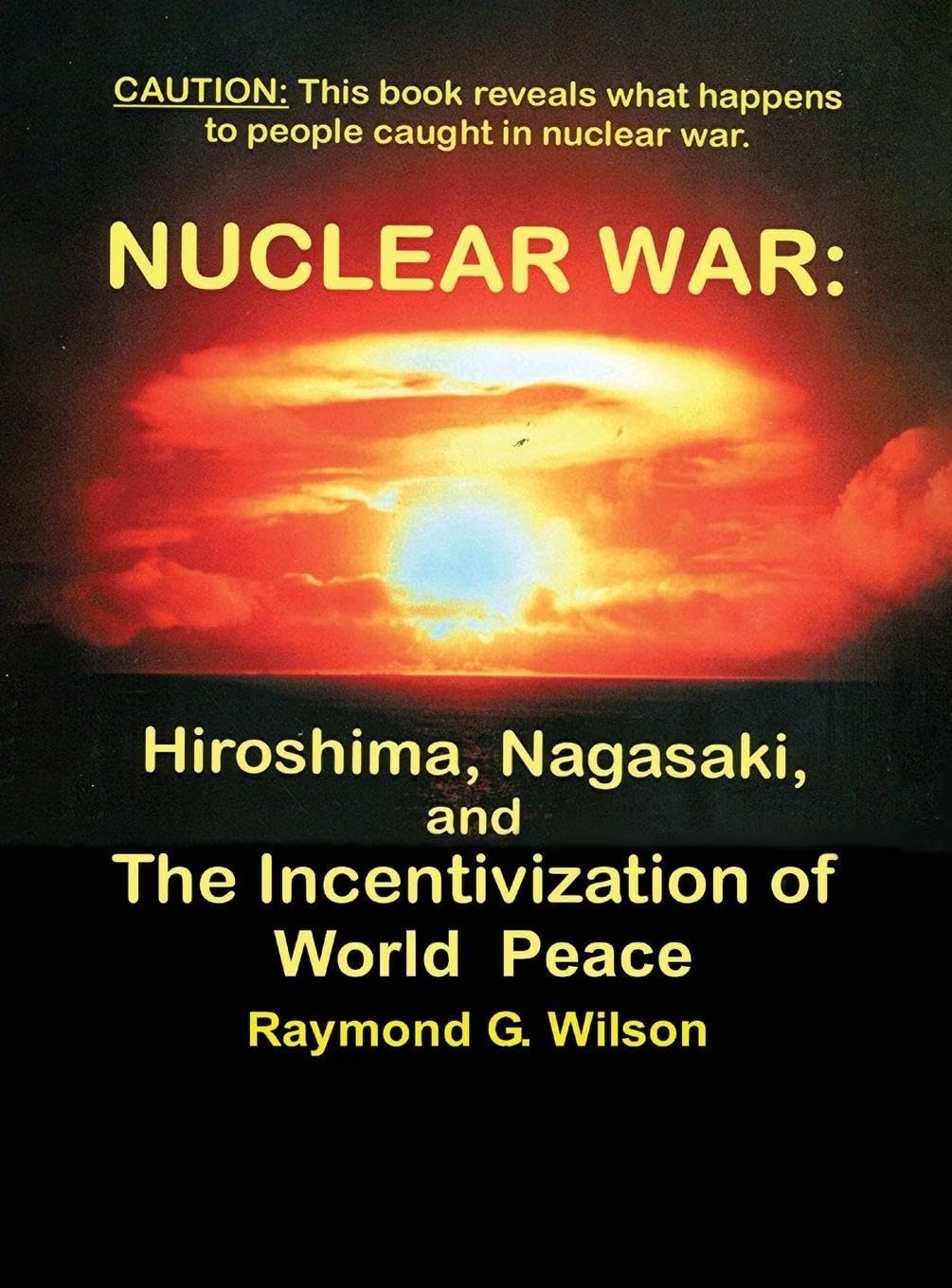
An urgent examination of nuclear warfare, human survival, and the systems needed for lasting peace, Raymond G. Wilson’s powerful work moves from the history and lessons of nuclear conflict toward a unique proposal for incentivizing world peace.
“If we can make the pursuit of peace as profitable and structurally sound as the pursuit of war, the people and nations of the earth will naturally align themselves toward prosperity rather than destruction.”
The book “Nuclear War: Hiroshima, Nagasaki, and the Incentivization of World Peace” by Raymond G. Wilson examines the history and consequences of nuclear warfare while ultimately directing attention to a practical question: how can humanity build systems that make peace a lasting and strategic reality? At the heart of that question is the book’s principal idea: a blueprint for incentivizing world peace.
The book’s primary strategy deserves particular attention because it moves beyond historical reflection and teaching into a proposed approach for preventing future catastrophe. Wilson argues that humanity’s intellect has outpaced its morality and that the release of nuclear energy has changed everything except the way people and nations approach conflict. Rather than relying only on the language of hope, the chapter frames peace as a necessity that requires workable structures and incentives.
The book begins with the somber lessons of Hiroshima and Nagasaki, using the 1945 bombings as a sobering foundation for understanding the consequences of nuclear conflict. These tragedies are presented not simply as historical data points, but as a warning about where force-based approaches to resolving conflict can lead. With modern nuclear weapons capable of vastly greater destruction, the need to rethink humanity’s approach to conflict remains urgent.
The most distinctive element of Wilson’s proposal is the “Incentivization Strategy.” The book’s central proposal explores how economic growth and industrial cooperation could be aligned with the elimination of war, creating a new pull toward stability and shared prosperity. The foundational concept is that if the pursuit of peace can become as structurally compelling as the pursuit of conflict, people and nations may have stronger reasons to cooperate rather than move toward destruction.
Wilson, an emeritus associate professor of physics, connects this proposal to the concerns expressed by figures such as Robert Oppenheimer and Albert Einstein in their later years: scientific knowledge without an ethical framework can become a dangerous gift. His approach asks readers to consider whether humanity can evolve its systems before it exhausts its opportunity to survive the nuclear age.
This makes the book’s central proposal especially relevant to policymakers, educators, and readers concerned with humanity’s future. It invites a thought experiment of the highest order: Can humanity change the incentives that shape international behavior before another nuclear catastrophe occurs? By treating peace as a tangible, strategic objective rather than an abstract ideal, Wilson offers a framework for discussion, cooperation, and action.
Blending history, science, and humanitarian insight, “Nuclear War: Hiroshima, Nagasaki, and the Incentivization of World Peace” challenges readers to look beyond the record of nuclear conflict and consider what comes next. The book’s main proposition lies at the heart of that challenge, offering a blueprint for cooperation and a path to more sustainable peace. As Wilson’s work suggests, humanity’s survival depends on its ability to cooperate before the consequences of inaction become irreversible.
Get a copy today, available in paperback, hardcover, and eBook, at the ReadersMagnet Bookstore, Amazon, and Barnes & Noble.
Author Bio
Raymond G. Wilson is an emeritus Physics professor who has dedicated more than five decades to teaching nuclear physics, Hiroshima, Nagasaki, and nuclear disarmament. Since 1959, he has educated students about nuclear war and global safety. He spent 18 summers conducting research in Hiroshima and Nagasaki, meeting survivors and documenting the human consequences of nuclear catastrophe. He also created the university course “Problems of Nuclear Disarmament,” which he taught for 33 years, and has led international peace education workshops focused on nuclear awareness and world peace.
Book Details
Book Title: “Nuclear War: Hiroshima, Nagasaki, and the Incentivization of World Peace”
Author : Raymond G. Wilson
Genre : History
Publisher : ReadersMagnet LLC
Published date : June 13, 2026
( Press Release Image: https://photos.webwire.com/prmedia/55089/360845/360845-1.jpg )
WebWireID360845
 Raymond G. Wilson
- Contact Information
- ReadersMagnet LLC
- Publishing and Marketing
- ReadersMagnet
- (1) 800-805-0762
- info@readersmagnet.com
This news content may be integrated into any legitimate news gathering and publishing effort. Linking is permitted.
News Release Distribution and Press Release Distribution Services Provided by WebWire.