

Western Pacific nations strengthen ocean cooperation to tackle mounting climate and biodiversity challenges
Countries chart priorities to turn ocean science and knowledge into practical solutions, protect marine ecosystems, and strengthen coastal resilience.
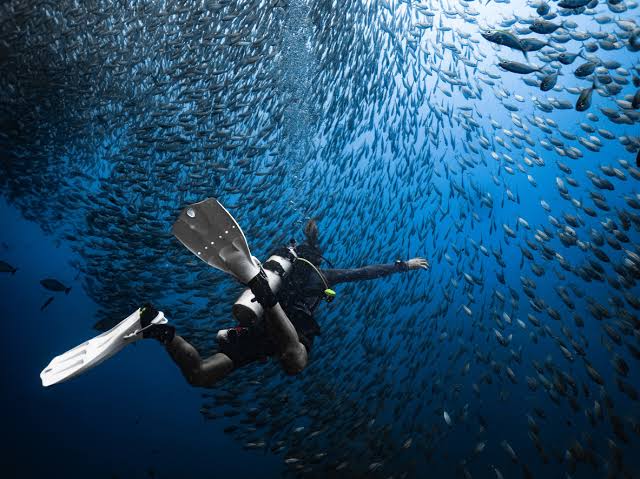
Representatives from 11 Western Pacific nations agreed on new actions to translate ocean sciences and knowledge into practical solutions in response to mounting pressure from climate change and biodiversity loss in the region.
The agreement came as national delegations from Australia, China, Indonesia, Japan, Malaysia, the Philippines, the Republic of Korea, the Russian Federation, Sri Lanka, Thailand and Viet Nam as well as representatives from international partners and foundations, gathered in Hangzhou, China, from 10 to 12 November 2026 for the Sixteenth Intergovernmental Session of the IOC Sub-Commission for the Western Pacific (WESTPAC-XVI).
The Western Pacific supports hundreds of millions of people and contributes to food security and economic prosperity far beyond the region. However, marine life and coastal communities are facing growing pressure from ocean warming, marine heatwaves, coral bleaching, sea-level rise, and the degradation of mangrove and seagrass ecosystems.
‘Ocean science matters as it provides the knowledge and evidence needed to make informed decisions, anticipate changes, and turn sustainability ambitions into action,’ said Prof. Jilan Su, former Chairperson of the Intergovernmental Oceanographic Commission (IOC) (1999-2003) and WESTPAC (1993-1996), renowned for his contributions to ocean circulation research and international cooperation, during the opening ceremony.
Since the previous meeting in Tokyo, Japan in March 2025, countries across the region have advanced cooperation to protect marine ecosystems, enhance coastal resilience, and build scientific and technical capacity.
Attention was given to advancing the implementation of the Regional Action Framework for Marine Spatial Planning (2025–2030) for sustainable management of marine spaces. Biodiversity monitoring and conservation efforts include research and science-based restoration of mangrove and seagrass ecosystems, and a new initiative expanding the application of environmental DNA (eDNA).
Regional initiatives are enhancing capacities of countries to observe, forecast, and assess coastal hazards and associated risks, while improving access to scientific information and practical tools to help coastal communities better prepare for ocean hazards.
Cooperation has also expanded to support the implementation of the Agreement on Biodiversity Beyond National Jurisdiction (BBNJ) for conservation and sustainable use of marine biodiversity beyond national jurisdiction. WESTPAC is working with Member States to identify priority needs, strengthen scientific and technical expertise, and facilitate regional knowledge exchange through established mechanisms, including the Regional Network of Training and Research Centres on Marine Science.
Wenxi Zhu, Head of the WESTPAC and the UN Ocean Decade Coordination Office for the region, stressed the importance of collective action, ‘The ocean knows no borders, nor do the challenges it faces. Its immense scale, complexity, and interconnected nature make it impossible for any single country, however advanced, to study, monitor, protect, or sustainably manage it alone.’
The delegates called for stronger regional action on marine and coastal disaster risk reduction and prevention, promoting scientific cooperation and practical approaches to strengthen coastal resilience. They also agreed to develop a realistic and actionable 2028–2029 workplan, while contributing to the development of the IOC Medium-Term Strategy (2030–2037) and a WESTPAC Regional Blueprint reflecting regional priorities.
The delegates endorsed the establishment of a Regional Training and Research Centre on Regenerative Aquaculture for Community and Ecosystems to be hosted by the Centre for Marine and Coastal Studies, Universiti Sains Malaysia, to promote accessible, science-based aquaculture practices benefiting coastal communities and ecosystems.
A task force will be established to develop regional technical guidelines for harmful algal bloom (HAB) early warning and mitigation systems, strengthening capacities of countries to monitor, anticipate and respond effectively to HAB events, which pose a growing threat to marine ecosystems, fisheries, aquaculture, and coastal livelihoods.
The WESTPAC-XVI Session was hosted by China’s Ministry of Natural Resources and its Second Institute of Oceanography. Momentum will continue in Manila, the Philippines, where the 12th WESTPAC International Marine Science Conference and 3rd UN Ocean Decade Regional Conference will take place from 20 to 23 April 2027, hosted by the Government of the Philippines.
( Press Release Image: https://photos.webwire.com/prmedia/6/364523/364523-1.jpg )
WebWireID364523
This news content was configured by WebWire editorial staff. Linking is permitted.
News Release Distribution and Press Release Distribution Services Provided by WebWire.