

Siggy Launches Continuous Mental Health Care, Powered by AI and Supervised by Clinicians, With a Daily Siggy Score That Tracks Your Progress
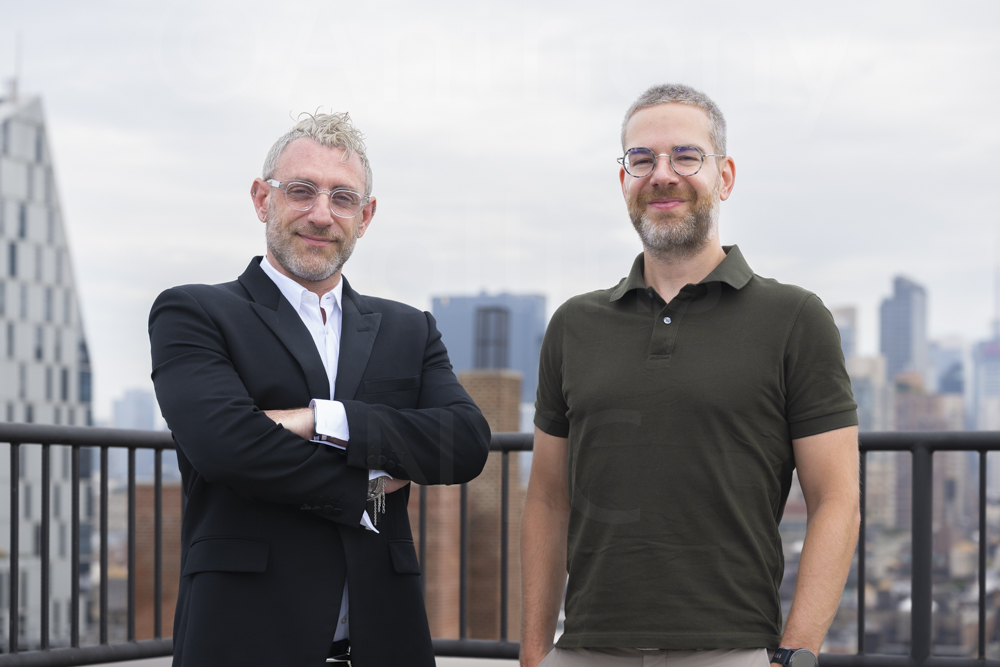
- With built-in memory, patients tell their story once, and the licensed clinician who makes every treatment decision walks into each appointment already knowing how you’re doing.
- A one-minute daily check-in on sleep, mood, and medication, plus data from a connected Apple Watch, Oura, or Whoop, becomes the Siggy Score, a single number out of 100 that patients and their clinician both see every day.
- Covered by most insurance plans in all 50 states, including Blue Cross Blue Shield, Aetna, UnitedHealthcare, and Humana, Siggy reaches roughly 80% of insured Americans. HSA and FSA accepted, and free for veterans, permanently.
Siggy launched today to build the operating system for mental health: a complete system that brings continuous care to psychiatry, with an AI that has built-in memory, knows a patient’s whole story, and works with them every day, under licensed clinicians who make every diagnosis, prescription, and treatment decision. Patients can start free today at siggymd.ai.
According to the Substance Abuse and Mental Health Services Administration, more than 54 million American adults had a mental illness last year, and nearly half received no treatment. Another 137 million live in designated mental health professional shortage areas, where only about 27% of the need is met, according to federal data. The gap gets filled with medication, much of it prescribed by non-psychiatrists in 15-minute visits months apart, and roughly 60% of patients stop within the first three months. Siggy turns the time between visits into meaningful insights. Every conversation, check-in, and wearable reading adds to a picture that improves over time, so care can move from reacting to crises toward catching changes early.
“Our mission is to end the mental health crisis, and treatment only works if people stay in it. No human team can give continuous, personalized care to millions of people, but with AI it’s finally possible. Every check-in builds a picture of how someone’s mind is doing over years, and that becomes the operating system for brain health and, eventually, for how people stay well for life,” said Jonathan Sabbagh, co-founder and CEO of Siggy.
How Siggy works
Tell your story once. Patients start with a free, anonymous conversation, with no account or login. Siggy remembers it and builds on it with everything that follows, so patients never repeat their history to a new provider.
- Talk to Siggy between visits. Patients can work through what’s on their mind with Siggy’s AI, which draws on their full history instead of a single message.
- Check in for one minute a day. Four questions on sleep, mood, medication, and how the body feels, plus data from an Apple Watch, Oura, or Whoop (coming soon), become the Siggy Score: one number out of 100 that patient and clinician both see daily.
- Work toward real goals. Siggy helps patients name what they want from treatment, like sleeping through the night or having dinner with family once a month, and tracks progress toward it.
- A clinician behind every decision. When Siggy sees a pattern building, it flags the change to the patient’s clinician with the context behind it. Medication is one tool among several, and clinicians taper patients off when they’re ready.
A clinician, always in the loop
Say a patient types, “I’m so tired of feeling this anxious, my life’s going downhill.” A general-purpose AI responds to that one message, usually with encouragement, because it has no clinical history to compare it against and no doctor to bring in. Siggy reads the same message against everything it knows about the patient, from past check-ins to wearable data. When it spots a pattern building over several days, it flags it to the patient’s licensed clinician with the context behind it. Weekly check-ins through the first two months let clinicians decide within days whether to hold a dose, increase it, or change medication, and taper a patient off when they are ready.
Built from the founder’s own care
CEO Jonathan Sabbagh grew up in Switzerland, left school at 18 for a job at a hedge fund, and spent 20 years in finance before a burnout revealed he had been living with undiagnosed PTSD from childhood trauma. What finally worked was psychedelic-assisted therapy and a care team most people never get: a psychiatrist who was both his therapist and his prescriber, and who answered his texts within minutes, at any hour. He went back to school at 38 to study psychology, then left to build Journey Clinical into the largest psychedelic-assisted therapy network in the U.S., with more than 3,000 practices and over one million hours of supervised care.
Sabbagh co-founded Siggy with Edvard Engesaeth, MD, now COO, an early Journey Clinical investor who co-founded Nurx and scaled it past two million patients and a $100 million run rate. They recruited CTO Jake Bourke, who led cloud reliability engineering at Coinbase and built SimpliSafe’s connected-device infrastructure, and Chief Medical Officer Daniel Montville, MD, who designed Siggy’s clinical model and leads a medical team trained at Yale School of Medicine, the University of Chicago, and Mercy University.
“Mercury puts me around ambitious companies every day, and the founders I back personally are the ones attempting something hard. Jonathan and Edvard are using AI to make expert mental healthcare part of everyday life, with the long-term goal of an AI that understands each person’s brain health well enough to catch changes early,” said Immad Akhund, founder and CEO of Mercury. “I backed Jonathan at Journey Clinical and Edvard at Nurx, and watched each of them scale a healthcare company. That’s why I’m backing them again with Siggy, and why I’m excited to be in early on what they build next.”
“Mental health remains one of healthcare’s biggest unsolved problems, in part because no one measures it continuously,” said Amrit Rao, General Partner at Village Global. “Siggy changes that, with a clear measure of progress and care. We are delighted to back Jonathan and Edvard to bring this vision to patients across the US.”
Siggy is backed with $6 million in pre-seed funding led by Village Global. Several backers are investing in the founding team for the second time, including Albert Wenger of Union Square Ventures, which funded both Journey Clinical and Nurx; Immad Akhund of Mercury; Toyin Ajayi of Cityblock Health through Coalition Operators; Psymed Ventures; and Christina Sass, co-founder of Andela. They are joined by Andrew Parker of Papa; Steven Gutentag and Demetri Karagas, the Thirty Madison co-founders who acquired Nurx; Daft VC; Mystic Ventures; and angels including Gokul Rajaram.
Try Siggy today at: siggymd.ai.
( Press Release Image: https://photos.webwire.com/prmedia/42381/363771/363771-1.jpg )
WebWireID363771
 Mental Health
- Contact Information
- Emma McDermott
- PR for Siggy
- VSC for Siggy
- Contact via E-mail
This news content may be integrated into any legitimate news gathering and publishing effort. Linking is permitted.
News Release Distribution and Press Release Distribution Services Provided by WebWire.