

Strengthening support for women school principals in Benin and Madagascar
Two new policy briefs from IIEP-UNESCO’s Women in Learning Leadership programme explore how female school principals strengthen equity and learning.
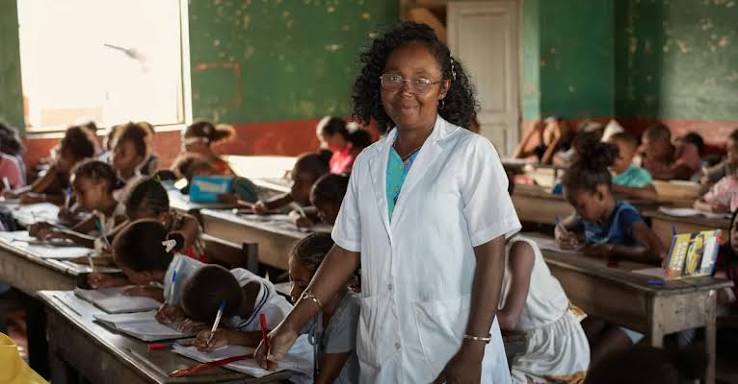
Evidence has shown that female leadership in schools can help ensure broader student success. But ensuring that women have access to these positions requires tackling gender barriers, as well as professionalization and support so they can thrive.
Two new policy briefs from the UNESCO International Institute for Educational Planning in Africa (IIEP in Africa) examine women’s representation in primary school leadership in Benin and Madagascar, the barriers they face, and the conditions that can enable their leadership to contribute to student success.
In Benin, women remain underrepresented in primary school leadership, holding 17 per cent of positions in 2022 and with a stronger presence in urban centres.
Social norms, constraints related to postings, security concerns, and unequal access to qualifications continue to limit their progression into these roles. Yet IIEP’s evidence shows that, in comparable educational contexts, having female leadership in public schools is associated with better retention of girls and better learning outcomes in rural areas.
In Madagascar, women account for 35 per cent of principals in public primary schools, and more than half in the private sector.
However, their representation remains highly uneven across regions. Women school principals are more prevalent in urban areas and in regions where women make up a larger share of teachers. The brief also highlights the important role of qualifications, particularly in rural areas, in enabling school leadership to have a positive impact on learning.
Supporting women school principals is not just about increasing their numbers. It is also about creating the institutional, professional, and social conditions that enable them to exercise their leadership fully. - Jihane Lamouri, Gender-sensitive Educational Policy Planner, IIEP-UNESCO in Africa
These two publications stress that strengthening women’s school leadership is not only about increasing the number of women in leadership positions. It also means creating the conditions that enable female and male school principals to fulfil their roles fully. This means having clear appointment criteria, training, ongoing support, improved working conditions, action against harassment and harmful gender norms, and making posts in remote areas more attractive.
( Press Release Image: https://photos.webwire.com/prmedia/6/362767/362767-1.jpg )
WebWireID362767
This news content was configured by WebWire editorial staff. Linking is permitted.
News Release Distribution and Press Release Distribution Services Provided by WebWire.