

Community radio practitioners trained in Eastern Zimbabwe to strengthen disaster preparedness
UNESCO trained 42 community radio practitioners in Zimbabwe’s Chipinge District to deliver early warnings, report responsibly and keep broadcasting during disasters.
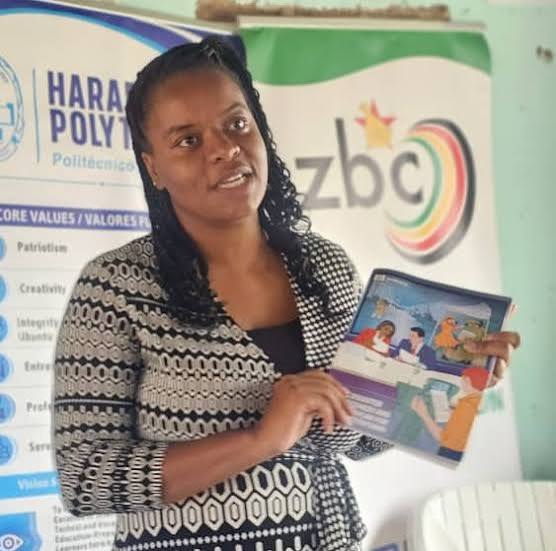
UNESCO has trained 42 community radio practitioners in Garahwa, Chipinge, to deliver reliable early warnings, report responsibly during disasters and keep broadcasting when emergencies disrupt normal operations.
Held at Garahwa Primary School ahead of the International Day for Universal Access to Information, the training brought together 30 participants from host station Ndau FM and 12 from Avuxeni FM, Chimanimani FM, Tongogara FM and Vemuganga FM.
The sessions addressed a critical need in Manicaland, where communities face floods, drought, cyclones, veld fires and storms. Participants explored how radio stations can help communities prepare, share practical safety information during emergencies and support recovery.
The UNESCO training on Disaster Risk Reduction taught me how to report accurately and responsibly during emergencies without causing unnecessary panic. I now have a better understanding of how to provide clear, factual, and timely information during disasters. - Lean Tsuvuka of Avuxeni FM.
Using UNESCO’s Model Disaster Preparedness Response Plan for Media Institutions, participants examined how to develop business continuity plans and standard operating procedures tailored to their stations.
The toolkit covers seven areas: business continuity, emergency programming, editorial policies, coordination with authorities and other stakeholders, digital technologies, staff training and support, and ensuring no one is left behind.
Participants used Cyclone Idai as a case study to examine how community radio could communicate warnings before a disaster and provide essential information during and after an emergency.
Through the training, I finally understand that as community radio broadcasters we should give proper early warnings to vulnerable people, so they can move to safe places in time and leave no one behind. - Jeremiah Makiwa of Chimanimani FM.
Participants also discussed taking portable broadcasting equipment, including mixers and microphones, to evacuation centres to help stations remain operational.
The training forms part of ongoing efforts to strengthen community radio in Zimbabwe. It complements UNESCO’s work with the Governments of Zimbabwe and Mozambique on early warning systems reaching more than 773,000 people in Zimbabwe and 1.1 million in Mozambique, supported by Austrian Development Aid following initial funding through the World Bank-funded Zimbabwe Idai Recovery Project.
( Press Release Image: https://photos.webwire.com/prmedia/6/361561/361561-1.jpg )
WebWireID361561
This news content was configured by WebWire editorial staff. Linking is permitted.
News Release Distribution and Press Release Distribution Services Provided by WebWire.