

St. Vincent, Diane Warren, and More Came Together for Spotify’s Created by Women Summit
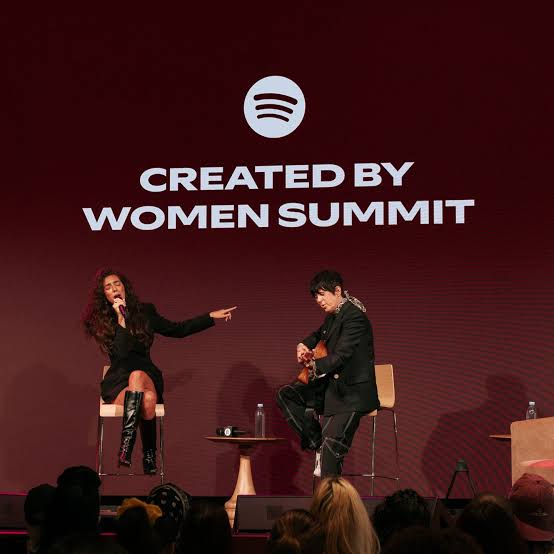
Last week, Spotify welcomed 500 guests from across the songwriting, producing, and publishing world to the second annual Created by Women Summit, a day dedicated to building a more equitable music industry. Since its launch last year, Created by Women has facilitated much-needed community, mentorship, and connection across the industry.
During a series of panels and interviews held at Spotify’s LA office, attendees heard from leading voices on a range of topics including being a working parent in the music industry, Black women in songwriting, and the power of creative collaboration across borders. Spotify’s Chief Public Affairs Officer Dustee Jenkins hosted the day’s keynote alongside songwriter Liz Rose.
“Today is about you,” Dustee said in her welcome remarks. “And it’s about what we can do together to make sure more people understand what you do and how much it matters. Your songs are traveling further and finding more listeners around the world. Fans want to build deeper connections with the artists and songs they love. They don’t want to just hear the songs, they want to know who made them.”
In the Heart & Soul Wellness Lounge, created in partnership with leading mental health and wellness non-profit Backline, attendees could stop by for a massage and nutrition consultation, and learn more about the resources and support available to them through the organization.
The event also featured live performances, and closed out with a mixer where guests had another chance to connect and keep the conversation going.
For the Record caught up with several featured songwriters and artists—including St. Vincent, Diane Warren, Ali Tamposi, Leona Lewis, Nija, and Lori McKenna—to talk about the importance of community, the practices that keep them grounded, and the work they feel best reflects their legacies.
St. Vincent: Tori Amos definitely helped me find my voice when I was younger, and I was lucky enough to become friends with her later on. But so many people in my orbit—on my team or other artists—are strong, brilliant, hardworking women. I never really felt like I was at a loss for that kind of community. I mean, growing up all I had to do was turn on MTV, and there’s Kim Gordon of Sonic Youth, there’s PJ Harvey. Going back, I had Nina Simone and Erykah Badu, my hero of heroes. I was also lucky enough to get to meet a lot of rad, like-minded women in all facets of the industry who are great at what they do and help create a community.
Diane Warren: There were a lot of women songwriters back in the day who really helped build the foundation of my career, like Carole King, Cynthia Weil, and Ellie Greenwich. Those women helped write some of the best songs of all time.
Ali Tamposi: I have a very strong support system outside of the music industry. I’ve also worked really hard to separate my personal life from “Ali the songwriter.” I have a family and a kid, so that has become the most important piece of my life. Creating music is just the cherry on top; it’s not everything. It’s been difficult to get here, but now when I get any kind of rejection it doesn’t hurt as much because, at the end of the day, we’re just writing songs.
Leona Lewis: We’re in an industry that just requires a lot of you. It’s 24/7, 365 days a year. But you have to give yourself pause and recognize when you need time to look after yourself and your well-being—especially as a mom, because you need to show up for both you and your child.
Nija Charles: It says a lot when a collaborator can look me in the eye, and be like, “What do you think? What would you do?” That makes me feel like we’re all equal, we’re all contributing an equal amount, and I’m not just an afterthought.
If someone were discovering your work for the first time, which song would you point them to, and why?Lori McKenna: That’s a really hard question! I guess the song that I think represents me really well would be “People Get Old.” I’m obsessed with age, and it’s a song that I wrote about my dad. I’ve been proud of the way that song has aged along with me.
Head to theEQUAL hub on Spotify to discover more talented women artists and creators.
( Press Release Image: https://photos.webwire.com/prmedia/6/360997/360997-1.jpg )
WebWireID360997
This news content was configured by WebWire editorial staff. Linking is permitted.
News Release Distribution and Press Release Distribution Services Provided by WebWire.