

“Black Men in Uniform” Joins UK Library Platform Biblio+, Offering Young Audiences a Resilience-Centered Approach to African American History
Award-winning filmmaker Emunah La-Paz (Vicki L. Hubbard) draws from her own childhood experiences to present Black history through resilience, dignity and agency—not trauma alone.
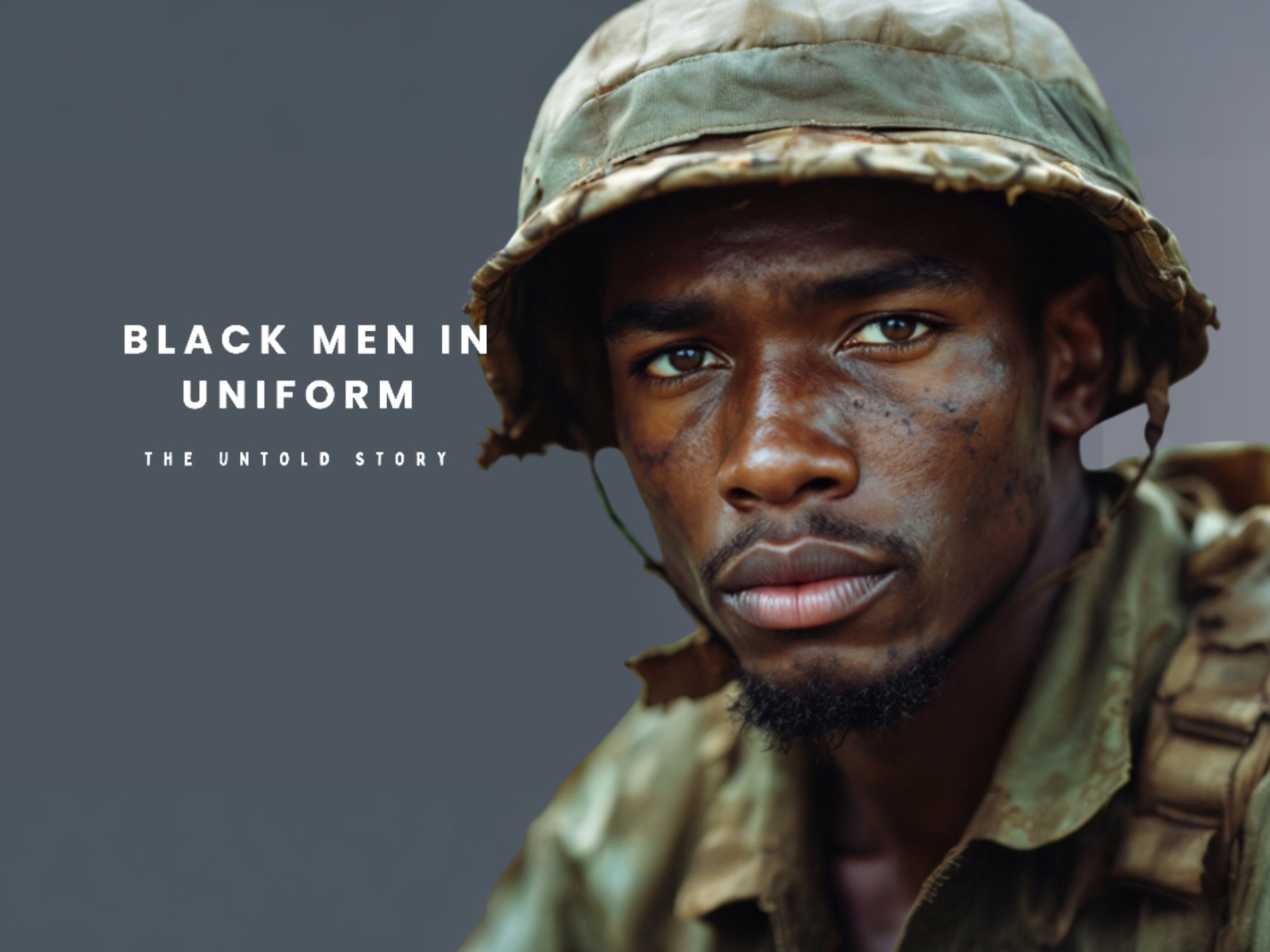
“What one generation understands as history can always be viewed through a different lens by the next. We should never erase the painful truths of African American history, but we can be thoughtful about how we present them to young people. Children should be able to learn about slavery, racism and injustice without inheriting guilt, shame or trauma because of who their ancestors were. With Black Men in Uniform: The Untold Story, I wanted to tell the truth while also showing resilience, dignity.
“Black Men in Uniform: The Untold Story,” the award-winning documentary from filmmaker Emunah La-Paz (Vicki L. Hubbard), has expanded its international educational reach through Biblio+, a streaming service available through participating libraries.
For La-Paz, the placement represents more than another distribution outlet. It brings the documentary closer to one of its central purposes: giving students and young audiences an opportunity to encounter African American history through a lens that acknowledges oppression while also emphasizing resilience, contribution and human dignity.
That mission comes from a deeply personal place.
La-Paz remembers being approximately ten years old and the only Black student in her classroom when lessons about African American history centered heavily on slavery. As classmates learned about enslavement and watched widely seen portrayals of the period, she became the target of racialized teasing. Students called her “Kunta,” referencing the character Kunta Kinte, and some attempted to reenact scenes they had seen.
The experience left a lasting question for the future filmmaker: How do we tell the truth about painful history without making the children descended from that history feel ashamed of who they are?
Years later, after witnessing some of the same discomfort surrounding the teaching of African American history affect another generation, La-Paz became increasingly determined to explore a different approach.
“Black Men in Uniform: The Untold Story” does not attempt to erase slavery, racism or the injustices African Americans endured. Instead, the documentary places those realities alongside another part of the historical record—the determination, service and resilience of African American men who participated in shaping the nation even while full equality was denied to them.
The documentary traces African American military service across generations while connecting that history to broader American culture. Its approach deliberately seeks to avoid reducing Black historical figures to images of suffering alone.
“As a child, I knew what it felt like to sit in a classroom and feel as though everyone was looking at me when slavery was discussed,” La-Paz said. “History should tell the truth, even when that truth is painful. But I also believe our children deserve to see what their ancestors survived, what they accomplished and what they contributed. Oppression is part of our history. It is not the entirety of our identity.”
A Different Approach to Difficult Historical Imagery
That philosophy has influenced La-Paz’s visual approach as well. In “Black Men in Uniform: The Untold Story,” AI-generated imagery is used selectively in scenes where La-Paz believes it is most necessary—particularly when depicting deeply sensitive historical experiences for which traditional archival imagery or reenactments could create additional ethical concerns.
One such sequence involves Pata Seca, an enslaved Brazilian man who was reportedly forced to father more than 200 children. Rather than search for dehumanizing photographs of enslaved people to visually represent such experiences, or stage reenactments involving actors portraying enslaved adults and children being subjected to abuse, La-Paz chose a different visual approach.
For La-Paz, the decision is rooted in a question of dignity and consent. Many enslaved people who were photographed had little or no authority over how their images were created, preserved, circulated or eventually used by future generations. Reproducing particularly degrading imagery can therefore risk repeating the objectification captured in the original image and can remain deeply distressing for viewers today.
La-Paz believes graphic reenactments of slavery are not necessary to communicate its brutality, particularly when children would be asked to participate in staged scenes depicting enslavement, violence or degradation. Her conviction comes in part from her own childhood experience and the lasting emotional impact that graphic depictions and reenactments of slavery had on her as a young Black child.
While she recognizes that other filmmakers will make their own creative decisions, she has made a deliberate choice in her own work not to recreate imagery that she believes can leave another generation of children carrying the same painful memories. Her approach is not to conceal what happened, but to communicate those realities without unnecessarily recreating the humiliation inflicted upon the people whose history is being told.
“Technology should never be used simply because it is available,” La-Paz said. “For me, the question is whether there is a more humane way to tell a painful truth. I don’t believe we have to repeatedly expose the bodies and suffering of enslaved people—or ask children to reenact that suffering—in order for an audience to understand what happened.”
Her guiding principle is simple:
Teach the oppression, but don’t allow oppression to become the entirety of the identity.
From Streaming to Education
For La-Paz, the documentary’s availability through Biblio+ is therefore particularly meaningful. Libraries have historically served as gateways to education, research and independent discovery, making library-based streaming a natural environment for a film created with future generations in mind.
“Black Men in Uniform: The Untold Story” has also reached audiences through Tubi and other digital outlets and has received recognition through independent film festivals and film criticism internationally.
La-Paz hopes the documentary’s growing educational footprint will ultimately provide the foundation for a broader historical series exploring African American military service across different eras, with resilience remaining at the center of the storytelling.
“The history doesn’t become less truthful because we show resilience,” La-Paz said. “Sometimes the most powerful part of the history is understanding what people were facing—and then seeing what they did anyway.”
About “Black Men in Uniform: The Untold Story”
“Black Men in Uniform: The Untold Story” is a documentary exploring generations of African American military service and the larger cultural history surrounding that service. Through archival research, historical storytelling and contemporary filmmaking techniques, the film examines the experiences and contributions of Black Americans while emphasizing resilience, agency and historical dignity.
About the Filmmaker
Emunah La-Paz (Vicki L. Hubbard) is an award-winning filmmaker, writer and director and founder of Little Ant Productions LLC. Born in Montgomery, Alabama, and raised for part of her childhood in Kaiserslautern, Germany, La-Paz’s experiences with race, education and the presentation of African American history have shaped her approach to historical filmmaking.
Her work seeks to preserve difficult historical truths while creating films that future generations can encounter without reducing African American identity to oppression alone.
“Black Men in Uniform: The Untold Story” is currently available through Tubi, Fawesome, and Biblio+, and is also listed on Apple TV, with availability varying by territory and participating library access.
( Press Release Image: https://photos.webwire.com/prmedia/107200/360956/360956-1.jpg )
WebWireID360956
 Black Men In Uniform
- African American History
- Educational History
- Untold American History
- Emunah La-paz
- Contact Information
- Shay Williams
- Representative
- Little Ant Productions LLC.
- Contact via E-mail
This news content may be integrated into any legitimate news gathering and publishing effort. Linking is permitted.
News Release Distribution and Press Release Distribution Services Provided by WebWire.