

GSMA and PDAA Unveil Roadmap to Close Africa’s Mobile Internet Usage Gap and Connect One Billion People by 2030
New framework prioritises faster migration to 4G and 5G, coordinated energy and connectivity investment and more sustainable ways to connect rural communities
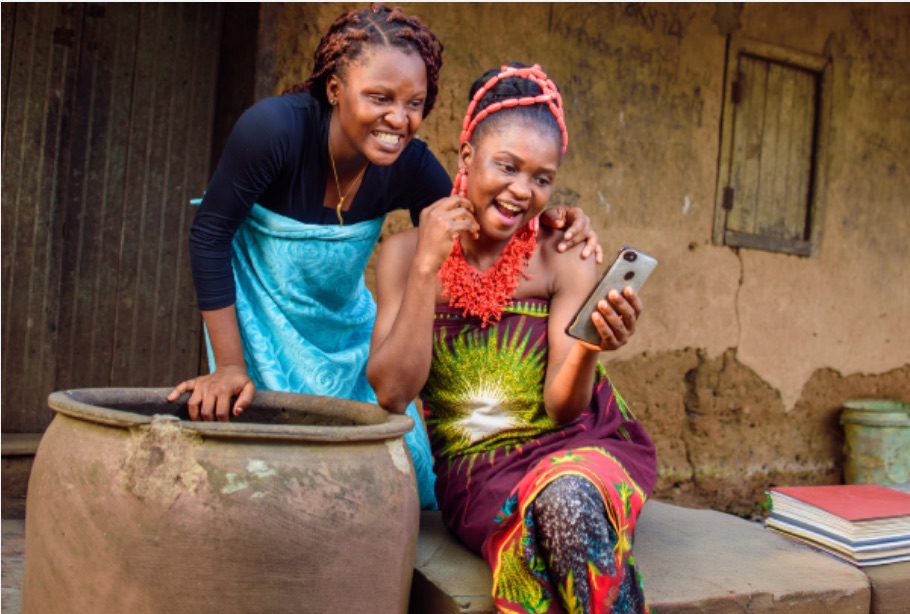
The GSMA and the Partnership for Digital Access in Africa (PDAA) launched a new roadmap to accelerate meaningful digital participation across Africa and support the ambition of connecting one billion people to the internet by 2030.
Launched during the United Nations General Assembly, Advancing Digital Connectivity in Africa: Charting Africa’s Path to 1 Billion Connected People by 2030 sets out priority actions for governments, industry, development partners and investors to move beyond expanding network coverage and enable more people to use the internet regularly, safely and productively.
The roadmap builds on the GSMA’s State of Mobile Internet Connectivity Report 2026, published earlier this month, which found that 3.1 billion people globally live within mobile broadband coverage but do not use mobile internet. In Africa alone, analysis underpinning the new roadmap puts this usage gap at around 906 million people – almost 60% of the continent’s population. By comparison, 122 million people, or 8% of the population, still live beyond the reach of a mobile broadband network.
Developed by GSMA Intelligence for PDAA, the roadmap draws on analysis of 11 diverse African markets – the Democratic Republic of the Congo, Egypt, Ethiopia, Ghana, Kenya, Niger, Nigeria, Rwanda, Senegal, South Africa and Uganda. It identifies three priorities for accelerating meaningful digital participation:
- Accelerating migration from 2G and 3G to smartphone-based participation, converting more than 600 million legacy mobile connections into meaningful internet use on 4G and 5G networks.
- Integrating energy and connectivity investment, recognising reliable electricity as essential to network economics, device use and participation in the digital economy.
- Reducing the cost of reaching rural and underserved communities through shared infrastructure, innovative technologies, outcome-based public funding and anchor demand from schools, healthcare facilities and other public institutions.
The roadmap finds that progress across these priorities must be reinforced by access to affordable, quality smartphones; practical digital skills; safe and trusted services; locally relevant content; digital public infrastructure; and policies that promote investment and inclusion.
It also recognises that there is no single pathway to closing Africa’s connectivity gap. While some markets must continue expanding rural coverage and reliable electricity access, others need to prioritise smartphone affordability, digital skills, online safety or access to relevant services that give people a compelling reason to connect.
Halving the mobile internet usage gap across the 11 markets assessed could bring approximately 245 million additional people online.
Hon. Ellen Johnson Sirleaf, Co-Chair of PDAA, former President of Liberia and Nobel Peace Prize laureate, said: “The goal is ambitious, but it is achievable. If we bring together connectivity, electrification, affordable devices and digital skills – and if we match Africa’s many promising programmes with the power of genuine public-private partnership – we can ensure that the continent’s digital transformation leaves no community behind.”
John Giusti, GSMA Chief Regulatory Officer and President of GSMA Foundation said: “Africa has already built much of the network foundation for its digital future. The urgent task now is to close the usage gap by making smartphones and services affordable, equipping people with practical skills, building trust and ensuring connectivity delivers visible value in people’s daily lives.
This roadmap shows how governments, industry and development partners can align investment and accountability around the outcomes that matter. Reaching one billion meaningfully connected Africans will require coordinated action across infrastructure, energy, devices, skills and digital services.”
Ibrahima Guimba-Saïdou, CEO of the Partnership for Digital Access in Africa (PDAA), said: “Africa cannot build its digital future on connectivity alone. A network can reach a community, but meaningful participation depends on the conditions around it: reliable energy, affordable devices, digital skills and services people have a reason to use. This roadmap gives us a practical framework for bringing those conditions together and turning access into opportunity at scale.
From ambition to coordinated delivery
The roadmap calls for stakeholders to replace standalone interventions with a coordinated delivery model that connects policy, infrastructure, energy, devices, skills, safety and relevant digital services.
PDAA will serve as a platform to bring together public- and private-sector stakeholders, align investment pipelines, reduce duplication, share risk and help proven solutions scale across markets.
It also urges governments, industry and development partners to measure progress through meaningful digital participation and socioeconomic outcomes – including active internet use, access to public services, learning, healthcare, financial inclusion and productivity – rather than infrastructure deployment alone.
The roadmap was formally presented at an event at the Rockefeller Foundation in New York on 21 September, bringing together stakeholders to discuss the collective action needed to accelerate meaningful digital participation across Africa.
About GSMA
The GSMA is a global organisation unifying the mobile ecosystem to discover, develop and deliver innovation foundational to positive business environments and societal change. Our vision is to unlock the full power of connectivity so that people, industry, and society thrive. Representing mobile operators and organisations across the mobile ecosystem and adjacent industries, the GSMA delivers for its members across three broad pillars: Connectivity for Good, Industry Services and Solutions, and Outreach. This activity includes advancing policy, tackling today’s biggest societal challenges, underpinning the technology and interoperability that make mobile work, and providing the world’s largest platform to convene the mobile ecosystem at the MWC and M360 series of events.
We invite you to find out more at gsma.com
GSMA Media contact
GSMA Press Office
pressoffice@gsma.com
About PDAA
The Partnership for Digital Access in Africa (PDAA) brings together governments, philanthropy, the private sector, and civil society to advance digital access across the continent. PDAA’s ambition is to connect one billion Africans to the Internet by 2030, recognising that digital access is essential to economic opportunity, innovation and long-term prosperity across Africa. By aligning partners around a common purpose and supporting country-led solutions, PDAA catalyses the collective action needed to expand digital access faster and more equitably across Africa. Its partners include governments, regional institutions, philanthropy, and leading private-sector organisations committed to expanding meaningful digital access across Africa.
PDAA Media contact
Korede Akinsete
korede@thekoconcept.com
( Press Release Image: https://photos.webwire.com/prmedia/7/360918/360918-1.jpg )
WebWireID360918
This news content was configured by WebWire editorial staff. Linking is permitted.
News Release Distribution and Press Release Distribution Services Provided by WebWire.