

Airbnb announces ‘Farm to Stay’ Grant Program to promote farmer-led tourism
Key Takeaways
- Airbnb and American Farmland Trust are partnering to launch the ‘Farm to Stay’ Grant Program, offering farmers and ranchers up to $10,000 to tap into the growing agritourism industry.
- With the median small farm household in the US losing approximately $2,800 from farming activity in 2024, new data shows that farmers and ranchers who host on Airbnb earned roughly $8,000 last year.
- Demand for agritourism has grown sharply and consistently—Google Trends shows US search interest for “farm stay” nearly quadrupled between 2016 and early 2026.
In partnership with American Farmland Trust, the company will give farmers up to $10,000 each to help them earn from increased tourism demand, as new Airbnb report finds agritourism is filling a critical income gap for communities.
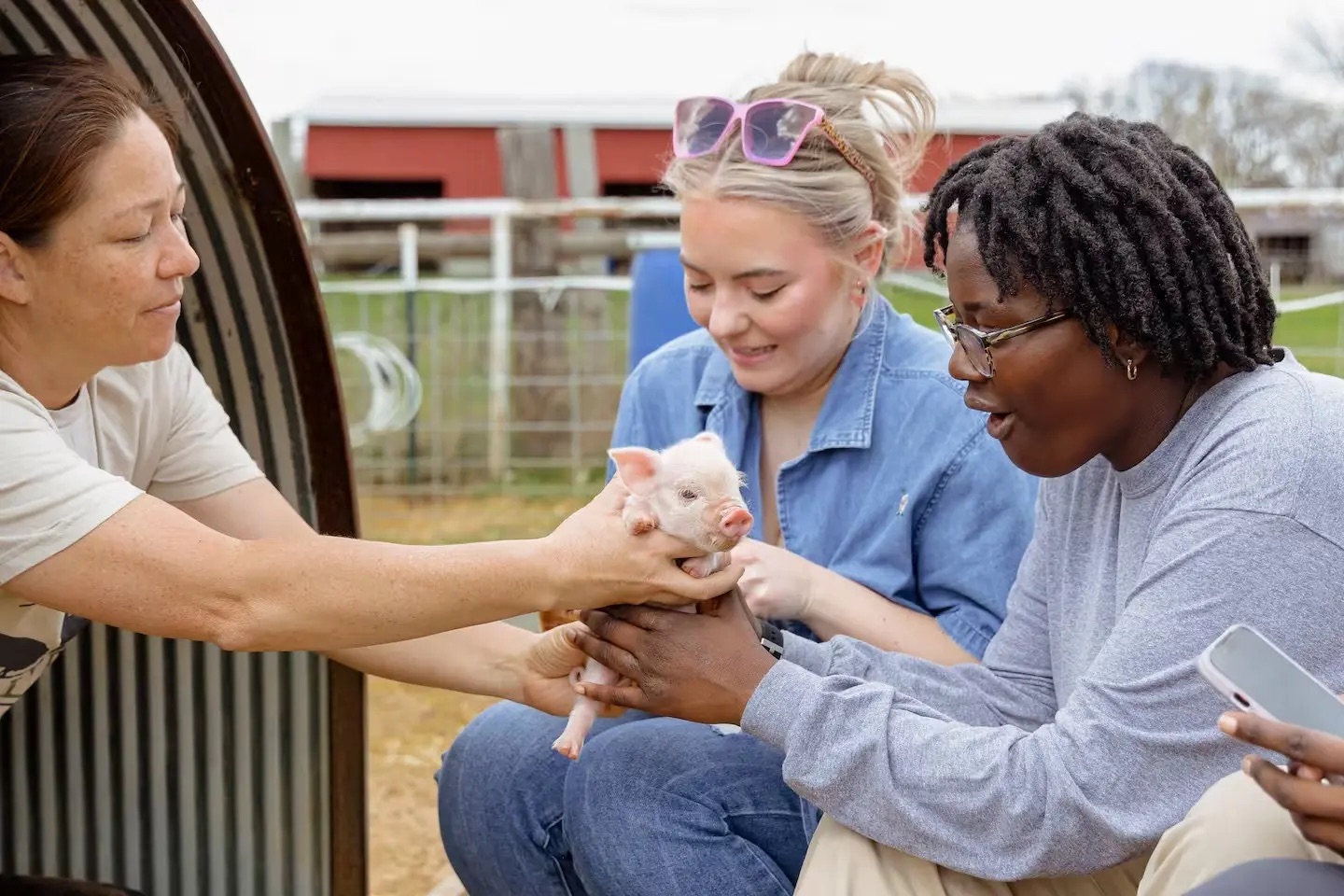
From pig cuddling in rural Texas, to a vegetable farm stay in Missouri, and an Alpine goat hike in Maine, the demand for agricultural travel is rapidly growing, and so is the need. Agritourism turns working farms and ranches into places people can visit, learn from, and stay, strengthening farm income while connecting communities to agriculture—enabling exactly the kind of belonging Airbnb was built for. As economic pressure squeezes American farms and ranches, a new Airbnb report finds hosting on the platform earned the typical farm stay host close to $8,000 last year, with US farms on Airbnb earning nearly $120 million in 2025.1 To help make this opportunity even more accessible, Airbnb and American Farmland Trust are announcing the ‘Farm to Stay’ Grant Program, which will offer farmers and ranchers up to $10,000 per grant to start or expand an agritourism stay or experience.2
“Through the ‘Farm to Stay’ Grant, we’ll give agricultural communities a critical foothold in a growing sector that can help bring stability and predictability to an industry facing serious headwinds,” said Ashley Brucker, American Farmland Trust Senior Manager of Grantmaking, Brighter Future Fund. “With interest in farm stays increasing, our partnership with Airbnb could not happen at a better time. For over four decades, our mission has been to protect America’s farmland and help sustain the livelihoods of our farmers and ranchers. The opportunity to develop new revenue streams, in this instance through stays and experiences, has become essential to that work.”
Airbnb’s partnership with American Farmland Trust will launch a new grant program aimed at farmers who want to take advantage of agritourism opportunities that support their farm business but need support to get there.
“A ‘Farm to Stay’ Grant can be what helps keep a family on their land through a bad season. Sharing a room in the farmhouse can offset increased costs and bring tourism dollars to communities that visitors have traditionally overlooked,” said Jordi Torres Mallol, Airbnb Regional Director for the Americas. “The demand is only growing, and we’re proud to work with American Farmland Trust and local community partners to help farmers and ranchers meet it.”
American Farmland Trust has been a pioneer of the American agriculture conservation movement and has spent decades working directly with farming communities across the country. Their mission—to protect farmland, promote sound farming practices, and keep farmers on the land—aligns directly with what Airbnb’s data shows agritourism hosting can do—give farmers a new revenue stream that makes staying on the land financially viable.
Grants will range up to $10,000, with the program designed to support farmers across every part of the US.
American farms are under pressure. Unpredictable weather, rising input costs, and volatile commodity markets have made it harder than ever for independent farmers to stay afloat. In fact, according to USDA economic research, the typical small farm household lost money on farming in 2024, with median farm income of nearly -$2,800.3
A new report by Airbnb shows that the typical farm stay host earned approximately $8,000 in 2025. This supplemental income is critical for many farming families, and can be the difference between staying in business and walking away. Across the country, farm stay hosts have collectively earned approximately $120 million through Airbnb in 2025, and areas with new farm stays saw roughly 15 percent faster growth in overall earnings.4
That impact goes beyond visitors’ spending on lodging and contributions to local economies that wouldn’t otherwise see the benefits of tourism because of the lack of accommodation options. The report finds that across the US, more than 60 percent of census tracts are hotel deserts where Airbnb is the only accommodation option.5 In these rural areas, farm stay guests generate close to $125 million in total tax revenue and contribute nearly $500 million in G.D.P., supporting small businesses, local attractions, and state and local governments alike.67
According to Google Trends data, US searches for all “farm stay” have nearly quadrupled in the last decade.8 Additionally, total host earnings for farm stays on Airbnb have grown nearly 400 percent since 2018.9 The data tells a clear story that agritourism is no longer a niche, instead becoming a growing economic lifeline for American farming and ranching communities.
“Small farms have to find creative ways to remain viable, and welcoming guests has allowed us to diversify the farm while continuing to produce local food and keep the property in active agriculture. It’s become another part of how we keep a working farm thriving while sharing a little bit of this life with people who otherwise might never have the opportunity to experience it.”
– Jeremy Foust, Airbnb host from Eatonville, Washington
‘Farm to Stay’ Grant applications will open in November. Farmers and ranchers interested in applying can learn more at www.farmland.org/farm-to-stay.
Alongside the grants, Airbnb is running two free online workshops for anyone curious about agritourism—no grant application required. Each session will cover how our platform works, hosting best practices specific to rural and farm stays, and what it takes to get a stay or an experience live, from setting up a listing to welcoming a first guest. Both sessions include Q&A and a walkthrough of the community resources available to new hosts year-round.
Workshops will be held on Wednesday, October 14th at 5:00 pm ET and Friday, November 13th at 12:00 pm ET. Register by clicking either date.
“For years, hosting has let us introduce guests from across the country and around the world to our historic corner of Detroit. Now we want to add something to it—an urban farm right here in the heart of the city. A ’Farm to Stay’ grant would make that real, and as a veteran, that means a lot to me.”
– Evan Fay, Airbnb Host from Detroit, Michigan
See the full report here.
1Based on Airbnb data of the median and total U.S. farm stay host earnings between January 1, 2025 – December 31, 2025. A farm stay listing is one whose host self-selected “Farm Stay” as the listing’s space type when creating their listing on Airbnb.
2American Farmland Trust, and the Farmland logos are trademarks of American Farmland Trust. www.farmland.org.
3Source: U.S. Department of Agriculture, Economic Research Service. (2026, February 5). Farm household well-being: Farm household income estimates, Households associated with intermediate and residence farms reported median farm income of -$2,799 and -$2748, https://www.ers.usda.gov/topics/farm-economy/farm-household-well-being/farm-household-income-estimates.
4We use a staggered difference-in-differences design that compares rural census tracts gaining farm stay listings to adjacent never-treated rural census tracts across 2016–2025. In addition, this delayed but sustained earnings lift is not driven by COVID-era disruptions; results are nearly identical when tracts that adopted farm stays during 2020–2021 are excluded entirely. The USDA ERS defines farm typology groups farms by gross cash farm income and the principal operator’s primary occupation: residence farms are farms with less than $350,000 in gross cash farm income and where the principal operator is either retired from farming or has a primary occupation other than farming, intermediate farms are farms with less than $350,000 in gross cash farm income and a principal operator whose primary occupation is farming, commercial farms are farms with $350,000 or more gross cash farm income and nonfamily farms. Source: U.S. Department of Agriculture, Economic Research Service. (2026, February 5). Farm household well-being: Glossary,
5Based on the Airbnb data in 2025 and Costar data on hotels in 2025.
6Estimated number of full-time, part-time and seasonal jobs supported by the output generated by Airbnb activity from January 1, 2025 – December 31, 2025. This metric includes direct, indirect, and induced effects.
7Estimated total tax revenue associated with economic activity generated by Airbnb stays from January 1, 2025 – December 31, 2025. This includes the total value of taxes associated with hosts’ income and spending, and the economic activity stemming from guests visiting local businesses.
8Source: Google Trends, https://trends.google.com/explore?q=farm%2520stay&date=2016-01-01%202026-03-31&geo=US. Note that the Google Trends numbers can differ even when one uses the exact same keyword, date range, and location because Google uses a random sample of real search data. However the correlation from each pull is very high, therefore the overall trend remains.
9As explained previously, hosts self-select “farm stay” as their listing’s description when creating it on Airbnb. Host earnings growth is calculated based on the total host earnings between 2018 and 2025. Note that farm stay listing as a listing space type only became available on Airbnb in 2018.
American Farmland Trust is the only national organization that takes a holistic approach to agriculture, focusing on the land itself, the agricultural practices used on that land, and the farmers and ranchers who do the work. AFT launched the conservation agriculture movement and continues to raise public awareness through our No Farms No Food® message. Since its founding in 1980, AFT has helped permanently protect over 8 million acres of agricultural land, advanced environmentally sound farming practices on millions of additional acres, and supported thousands of farm families.
( Press Release Image: https://photos.webwire.com/prmedia/8/360888/360888-1.jpg )
WebWireID360888
This news content was configured by WebWire editorial staff. Linking is permitted.
News Release Distribution and Press Release Distribution Services Provided by WebWire.