

The Last Ice Area: Protecting the Arctic’s longest lasting refuge
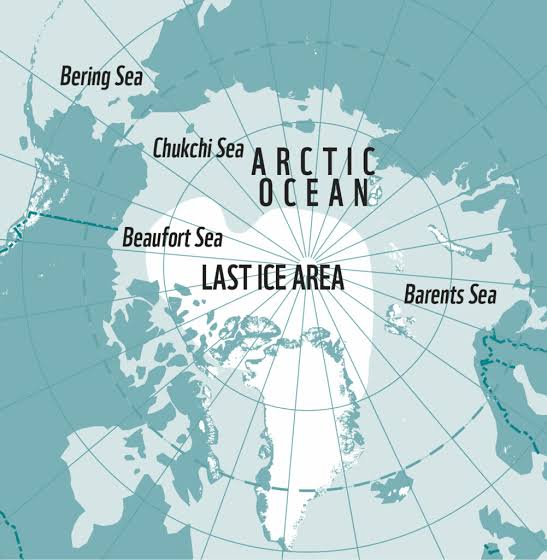
As the Arctic warms at an alarming rate, one vast expanse of sea ice is expected to outlast the rest. But safeguarding this Arctic refuge will require protecting not only the Last Ice Area itself, but the distant waters that sustain it.
Sea ice plays a vital role in the Arctic. It shapes weather patterns, supports marine life, and provides essential travel and hunting routes for northern communities. It also helps cool the planet by reflecting sunlight back into space, acting like a natural air‑conditioning unit for Earth.
But with the Arctic warming nearly four times faster than the global average, sea ice is disappearing at an alarming rate. Scientists warn that the Arctic could be ice‑free in summer within the coming decade — except for one place: the Last Ice Area.
The Last Ice Area is a region north of Canada and Greenland that is expected to retain summer sea ice longer than anywhere else. Covering roughly one million square kilometres, it could become a refuge for multi-year ice, the thick, long‑lasting ice that survives several melt seasons.
This makes the region essential for species that depend on sea ice — from microscopic algae to polar bears —and for Inuit communities whose food security, culture and knowledge are deeply tied to ice.
But the future of this critical refuge depends on decisions made far beyond its borders.
Identifying the origins of the ice in the Last Ice Area reveals just how profoundly connected the Arctic Ocean is. Much of the ice that reaches the Last Ice Area starts its life in the Central Arctic Ocean and surrounding seas, especially the Laptev and East Siberian seas. Winds and currents move this ice around the Arctic Basin until it eventually arrives at the northern coasts of Greenland and Canada.
Changes in those distant waters — termed the “ice shed” by scientists, from warming trends to increased industrial activity — directly affect the strength and stability of the multi-year ice that accumulates in the Last Ice Area.
This interconnectedness is one reason why WWF and its partners are calling for protection measures that extend beyond the Last Ice Area itself.
“The Last Ice Area is often described as the Arctic’s last refuge. But no refuge can endure if the systems that sustain it are left unprotected,” says Vanessa Dick, senior governance lead for WWF’s Global Arctic Programme.
The Last Ice Area is dominated by multi-year ice — ice that has survived at least one summer melt season. As it ages, it becomes thicker and more complex, forming ridges and mounds that create three‑dimensional habitats above and below the surface. These features help buffer underwater noise from ships and provide shelter for algae and other microscopic organisms that form the base of Arctic food webs.
Multi-year ice also supports a wide range of Arctic wildlife. Ringed seals, bearded seals, polar bears and many other species use it for feeding, resting and raising their young.
The Last Ice Area is also critical for Arctic peoples. For Inuit communities, the region is known as Similijuaq, “place of the big ice.” It is a land and seascape of deep cultural meaning, shaped by generations of knowledge about its rhythms and wildlife. Protecting the region means protecting this continuity of knowledge and the communities that depend on it.
The Last Ice Area’s vulnerability lies in its connections. As sea ice retreats, the Central Arctic Ocean is becoming more accessible to shipping, fishing and other industrial activities. But these activities do not occur in isolation —and neither do their impacts. Yet, decisions regarding them are often made sector‑by‑sector or within national boundaries. Protecting the Last Ice Area requires an ecosystem‑based approach that matches the scale of the system itself.
This type of approach means drawing on both science and Inuit Knowledge to understand how the Arctic functions as a single connected ocean. It also means ensuring that the people who know this region best, such as Inuit rightsholders, scientists, policymakers and those who manage Arctic waters, work together to define what long‑term protection should look like.
New international tools could help safeguard the Last Ice Area and the ice shed that sustains it. The United Nations Agreement on the Biodiversity of Areas Beyond National Jurisdiction (BBNJ Agreement), also known as the High Seas Treaty, entered into force in 2026 and offers some hope. It creates the first global framework to protect marine ecosystems in international waters.
But turning that opportunity into effective protection will require cooperation across borders, jurisdictions and sectors.
“Protecting the Last Ice Area is a truly multilateral and international effort that will require courage and innovation from all responsible parties,” says Melanie Lancaster, senior specialist in Arctic species conservation with WWF’s Global Arctic Programme.
The Last Ice Area meets most of the treaty’s criteria for area‑based management tools, including uniqueness, ecological connectivity, vulnerability and importance for threatened species. Because a significant portion of the region’s ice shed lies beyond national jurisdiction, the BBNJ Agreement offers the first legal mechanism capable of coordinating protection across the entire Arctic Ocean.
For now, human activity in the Central Arctic Ocean remains limited. Unregulated commercial fishing is prohibited until at least 2037 under the Central Arctic Ocean Fisheries Agreement, and harsh Arctic conditions still limit shipping and tourism. But as sea ice diminishes, accessibility will increase — and so will the risks to the Last Ice Area.
Canada has already taken concrete steps by designating Tuvaijuittuq, off the northwest coast of Nunavut, as a marine protected area in partnership with the Qikiqtani Inuit Association. But Greenland and Denmark have yet to establish protections for their portion of the Last Ice Area, although emerging international mechanisms could help safeguard the ice shed as a whole.
Protecting the Last Ice Area means thinking beyond its borders. It means acting before rising temperatures and expanding industrial activity reshape the region forever. And it means recognizing that this refuge — the Arctic’s final stronghold — depends on choices made across the entire Arctic Ocean.
WWF-Arctic: The Last Ice Area
Can Arctic wildlife adapt to a warming climate?
Climate Impacts
( Press Release Image: https://photos.webwire.com/prmedia/6/360294/360294-1.jpg )
WebWireID360294
This news content was configured by WebWire editorial staff. Linking is permitted.
News Release Distribution and Press Release Distribution Services Provided by WebWire.