

Xiaomi Makes IFA Debut with Largest-Ever Overseas Booth, Showcasing Its "Human × Car × Home" Smart Ecosystem
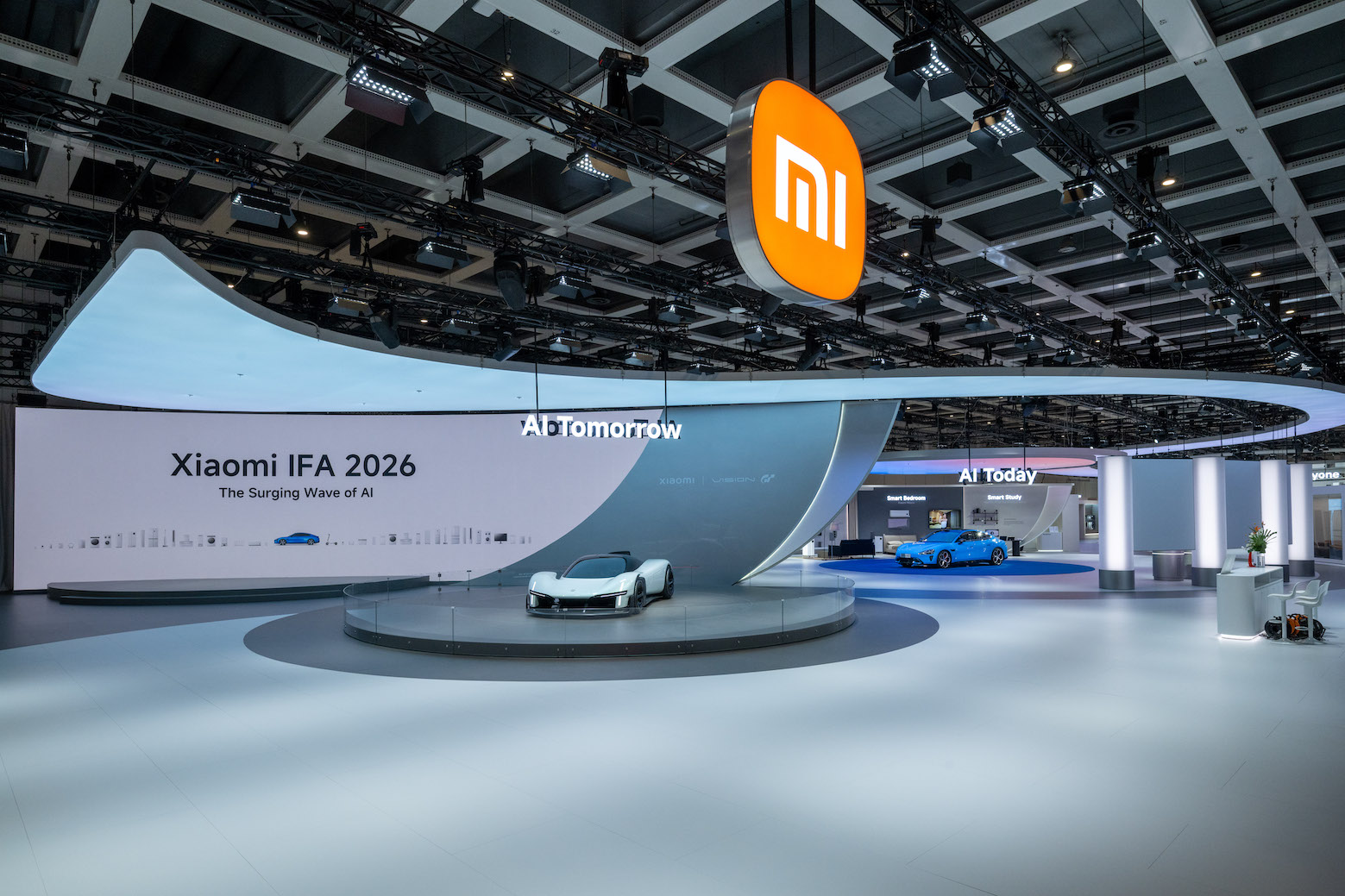
Xiaomi, a global leader in consumer electronics and smart manufacturing, today made its debut at IFA 2026 in Berlin with over 3,300 square meters of exhibition space—its largest standalone overseas exhibition to date.
Bringing together more than 380 products, forward-looking technologies and real-world demonstrations, the exhibition presents the full scope of Xiaomi’s “Human × Car × Home” smart ecosystem across personal, home and mobility spaces. It also demonstrates how AI can coordinate devices and services across different environments to create more intuitive experiences in everyday life.
“This year’s IFA marks a significant milestone in Xiaomi’s global journey,” said Xu Fei, CMO of Xiaomi. “Over the years, we have expanded from smartphones into smart home and smart vehicles, while investing deeply in foundational technologies including AI, operating systems, chips and smart manufacturing. Today, these businesses and capabilities are coming together through our ’Human × Car × Home’ smart ecosystem, which we are presenting at scale to a global audience at IFA.”
“Europe is an important market in Xiaomi’s global strategy,” Fei added. “With Mijia expanding at scale across Europe and Xiaomi Auto expected to enter the European market in 2027, the three core parts of our ’Human × Car × Home’ smart ecosystem — personal devices, smart vehicles and smart home — will begin to come together in the region. This goes beyond bringing more products to Europe. It is about bringing Xiaomi’s technology and ecosystem capabilities to more users across the region.”
Xiaomi’s IFA exhibition is organized around three major areas: AI Tomorrow, AI Today, and Human x Car x Home Product Portfolio. Together, they take visitors from future-facing concepts to intelligent experiences available today and Xiaomi’s broader product portfolio.
AI Tomorrow explores the future of intelligent mobility through Xiaomi Vision Gran Turismo, highlighting new possibilities at the intersection of automotive design, performance technology and digital experiences.
AI Today brings these capabilities into real-world settings. Centered on Xiaomi SU7 Max and home environments including the kitchen, living room, bedroom and study, the area demonstrates how AI can coordinate personal devices, cars and smart home products around everyday needs.
Human x Car x Home Product Portfolio brings together more than 380 products across seven areas: cooking and food storage, home cleaning, air management, audiovisual entertainment, safety and security, personal devices and smart mobility. The showcase reflects the breadth of Xiaomi’s ecosystem, while demonstrating how shared technologies, system-level capabilities, and a consistent design language can create more coordinated experiences across different devices and categories.
Xiaomi’s “Human x Car x Home” smart ecosystem is a user-centered intelligent ecosystem that connects personal devices, smart vehicles and smart home products. Going beyond simple device connectivity, it uses AI and Xiaomi HyperOS to enable devices and services to work together across products and scenarios, delivering more intuitive, seamless and smart experiences that respond to users’ real-life needs.
After three years of continued development, “Human × Car × Home” smart ecosystem has established a strong foundation at scale. Xiaomi’s global smartphone shipments have ranked among the top three for 24 consecutive quarters, while Xiaomi’s tablet shipments ranked fourth globally, marking the 9th consecutive quarter among the global top five, and shipments of its wearable bands (including smart bands and smartwatches) ranked No. 2 globally.¹ Xiaomi Auto has delivered more than 700,000 vehicles in the Chinese Mainland within two years of entering the market,² while Xiaomi YU7 surpassed 240,000 locked-in orders on its first day. At the same time, Xiaomi has built a world-leading consumer AIoT platform, with more than 1.1 billion connected devices (excluding smartphones, tablets, and laptops), serving more than 175 million users and households worldwide.¹ This accumulated scale of products, technology, and ecosystem capabilities provides a strong foundation for bringing “Human x Car x Home” smart ecosystem from vision into everyday life.
As AI continues to evolve, intelligent experiences are moving beyond device connectivity toward a new stage of understanding user needs and providing more proactive services. Xiaomi believes the next step for AI should go beyond answering questions on a screen. More importantly, AI should be able to better understand real-world context and, with user authorization and control, coordinate devices to help complete real-world tasks.
“Human x Car x Home” smart ecosystem provides an important foundation for this transition. By connecting smartphones, cars, and smart home devices around the same user, the ecosystem provides a foundation for AI to understand context across different scenarios and coordinate multiple devices to complete tasks, moving intelligent experiences beyond responding to commands toward understanding intent and providing more proactive assistance.
At IFA, Xiaomi shows how its “Human × Car × Home” smart ecosystem can make technology work more naturally in everyday life. As a user drives home, the system can use contextual information such as time, location and weather conditions to proactively adjust lighting and air conditioning before they arrive. At home, a simple request such as “Print the photo I just took” can enable multiple devices to work together to complete the task, while other scenarios demonstrate how lighting, curtains and temperature can coordinate around activities such as reading. Together, these experiences illustrate Xiaomi’s vision for the next generation of intelligent experiences: moving beyond individual device control toward AI that can understand context and user intent, coordinate devices across scenarios, and make technology more useful in the physical world — always with users in control.
Behind Xiaomi’s cross-device and cross-scenario experiences is a technology foundation built through long-term investment in AI, operating systems, chips and smart manufacturing. Together with Xiaomi HyperOS, these capabilities enable deeper hardware-software integration across smartphones, cars, smart home devices and emerging form factors, supporting more consistent and intelligent experiences across Xiaomi’s ecosystem.
In AI, Xiaomi continues to advance its in-house large-model capabilities. Recent developments including MiMo-V2.5-Pro, Xiaomi Miloco and Xiaomi Miclaw are further strengthening AI capabilities in understanding, reasoning and execution, exploring how AI can move from answering questions toward assisting with more complex real-world tasks.
Smart manufacturing, meanwhile, enables Xiaomi to translate technological innovation into product capabilities at scale. Xiaomi has built smart manufacturing capabilities across three major product areas in mainland China: smartphones, cars and home appliances. Xiaomi Smart Factory has an annual production capacity of approximately 10 million flagship smartphones, while Xiaomi Smart Factory: Wuhan integrates R&D, production and validation and is equipped with 46 laboratories. At peak production speed, one air conditioner can roll off the production line every 6.5 seconds. Alongside this, Xiaomi is exploring the use of humanoid robots in its manufacturing chain, with tasks such as nut tightening at Xiaomi Auto Factory showing an improvement in success rate from approximately 90% to 98% within four months.
Xiaomi also continues to invest in its in-house chip capabilities, focusing on key technologies that shape core product experiences and long-term competitiveness. Through innovations in computing architecture, NPUs, and other technologies, Xiaomi is strengthening core experiences in on-device AI, performance, and power efficiency. At IFA, Xiaomi also showcases its new AI computing foundation for “Human × Car × Home” smart ecosystem, demonstrating how its latest computing capabilities can support AI experiences across devices and scenarios. Also on display is Xiaomi 18 Fold, the first flagship smartphone powered by the next-generation Xiaomi XRING O3 chip, highlighting Xiaomi’s latest exploration of mobile computing, foldable form factors and on-device intelligence.
Also on display at IFA, Xiaomi CyberOne interacts with visitors through real-time gestures such as finger hearts and thumbs-ups. Beyond the exhibition floor, Xiaomi CyberOne is also undergoing trials at Xiaomi Auto Factory, where its capabilities are being tested and validated through real-world manufacturing tasks. By using its own manufacturing environments as a testing ground, Xiaomi is continuing to refine Xiaomi CyberOne’s capabilities in perception, control and task execution while exploring the practical potential of humanoid robots in smart manufacturing.
Xiaomi Auto brings the mobility dimension of the “Human × Car × Home” smart ecosystem onto the show floor, with three vehicles on display that trace its journey from future-facing concept to today’s intelligent driving experience.
At the center of the automotive display is Xiaomi Vision Gran Turismo, a visionary electric hypercar concept created for the legendary Gran Turismo franchise, with Xiaomi becoming the first technology company to join the Vision Gran Turismo program. Conceived as a virtual concept car, it reimagines the future of automotive design, aerodynamics and intelligent interaction, exploring possibilities free from the constraints of the physical world. Shaped entirely by airflow, its “Shaped by the Wind” exterior pairs a teardrop cockpit with an Active Wake Control System, while a “Racing on a Sofa” cabin and the ring-shaped Xiaomi Pulse assistant offer a glimpse of how design, performance technology and intelligent interaction could come together in the future.
The display also features new-generation Xiaomi SU7 and Xiaomi SU7 Ultra. New-generation Xiaomi SU7, positioned as a driver’s car for a new era, reflects Xiaomi Auto’s approach to the smart electric sedan, combining an elegant, sporty design language with deep integration into Xiaomi HyperOS and the wider smart ecosystem, so that the car connects naturally with users’ personal devices and smart home. Xiaomi SU7 Ultra is Xiaomi Auto’s high-performance flagship, extending the company’s engineering capabilities validated at the Nürburgring Nordschleife, where the production Xiaomi SU7 Ultra set the official record in the “Electric Executive Car” category in April 2025.
Beyond the individual vehicles, the automotive display reflects how Xiaomi Auto extends Xiaomi’s intelligent experiences onto the road, making the car an integral part of the “Human × Car × Home” smart ecosystem. Since delivering its first vehicle in March 2024, Xiaomi Auto has delivered more than 700,000 vehicles in the Chinese Mainland, bringing the mobility dimension of the ecosystem to life. At IFA Berlin, Xiaomi Auto also signed MoUs with the first batch of eight leading German automotive dealer groups, taking a first step toward building its European retail and service network ahead of its planned entry into European markets, including Germany, in 2027.
At IFA 2026, Xiaomi announced the large-scale expansion of Mijia, its smart home brand, across Europe. Under the positioning of “The Art of Smart Living,” Mijia brings together human-centric intelligence, proven quality and essential design to create smart home experiences that feel more natural, intuitive and dependable in everyday life. The expansion brings a broader range of Mijia products and experiences to European users, strengthening the home dimension of Xiaomi’s “Human × Car × Home” smart ecosystem in the region.
Mijia’s approach goes beyond adding connectivity to individual appliances. Xiaomi sees the smart home evolving from connected devices toward greater coordination across the home, with devices responding more naturally to different users, environments and scenarios. Through Xiaomi Home app, compatible Mijia products can be managed through a unified platform and work together across household scenarios, always with user authorization and control at the center of the experience. Together, these capabilities reflect a broader shift in the smart home — from intelligence within individual devices toward more integrated, system-level experiences.
Today, Mijia covers over 2,000 products across more than 130 product categories, all connected through a shared ecosystem. Building on Xiaomi’s capabilities in AI, operating systems, and IoT connectivity, Mijia integrates intelligence into traditional home appliances to create a smarter, more intuitive, and more seamless daily life.
Design is equally central to the Mijia experience. Guided by Xiaomi’s “Alive” design philosophy, Mijia uses a simple, natural and approachable design language to create consistency across products while allowing technology to integrate naturally into contemporary living spaces. To date, Mijia products have received more than 500 international design awards.
As Mijia expands at scale across Europe, Xiaomi will continue strengthening its products and services for the home, bringing more integrated and intelligent experiences to users across the region. Through this expansion, Xiaomi aims to bring AI further beyond the digital world and into everyday life, making intelligent services a more natural part of how people live.
Europe is an important market in Xiaomi’s global strategy and a key region for the continued expansion of its “Human × Car × Home” smart ecosystem. Xiaomi will continue deepening its long-term commitment to Europe by strengthening its local R&D, product, retail and service capabilities to support sustainable growth in the region and better serve European users.
From 2026 to 2030, Xiaomi expects its global R&D investment to exceed EUR 24 billion,³ with investment spanning AI, operating systems, in-house semiconductor capabilities, smart vehicles, robotics and smart manufacturing. By investing across these foundational technologies, Xiaomi is building capabilities that can be shared across products and categories — from personal devices and the home to mobility — and translated into better products and more integrated experiences for users.
Looking ahead, Xiaomi will continue combining long-term investment with deeper localization across global markets. Through its “Human × Car × Home” smart ecosystem, Xiaomi aims to connect personal, home and mobility spaces, bring AI into more real-world scenarios, and make intelligent technology a more natural and useful part of everyday life for users around the world.
¹ According to Omdia data for Q2 2026.
² Xiaomi Internal Data, accounting for all Xiaomi Auto models delivered by March, 2026.
³ The figure is converted from RMB at an exchange rate of EUR 1 = RMB 8.33.
Xiaomi Corporation was founded in April 2010 and listed on the Main Board of the Hong Kong Stock Exchange on July 9, 2018 (1810.HK). Xiaomi is a consumer electronics and smart manufacturing company with smartphones, smart hardware, and smart electric vehicles connected by an IoT platform at its core.
Embracing our vision of “Make friends with users and be the coolest company in the users’ hearts”, Xiaomi continuously pursues innovations, high-quality user experience and operational efficiency. The Company relentlessly builds amazing products with honest prices to let everyone in the world enjoy a better life through innovative technology.
Xiaomi is one of the world’s leading smartphone companies. In June 2026, the MAU reached 766.5 million (including smartphones and tablets) globally. The Company has also established the world’s leading consumer AIoT (AI+IoT) platform. As of June 30, 2026, the number of IoT devices connected to its platform (excluding smartphones, laptops, and tablets) reached 1,160.8 million. In October 2023, Xiaomi upgraded its strategy to “Human × Car × Home” smart ecosystem, seamlessly merging personal devices, smart home products, and cars. The Company has rapidly emerged as a leading innovator in the smart electric vehicle industry, reaching profitability within six quarters of commencing deliveries and delivering over 600,000 units by February 2026. Xiaomi always centers on humanity and is committed to providing comprehensive, better connected experiences. Xiaomi products are present in more than 100 countries and regions around the world. In July 2026, Xiaomi was included in the Fortune Global 500 list for the eighth year in a row, ranking 232nd.
Xiaomi is a constituent of the Hang Seng Index, Hang Seng China Enterprises Index, Hang Seng TECH Index and Hang Seng China 50 Index.
( Press Release Image: https://photos.webwire.com/prmedia/8/360036/360036-1.jpg )
WebWireID360036
This news content was configured by WebWire editorial staff. Linking is permitted.
News Release Distribution and Press Release Distribution Services Provided by WebWire.