

George D. Robson Presents a Practical Roadmap for Turning Risk into Opportunity in “How to Handle Risk! Wide Open to Success”
In a world where uncertainty, difficult decisions, and unexpected challenges are part of everyday life, author George D. Robson offers readers a practical approach to managing risk in his book, “How to Handle Risk! Wide Open to Success!”
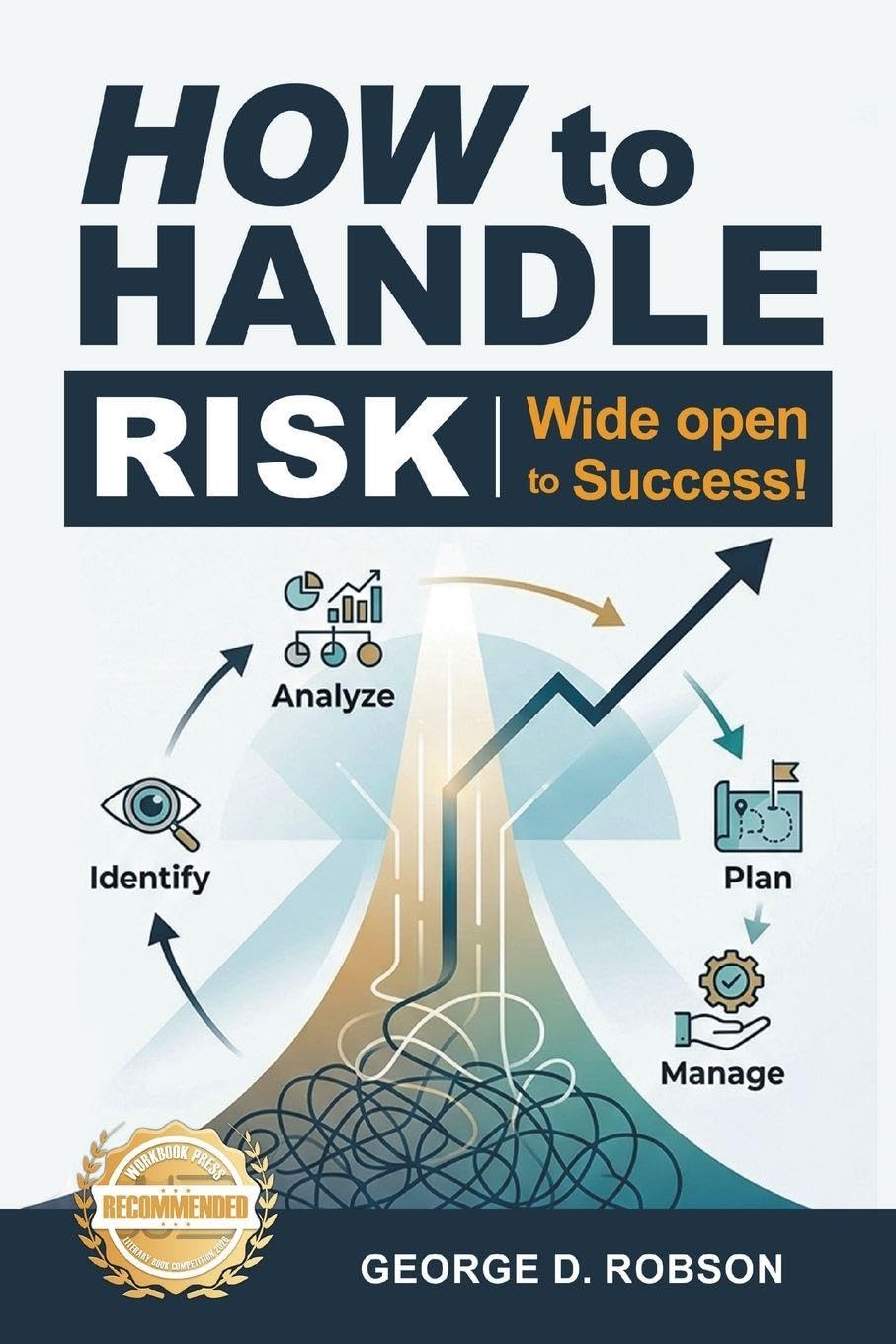
“Risk doesn’t have to stand in the way of success—it can become the pathway to it. George D. Robson’s How to Handle Risk! Wide Open to Success! provides a practical, four-step approach to identifying, analyzing, planning, and managing risk, helping readers replace uncertainty with objective thinking and confident decision-making.”
In a world where uncertainty, difficult decisions, and unexpected challenges are part of everyday life, author George D. Robson offers readers a practical approach to managing risk in his book, “How to Handle Risk! Wide Open to Success!”
Rather than presenting risk management as a complicated collection of formulas or financial models, Robson introduces a straightforward philosophy built around common sense harnessed in a simple process. His approach is designed to help readers move from subjective reactions and uncertainty toward objective analysis, deliberate planning, and effective action.
At the heart of the book is a four-step methodology: Identify, Analyze, Plan, and Manage. Readers are guided through each stage with process maps, checklists, examples, and practical applications designed to make the concepts easier to understand and implement.
One of the book’s strengths is its emphasis on applicability beyond the corporate environment. Although Robson initially developed the material with business leaders and project managers in mind, he explains that the process can also be applied to personal decisions and everyday challenges. From managing projects and business issues to evaluating major personal purchases, the methodology encourages readers to identify concerns, evaluate probability and impact, establish priorities, and take corrective action.
Robson draws upon his professional experience at General Electric, where he developed and applied the risk management process. The book traces the origins of the methodology to challenges faced at GE Aircraft Engines and describes how the process was integrated into new product introduction and continuous process improvement efforts. According to the author, its implementation helped reduce product-to-market cycle time by nearly 50 percent while meeting cost and customer expectations.
The book also demonstrates how the methodology can be applied outside traditional business settings. One example follows a solar-power project involving schools in six villages in Mexico. The team used Robson’s process to identify concerns, establish assessment criteria, and address potential problems before they could threaten the project’s success.
Another particularly accessible example is the book’s used-car exercise, which shows how risk management can help families make decisions objectively rather than allowing competing preferences and emotions to dominate. Readers are encouraged to establish needs and boundaries, analyze options according to probability and impact, prioritize risks, assign actions, and validate the results before making a final decision.
A recurring message throughout “How to Handle Risk!” is that identifying a problem is only the beginning. Robson encourages readers to document issues, prioritize them, assign responsibility, and continuously monitor progress. The process is presented as something that should become part of the way individuals and organizations naturally operate rather than an additional administrative burden.
The book is especially relevant for business leaders, project managers, teams, entrepreneurs, decision-makers, and individuals facing important personal choices. It can also be a textbook in the vast, fertile world of education. Its practical orientation and emphasis on checklists and repeatable steps make it a resource intended not merely to be read, but to be applied.
Ultimately, “How to Handle Risk! Wide Open to Success!” delivers a simple yet disciplined message: uncertainty does not have to dictate the outcome. By identifying risks, analyzing them objectively, planning appropriate responses, and managing those actions through completion, readers can approach challenges with greater clarity, confidence, and purpose.
George D. Robson’s book is an invitation to stop merely talking about problems and start managing them—with a process designed to turn uncertainty into informed action and risk into a pathway toward success.
( Press Release Image: https://photos.webwire.com/prmedia/72702/359975/359975-1.jpg )
WebWireID359975
 Decision-making
- Contact Information
- Paul Stewart
- Marketing Manager
- WorkBook Press
- Contact via E-mail
This news content may be integrated into any legitimate news gathering and publishing effort. Linking is permitted.
News Release Distribution and Press Release Distribution Services Provided by WebWire.