

IAA Transportation 2026: How Bosch is shaping freight transport today and tomorrow
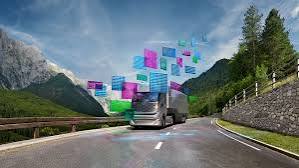
Bosch innovations for the software-defined truck
- E-axles, fuel cells, and hydrogen engines: Bosch is driving the transition away from fossil fuels in the trucking industry worldwide.
- With sensor technology and redundant steering systems, Bosch is paving the way for automated driving functions in freight transport as well.
- Centralized vehicle architectures and high-performance vehicle computers are laying the foundation for software-defined commercial vehicles.
Bosch is shaping the transition to software-defined commercial vehicles with a broad portfolio of technologies for powertrains, thermal management, chassis, automation, connectivity, and digital services. The company’s latest innovations help vehicle manufacturers and fleet operators tackle the industry’s most pressing challenges, from decarbonization and traffic safety to the increasing complexity of software and systems in modern commercial vehicles.
As a system partner, Bosch provides custom solutions that, through software and artificial intelligence, encompass both the hardware in the vehicle and the digital control system. In May 2026, Bosch announced its plans to establish a new joint venture by the end of the year in collaboration with the two subsidiaries of the TSF Group, namely Brakes India Private Limited (BIPL) and Wheels India Limited (WIL). The establishment of the new company is still subject to official approval. Through the new joint venture, Bosch aims to expand its portfolio to include smart actuators for compressed air generation, compressed air treatment, air suspension, and parking brakes. The goal is to strengthen the company’s position in the commercial vehicle segment and to further advance the development of software-defined commercial vehicles and connected transportation solutions.
Electric powertrain: Bosch is electrifying both light- and heavy-duty commercial vehicles, from individual components to complete systems solutions. Its new rigid e-axle integrates core components of the electric powertrain like the electric motor and transmission into a solution for commercial vehicles weighing 18 to 49 metric tons. The axle reduces the vehicle’s weight and also operates more efficiently than a conventional electric center drive. When combined with silicon carbide inverters, which feature an efficiency of up to 99 percent, the rigid e-axle significantly reduces operating costs in freight transport. A global manufacturing and supply network also ensures reliable delivery directly to sites in all relevant markets.
High-voltage motor-driven fan: Efficient thermal management is crucial for the range and performance of electric commercial vehicles. To this end, Bosch is introducing a new high-voltage blower module for 800-volt architectures, which the company has developed specifically for electric commercial vehicles and off-highway applications. The solution provides on-demand cooling for key vehicle components, reduces energy consumption, and thus helps increase range and efficiency.
Fuel-cell systems for buses and trucks: As a locally emission-free powertrain solution for commercial vehicles, fuel cells use hydrogen and oxygen to produce water and electricity. Compared to a purely battery-electric powertrain, this technology offers advantages such as lower system weight, longer ranges, and quick refueling times. Bosch’s portfolio of compact, highly integrated fuel-cell systems covers a power spectrum from 100 to 300 kilowatts. This enables the operation of city buses, long-haul trucks, and stationary applications.
Hydrogen engines as alternative powertrain: Since 2025, Bosch has been supplying various test vehicles and fleets worldwide with, among other things, injectors, control units, and sensors for direct and intake manifold injection, as well as components for hydrogen tank systems. Because this powertrain solution is based on established architectures, automakers can still use their existing development and production lines. In addition, the hydrogen engine conserves resources because it requires virtually no raw materials that are difficult to source, such as rare earth elements or precious metals. Bosch also offers solutions for other alternative fuels, such as natural gas/methane, ethanol, and methanol, which have often been developed for specific regions or applications.
Bosch’s digital carbon certificate: Organic and electricity-based synthetic fuels reduce carbon emissions from existing fleets and commercial vehicles that are difficult to electrify. Bosch provides fleet operators who use renewable synthetic fuels such as hydrotreated vegetable oil (HVO) with a digital fuel twin. This cloud-based software function automatically tracks the use of alternative fuels and documents the resulting reduction in emissions.
Integrated drowsiness detection in the side mirror: As of mid-2026, the EU requires all newly registered trucks to be equipped with sensor-based driver warning systems to prevent accidents caused by inattention or fatigue. Bosch is implementing the EU regulation particularly efficiently: a camera integrated into the left display of Bosch’s digital side mirror monitors the driver’s attention, eliminating the need for manufacturers to install a separate unit. Two European truck manufacturers are already equipping their vehicles with this solution as standard. A separate control unit is still needed to process the image data, but in the future, a central domain controller will handle this task.
Sensor data fusion directly in the camera: Modern trucks already use multiple video and radar sensors to track their surroundings. Bosch’s MPC4 multipurpose camera is the first to enable data fusion from the camera’s numerous surround sensors. Compared to the previous model, Bosch has increased the computing power by a factor of twenty and is using artificial intelligence (AI) to improve assistance systems such as lane-departure warning and emergency brake assist. The system, which is specifically designed for the commercial vehicle environment, will go into production in 2027.
Radar technology with its own chip architecture: Alongside the camera, Bosch will introduce its new seventh-generation radar sensor in 2027. The sensor uses waveguide antenna technology and a processing chip (system on a chip, SoC) manufactured in-house, while AI algorithms optimize signal quality. The technology adapts flexibly to various E/E architectures, from traditional domain control units to high-performance computers that will define the software-defined truck of the future.
Predictive driving and simplified access: Connecting commercial vehicles to the cloud enables new safety and convenience functions. For example, Bosch’s connected map services analyze real-time data on accidents, wrong-way drivers, and hydroplaning to proactively control driver assistance systems. The fleet management xtended access system, in turn, controls vehicle access using a physical key and a smartphone app. The digital key simplifies fleet scheduling for fleet managers.
Vehicle computers for software-defined commercial vehicles: To manage the increasing complexity of modern trucks, Bosch is developing central E/E architectures with powerful and scalable vehicle computers. The cockpit integration platform, for example, brings together all functions for driver interaction – from operating the infotainment system to other cockpit applications. For cross-domain functions, Bosch offers additional solutions such as its vehicle integration platform, which combines functions from the motion, energy, and body domains on a central computing platform. These high-performance computers enable the transition to software-defined commercial vehicles by supporting fast over-the-air software updates and advanced features such as secure gateways and other on-demand features.
The ETAS software platform for software-defined commercial vehicles: The Bosch subsidiary ETAS offers a vehicle software platform suite, which provides a stable and secure basis for the efficient development and management of scalable vehicle architecture. Based on the open-source initiative Eclipse S-CORE, it supports all modern vehicle architectures – from classic control units to powerful computers and platforms for assisted and automated driving. Customers can use it to efficiently create state-of-the-art vehicle platforms and market them more quickly.
Diagnostic solution from ETAS: The Bosch subsidiary ETAS is introducing next-generation vehicle health and repair, a service-oriented diagnostic approach based on the ASAM SOVD standard. This system pools vehicle data, diagnostic functions, and service information to quickly identify complex faults in software-defined commercial vehicles. This allows workshops to plan and prepare for repairs more effectively, reduce downtime, and increase the first-time fix rate – that is, successfully complete repairs during the customer’s first visit to the shop. At the same time, the diagnostic data collected is fed directly back into development and quality assurance, thereby contributing to the continuous improvement of the vehicles.
ServoE – fully electric steering: Bosch’s ServoE electromechanical system steers heavy-duty commercial vehicles using only electric power and requires no oil, which simplifies factory installation. The power-on-demand function reduces the vehicle’s energy consumption during operation. Thanks to its redundant design and a cybersecure software architecture, the system enables assisted steering functions all the way up to automated driving. In addition, ServoE paves the way for future steer-by-wire technologies without a mechanical connection between the steering wheel and the wheels.
Servotwin – electrohydraulic steering system: The Servotwin electrohydraulic steering system for heavy commercial vehicles combines a hydraulic Servocom steering system with scalable electrical servo units. Its cybersecure software architecture reliably controls SAE Level 2 steering assistance and driver assistance functions. In this way, Bosch significantly improves driving comfort and safety on long-haul trips.
Rear-axle steering for a smaller turning radius: Bosch’s electrohydraulic rear-axle steering system, as a standalone power-on-demand system, steers up to three or more leading or trailing heavy-truck axles. The additional axle steering reduces the turning radius and helps prevent premature tire wear. Thanks to its compact design, the system fits into all standard powertrains and trailer applications.
Compact, low-friction steering shaft: The modular steering shaft connects the steering mechanism to the steering column in buses as well as in medium- and heavy-duty commercial vehicles. The mechanical component fully compensates for relative movements between the cab and the chassis while driving without affecting steering behavior. In addition, this weight-optimized component features a highly compact design and minimal internal friction.
Airbag control units for enhanced occupant safety: Bosch protects the occupants of heavy-duty trucks in the event of a collision with an airbag system specifically tailored to this market segment. In electric commercial vehicles, the 24-volt system ensures that the high-voltage battery is automatically disconnected from the vehicle’s electrical system in the event of an accident. This protects occupants and emergency responders alike from hazards such as electric shock or fire. The control unit also records accident data in the integrated event data recorder and transmits crash information in real time to the vehicle’s internal network via the J1939 protocol.
****
Mobility is the largest Bosch Group business sector. It generated sales of 55,8 billion euros in 2025, and thus contributed around 61 percent of total sales. This makes the Bosch Group one of the leading mobility suppliers of technology and services. Bosch Mobility pursues a vision of mobility that is safe, sustainable, and exciting. For its customers, the outcome is integrated mobility solutions. The business sector’s main areas of activity are electrification, software and services, semiconductors and sensors, vehicle computers, advanced driver assistance systems, systems for vehicle dynamics control, repair-shop concepts, as well as technology and services for the automotive aftermarket and fleets. Bosch is synonymous with important automotive innovations, such as electronic engine management, the ESP anti-skid system, and common-rail diesel technology.
The Bosch Group is a leading global supplier of technology and services. It employs roughly 413,000 associates worldwide (as of December 31, 2025). The company generated sales of 91 billion euros in 2025. Its operations are divided into four business sectors: Mobility, Industrial Technology, Consumer Goods, and Energy and Building Technology. With its business activities, the company aims to use technology to help shape universal trends such as automation, digitalization, electrification, and artificial intelligence. In this context, Bosch’s broad diversification across regions and industries strengthens its innovativeness and robustness. Bosch uses its proven expertise in hardware, software, and services to offer customers cross-domain solutions from a single source. It also applies its expertise in connectivity and artificial intelligence in order to develop and manufacture intelligent, user-friendly, and sustainable products. With technology that is “Invented for life,” Bosch wants to help improve quality of life and conserve natural resources. The Bosch Group comprises Robert Bosch GmbH and its roughly 500 subsidiary and regional companies in over 60 countries. Including sales and service partners, Bosch’s global manufacturing, engineering, and sales network covers nearly every country in the world. Bosch’s innovative strength is key to the company’s further development. Bosch employs some 82,000 associates in research and development.
Additional information is available online at www.bosch.com, www.bosch-press.com.
( Press Release Image: https://photos.webwire.com/prmedia/6/359867/359867-1.jpg )
WebWireID359867
This news content was configured by WebWire editorial staff. Linking is permitted.
News Release Distribution and Press Release Distribution Services Provided by WebWire.