

Pacific Islands Advance Regional Geohazard and Tsunami Resilience at Honiara Meeting
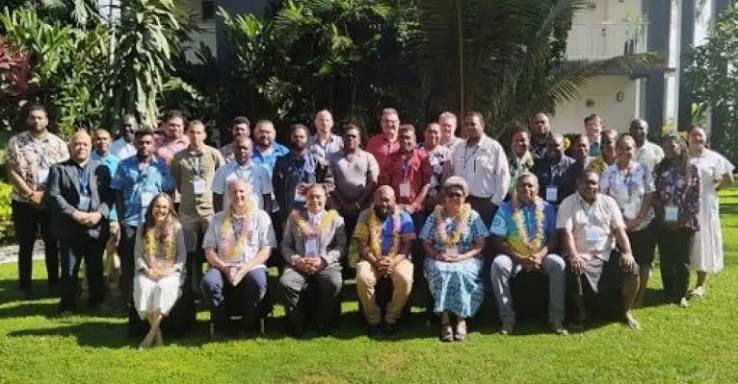
Representatives from Pacific Island Countries and Territories, regional organisations, and international technical partners convened in Honiara, Solomon Islands, from 10 to 14 August 2026 for the Annual Meeting of the Oceania Regional Seismic Network (ORSNET), the 11th Meeting of the Pacific Tsunami Warning and Mitigation System (PTWS) Regional Working Group for Pacific Island Countries and Territories (WG-PICT), and the Third Regional Geohazards Meeting.
The week-long gathering focused on strengthening regional cooperation to enhance earthquake, tsunami, volcano, and landslide monitoring, early warning, preparedness, and resilience across the Pacific. Hosted in Solomon Islands, the meeting brought together representatives from Papua New Guinea, Solomon Islands, Vanuatu, Fiji, Tonga, French Polynesia and New Caledonia, alongside technical and development partners, to review regional progress, identify emerging challenges, and agree on priority actions for the period 2026–2030.
The discussions underscored the growing need for a coordinated, multi-hazard approach to early warning systems in a region highly exposed to earthquakes, tsunamis, volcanic eruptions, and landslides. Participants highlighted persistent challenges including limited technical capacity, incomplete monitoring coverage, equipment maintenance constraints, and uneven access to real-time geophysical data.
A key outcome of the meeting was the endorsement of priority actions to strengthen the Oceania Regional Seismic Network (ORSNET), including improved seismic data sharing, enhanced interoperability, workforce development, and greater investment in maintaining critical monitoring infrastructure. Participants agreed on the establishment of an ORSNET Technical Working Group to support regional standards, data governance, operational procedures, and technical coordination among member countries.
The meeting also validated implementation priorities for ORSNET, the Oceania Regional Volcano Network (ORVNET), and the Oceania Regional Landslide Network (ORLNET), emphasizing the importance of strengthening monitoring networks, expanding technical training, improving metadata and information management, and supporting national early warning systems through enhanced scientific cooperation.
Participants further endorsed the continued development of a formal Regional Geohazards Network, which will provide a coordinated platform for seismic, volcano, landslide, and tsunami-related collaboration across the Pacific. The network aims to strengthen governance, interoperability, technical capacity, and resource mobilization to support hazard monitoring and early warning services throughout the region.
The 11th Meeting of WG-PICT reviewed progress under the Pacific Tsunami Warning and Mitigation System and assessed regional priorities for strengthening tsunami preparedness and resilience. Participants examined progress against the 2025 PTWS Capacity Gap Assessment and discussed actions to improve tsunami monitoring, warning dissemination, response planning, and operational coordination across Pacific Island Countries and Territories.
The meeting highlighted advances in national tsunami response planning, including validation of Fiji’s updated tsunami response arrangements, increased seismic data sharing to the Pacific Tsunami Warning Centre, and ongoing hazard assessment activities supported by regional and international partners. Special attention was given to strengthening national tsunami warning systems through improved coordination between meteorological services, geohazard agencies, disaster management offices, and national tsunami warning centres. Participants emphasized the importance of 24-hour operational capability, automated warning technologies, and decision-support tools to improve the speed and effectiveness of tsunami warnings.
Participants also discussed preparations for Exercise Pacific Wave 2026 (PacWave 2026), the Pacific-wide tsunami exercise scheduled to coincide with World Tsunami Awareness Day. This exercise will include scenarios involving tsunamis generated by volcanic activity and will provide an opportunity for countries to test communication mechanisms, standard operating procedures, and regional information-sharing arrangements.
Building on lessons from the 2022 Hunga Tonga-Hunga Ha’apai eruption, the exercise will support efforts to improve preparedness for volcanic tsunami hazards and enhance regional coordination among tsunami warning stakeholders.
Capacity development emerged as a major theme throughout the week. WG-PICT members reviewed the development of a new PTWS Minimum Competency Training Programme designed to strengthen operational capabilities of tsunami warning personnel. Participants also explored opportunities to align training with accredited educational frameworks through regional institutions, including the Regional Training Centre in Nadi and the University of the South Pacific.
The meeting reaffirmed support for the UNESCO-IOC Tsunami Ready Recognition Programme, recognising its role in strengthening community preparedness and reducing tsunami risk across coastal communities in the Pacific. Participants called for continued investment in public awareness, preparedness activities, evacuation planning, and regular exercises to build long-term resilience.
The outcomes of the meeting contribute directly to regional efforts under the Early Warnings for All initiative and broader Pacific resilience frameworks. Participants emphasized the need for sustainable financing, stronger partnerships, and long-term investment in geohazard monitoring infrastructure, scientific expertise, and workforce development.
By strengthening cooperation across ORSNET, WG-PICT, ORVNET, and ORLNET, Pacific countries and partners are advancing a shared vision of more integrated, reliable, and people-centred early warning systems capable of protecting lives and livelihoods from geohazard risks.
These series of meetings were supported by the Government of Solomon Islands, The Pacific Community (SPC) through the European Union funded “Building Safety and Resilience in the Pacific Phase II Project” and United States Geological Survey (USGS), SPREP Weather Ready Programme (WRP), UNDRR and UNESCO-IOC.
( Press Release Image: https://photos.webwire.com/prmedia/6/359529/359529-1.jpg )
WebWireID359529
This news content was configured by WebWire editorial staff. Linking is permitted.
News Release Distribution and Press Release Distribution Services Provided by WebWire.