

The 50th Anniversary of Spain in Freedom endeavour organises the special programme ’Youth, cinema, memory and democracy’ at the San Sebastián Festival
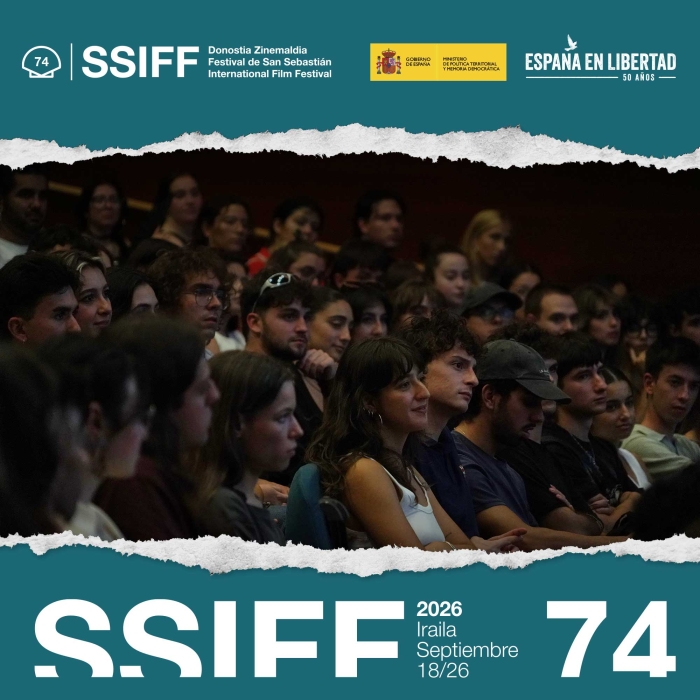
The Festival will host the premiere of the RTVE documentary ’Cuelgamuros, entre lo dificil y lo imposible’ and will strengthen its commitment to culture as a fundamental element for developing memory among the young audience
This year the Anniversary will screen ’Rocío’ (1980), the documentary by Fernando Ruiz Vergara censored during the Transition
Some fifteen titles on the Festival programme, including ’La bola negra / The Black Ball’, ’Fatherland’ and ’Ruega por nosotras / Pray for Us’ will carry the ’Youth, cinema, memory and democracy’ stamp
The San Sebastián Festival and the Commissioner for the Holding of the 50th Anniversary of Spain in Freedom has this year renewed its collaboration agreement, under which they jointly organise an extensive programme to include the premiere of titles such as the RTVE documentary Cuelgamuros, entre lo difícil y lo imposible and the recovery of Rocío (1980), a non-fiction by Fernando Ruiz Vergara censored during the Transition, whose screening will be accompanied by a podcast and by the documentary Caja de resistencia.
As a result of this collaboration, the Festival and the Commissioner have selected some fifteen films from the different sections of the Festival to be screened with the Youth, cinema, memory and democracy stamp . Their screening will enable a debate on issues such as immigration, minors’ rights and civil rights in general, the arrival of democracy to Europe after Nazism and the rights of sexual minorities. Recommended among the films bearing the stamp are some of those to have enjoyed acclaim this year, such as La bola negra / The Black Ball, by Javier Calvo and Javier Ambrossi, and Fatherland, from Pavel Pawlikowski, as well as premieres such as Ruega por nosotras / Pray For Us, by Daniel Monzón. A good many of the showings on this programme will be attended by the directors and artistic teams of the films and/or experts in the subjects addressed, as well as a mediation and sign language interpretation service.
Cuelgamuros, Europe’s biggest mass grave
By virtue of this agreement, San Sebastián will host the absolute premiere of Cuelgamuros, entre lo difícil y lo imposible, an RTVE documentary narrating, for the first time, the process of exhuming the victims of the Civil War demanded by their families and buried, by order of the Franco regime and many against their will, in the Cuelgamuros Valley, Europe’s biggest mass grave. The documentary follows the forensic work carried out on request by the families, with the accompaniment of an advisory scientific committee made up of the specialists who participate in the work, and highlights the principles of truth, justice and reparation that guide the democratic memory policy.
’Rocío’, the last film censored
Thanks to this collaboration, three activities have been organised around Rocío, the documentary by Fernando Ruiz Vergara on the pilgrimage in honour of Our Lady of Rocío filmed from 1976 to 1978 and released in 1980. The film includes testimonials of repression during the Franco regime in the region of Almonte (Huelva), which pointed towards José María Reales Carrasco as the person responsible for around a hundred murders (99 men and one woman) during the repression of the Civil War in the municipality.
- Screening of Rocío in its uncut version. The film was legally censored shortly after its release, thereby driving its director into exile in Portugal and effectively cutting short his career. More than four decades later, its uncut screening in San Sebastián joins the exercise of cinematic reparation launched by the Commissioner and the Festival last year with the homage to Canciones para después de una guerra / Songs for After a War, by Basilio Martín Patino, also censored in its day.
- Live podcast. The uncut screening of Rocío will be accompanied by the live podcast Jornaleros. Cara A: Rocío, by the journalist Isabel Cadenas Cañón, winner of the Premio Ondas for this work included in the series De eso no se habla.
- Caja de resistencia. The documentary Caja de resistencia, directed by Alejandro Alvarado and Concha Barquero, based on the works left unfinished by Fernando Ruiz Vergara after the legal censorship of Rocío will also screen.
Practising democracy
The collaboration also includes the screening of El género de la democracia, a documentary directed by Cecilia Barriga and shot in 2025 and 2026 on the joint initiative of the Commissioner for the Holding of the 50th Anniversary of Spain in Freedom and the Institute of Youth (Injuve). In this work, more than 40 young people from all over Spain talk before the camera at various meetings on the political and social system of their time, their aspirations for a shared future and unfulfilled promises. The screening is framed within the activities of the Festival’s Thought and Discussion department. The showing will be followed by a Q&A between its director and a group of young people who participate in the documentary, at an event open to the general public to which the member of the Festival’s youth jury will also be invited.
Recommended films bearing the ’Youth, cinema, memory and democracy’ stamp
The Youth, c inema, memory and democracy stamp will group a series of films serving to foster discussion and recommend titles that defend the self-same values of democracy from different points of view and with different topics. Among these is one of the most eagerly awaited films showing in Perlak, La bola negra / The Black Ball, by Javier Calvo and Javier Ambrossi, inspired in Federico García Lorca’s unfinished homonymous work.With this film, Los Javis won the Best Director Award in Cannes ex aequo with Pawel Pawlikowski’s Fatherland, another recommended stamp-bearer following the journey undertaken by Thomas Mann and his daughter through post-war Germany. Another of the chosen pearls are this year’s Palme d’Or winner at Cannes, Fjord, in which Christian Mungiu talks about the collective values of an apparently irreconcilable world, and Coward, with which Lukas Dhont scooped the French festival’s Best Actor Award going to its two protagonists ex aequo.
From the Official Selection, the chosen titles include Ruega por nosotras / Pray for Us by Daniel Monzón, following the friendship of two teenage girls interned in the Women’s Protection Board, the reformatory created during the Franco era specialised in “women who have fallen or are at risk of falling”, as well as the film closing the Festival, Le faux soir by Michaël R. Roskam. For its part, Horizontes Latino will host the Spanish premiere of El deshielo / Meltdown, with which Manuela Martelli participated in Un Certain Regard at Cannes. Other recommended titles come from Zabaltegi-Tabakalera, where Meritxell Colell will present Lejos de los árboles / Far From the Trees, FIPRESCI Prize and Boccalino d’Oro for Best Film at Locarno 2026; Inurri Itsuak(Blind Ants), from Igor Legarreta, to open the Zinemira section as a world premiere, and La voz quebrada, by Manuel Menchón, to show as an RTVE Special Screening.
In addition, secondary school students will have the opportunity to attend three special screenings:
- La bola negra / The Black Ball, in which Javier Calvo and Javier Ambrossi speak out in favour of historical memory, the rights of the LGBTIQ+ collective and Lorca from the Spanish Civil War until our days.
- Este cuerpo mío / This Body of Mine, a film included in Made in Spain which, directed by Afioco Gnecco and Carolina Yuste, tells the story of two young people who find refuge in their friendship during the early days of Rafael’s gender transition.
- La patria de los heladeros, a film by Maite Vitoria Daneris also included in Made in Spain, reminding us how we the men and women citizens of Spain were also emigrants in other European countries in our day.
Dissemination and critical citizenry
This collaboration between the San Sebastián International Film Festival and the 50th Anniversary of Spain in Freedom falls within the functions attributed to the Commissioner in Royal Decree 1/2025, of 7 January, with a view to celebrating the obtaining of freedom and the consolidation of democracy as Spanish society’s most significant historical achievement, while drawing attention to the path followed by our democracy and the sacrifices of those who fought for said freedom, in fulfilment of the “Duty of Memory” established by Law 20/2022 as the fourth axis of the policy on democratic memory.
It also falls within the functions commended to the Secretary of State for Democratic Memory with a view to promoting actions of information, dissemination, training and capacity building in regard to democratic memory, understood as the sovereignty of the people in their fight for freedom from the origins of constitutionalism until the end of the dictatorship. As stipulated in Law 20/2022, of 19 October, on Democratic Memory, policies on public memory must include and channel the aspirations of civil society, encourage citizen participation and social reflection, and repair and recognise the dignity of the victims of all forms of intolerant and fanatical violence, thereby turning the memory into a decisive element for fostering open, inclusive and plural citizenries, capable of detecting and deactivating totalitarian or anti-democratic drifts.
( Press Release Image: https://photos.webwire.com/prmedia/6/359301/359301-1.jpg )
WebWireID359301
This news content was configured by WebWire editorial staff. Linking is permitted.
News Release Distribution and Press Release Distribution Services Provided by WebWire.