

Beyond Forecasting: Strengthening Pakistan’s Flood Early Warning System for Local Action
The review of Pakistan’s Flood Early Warning System highlights shifting to impact-based forecasting and community human sensors to improve rapid-onset disaster response
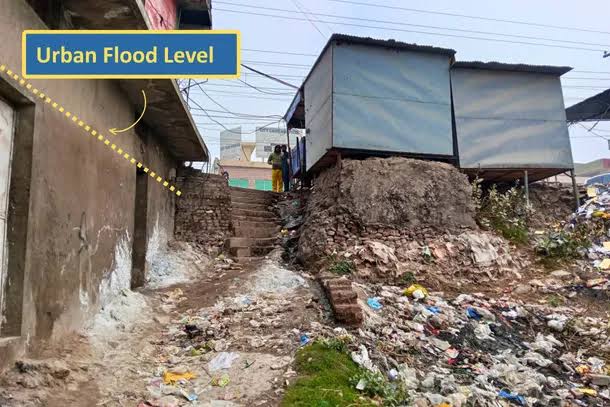
Pakistan stands on the frontline of climate change. From devastating riverine floods to increasingly frequent flash floods, hill torrents, urban flooding, and Glacial Lake Outburst Floods (GLOFs), communities across the country are facing a new generation of rapidly evolving hazards.
Pakistan has made significant progress in strengthening its Flood Early Warning System (FEWS) over the past several decades. Investments in hydro-meteorological monitoring, weather forecasting, river flow prediction, and institutional coordination have improved the country’s ability to anticipate flood risks, particularly for large riverine floods. Yet the floods in the recent past, especially the monsoon seasons of 2022 and 2025, provided a stark reminder of the challenges of dealing with fast-onset floods. While forecasting agencies were able to anticipate seasonal conditions and issue warnings, many communities still experienced what stakeholders described as “zero effective lead time”, the period between receiving a warning and being able to act upon it.
Recognizing these challenges, in response to the Floods of 2025 in Pakistan, UNESCO initiated a comprehensive review of Pakistan’s Flood Early Warning System (FEWS). The study assessed the entire warning chain, from risk knowledge and monitoring to forecasting, warning dissemination, preparedness, and community response while considering both riverine and rapid-onset hazards such as flash floods, debris flows, urban flooding, and Glacial Lake Outburst Floods (GLOFs).
The review combined extensive desk research with consultations involving federal and provincial agencies, disaster management authorities, academia, humanitarian organizations, media representatives, and local governments through two national and 6 provincial state level workshops. To understand how warnings function at the community level, the study also conducted Focus Group Discussions with nearly 300 participants, including 139 women, across flood-affected districts of Pakistan.
The “Last-Mile Gap”The review found that Pakistan has built a strong technical foundation for flood forecasting. Investments in observation networks, forecasting models, telemetry systems, and institutional coordination have significantly strengthened the country’s ability to anticipate seasonal weather patterns and major riverine floods.
However, the study identified a critical challenge: the breakdown of the heavily-relied Global System for Mobile Communications (GSM)-based dissemination. The challenge becomes even more acute during rapid-onset events such as flash floods, debris flows, urban flooding, and GLOFs, where available lead times may be measured in hours rather than days.
The review also found that digital warning systems are often least reliable when they are needed most. Communities repeatedly reported that GSM networks, electricity supply, and internet connectivity frequently fail during severe weather events, limiting the effectiveness of Short Message Service (SMS) alerts and online communication channels.
Many warning products continue to be transmitted through what stakeholders described as a “forwarding paradigm”, technical alerts are passed from one administrative level to another without being translated into localized and actionable guidance for communities. One of the key recommendations of the review is the transition toward Impact-Based Forecasting (IBF). Traditional warning systems focus on describing the hazard, such as expected rainfall or river levels.
Instead of warning that “100mm of rainfall is expected” or that “thousands of cusecs of water are approaching,” communities need practical information such as: “The bridge connecting your village is likely to be submerged. Move livestock and valuables to higher ground and relocate to the designated evacuation shelter.” Communities affected by the 2025 floods in Theme Park, Lahore, Mohallah Qasim Market Sialkot, and Azmatpur, Muzaffargarh emphasized the need for such localized and actionable warnings.Achieving this transition requires integrating hazard forecasts with exposure, vulnerability, and risk information, supported by GIS-based risk* mapping, historical impact data, localized risk assessments, and stronger capacity at district level to translate technical forecasts into practical guidance.
*Geographic Information System
Perhaps the most important finding of the review was that communities themselves remain one of the strongest components of the early warning chain.
Across multiple case studies, local volunteers, shepherds, community observers, teachers, mosque committees, and local leaders played critical roles in detecting hazards, disseminating warnings, and supporting evacuation.
A Case Study from Gilgit Baltistan
During the 21 August 2025 GLOF event in Talidas Village, Ghizer District, a local shepherd observed signs of danger upstream and relayed a warning through available communication channels. The message was rapidly disseminated through community networks and mosque announcements, enabling residents to evacuate before floodwaters arrived. While property and livestock were affected, no lives were lost.
The review recommends formally recognizing these actors as part of the FEWS architecture through what stakeholders referred to as a network of “Human Sensors”.
These individuals often possess detailed knowledge of local environmental conditions and can identify early signs of danger before technical systems detect them. Equally important, they are trusted intermediaries who can communicate warnings in ways that local communities understand and trust.
The review concludes that Pakistan’s next generation of Flood Early Warning Systems must focus on transforming forecasts into timely action. Priority investments include expanding monitoring networks, strengthening forecasting and nowcasting capabilities, improving cross-border hydrological data sharing, and integrating impact-based forecasting tools that translate hazards into locally relevant warnings.
It is also important to strengthen the last mile through resilient communication systems, including sirens, mosque loudspeakers, radio networks, community organizations, and trained volunteers that remain operational during power and telecommunications outages. Institutionalizing community-based monitoring, formalizing volunteer roles, and embedding clear response protocols will help ensure warnings are translated into action.
Pakistan has already established a strong foundation for flood forecasting. The challenge now is to ensure that every warning reaches the right people, at the right time, in a form they can understand and act upon. By strengthening the links between forecasting, communication, preparedness, and community action, Pakistan can build a more people-centred and resilient Flood Early Warning System that saves lives.
( Press Release Image: https://photos.webwire.com/prmedia/6/359194/359194-1.jpg )
WebWireID359194
This news content was configured by WebWire editorial staff. Linking is permitted.
News Release Distribution and Press Release Distribution Services Provided by WebWire.