

New Analysis Finds Municipal Bond Disclosures Leave Investors in the Dark
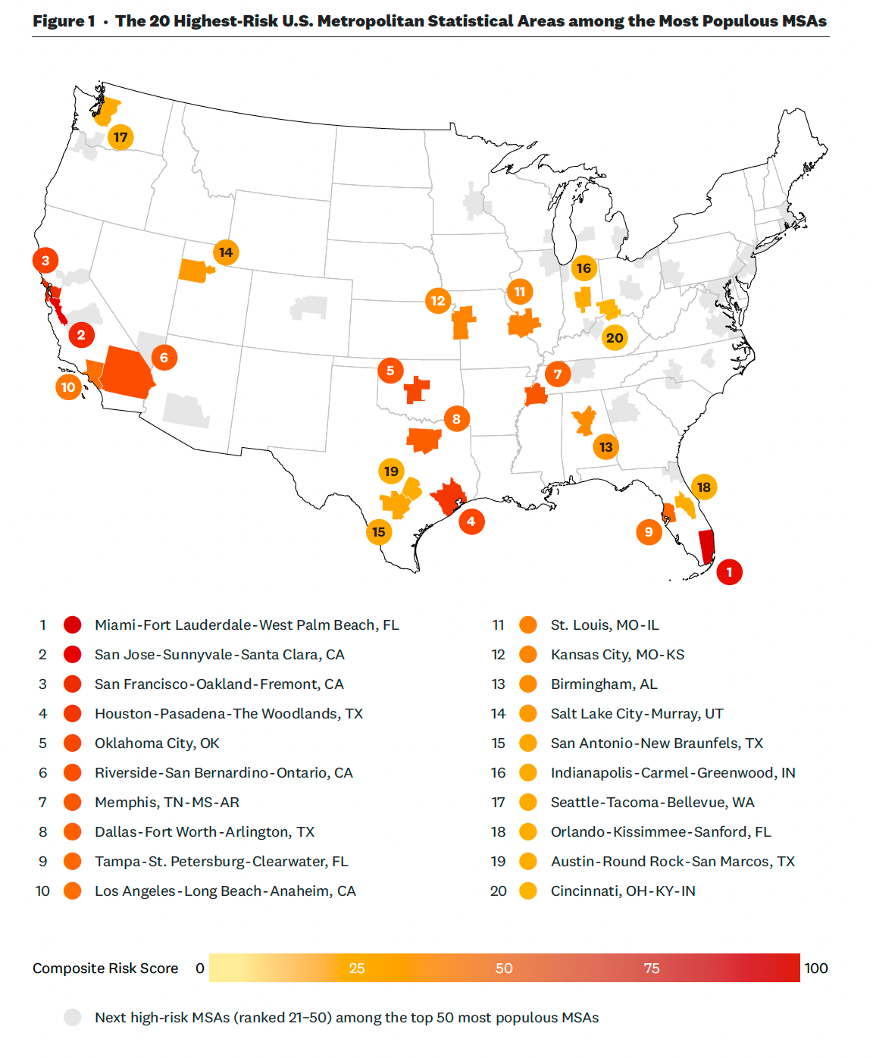
A new first-of-its-kind report from Ceres finds that municipal bond disclosures are not consistently providing investors with the information they need to assess and price climate-related financial risks, including those associated with extreme weather.
Can Investors Price the Risk? Assessing Municipal Bond Climate Disclosure and Financial Resilience analyzed 60 recent bond offerings from issuers in 20 U.S. metropolitan areas with the highest physical-risk exposure, among the 50 most populated, based on Cotality’s Comprehensive Climate Risk Analytics. It found that a third of the disclosures made no mention of climate or extreme weather risk at all. Even among issuers who did address these risks, disclosure was often generic, backward-looking, and missing critical information, such as who is accountable for managing climate risk and how progress is measured.
The report comes as record-breaking heatwaves, wildfires, and tornadoes are wreaking havoc across the country. This critical information is needed now more than ever to address these growing risks, which are devastating economies and communities.
Key findings include:
-
33% of the sampled bond offerings make no mention of climate or extreme weather risk.
-
Only 12% of bonds provide the quantitative metrics or targets that help investors evaluate how climate risks are measured and managed, and just 15% disclose who is accountable for managing that risk.
-
Many municipalities are already investing in resilience but aren’t getting credit for it. Issuers taking steps such as relocating wastewater treatment plants out of floodplains often don’t reflect that work in their official bond statements, leaving investors unable to price in the risk reduction.
-
Generic, boilerplate language dominates, even in jurisdictions with well-documented, location-specific hazards. For example, Phoenix, Arizona which faces the highest number of projected annual heatwave days among large U.S. metro areas, made only passing reference to heat mitigation in its 2024 bond offering.
-
Disclosures look backward rather than forward, even though municipal bonds typically run 20 to 30 years. Issuers frequently detail past disasters but rarely provide forward-looking analysis of future exposure or financial impact.
-
Bonds facing similar climate risks can receive very different levels of disclosure, even when issued in the same county, creating an inconsistent picture for investors trying to compare risk across issuers.
“Municipal issuers are often doing more to manage climate risk than their official bond documents disclose,” said Holly Li, Program Director at Ceres and an author of the report. “Peril-specific, forward-looking information on exposure, governance, and resilience investments can help issuers better communicate their resilience to the market and thus improve the issuer’s competitiveness.”
“The municipal bond market is valued at more than $4 trillion, yet disclosure has not kept pace with the escalating financial risks that extreme weather poses to state and local governments,” said Steven Rothstein, Chief Program Officer at Ceres. “Investors need consistent, decision-useful information to price climate risk accurately, and issuers who are already investing in resilience deserve to have their efforts reflected in the market.”
“Investors cannot price what they cannot accurately measure,” said Dr. Howard Botts, Chief Scientist at Cotality. “Advanced climate analytics now allow us to measure physical risk exposure with unprecedented, property-level granularity across future timeframes. It is time for municipal bond disclosures to reflect this available science, moving past boilerplate language so that communities can transparently fund and build necessary climate resilience.”
The report builds on a previously released Ceres resource that offers practical steps for disclosing climate risks in financial statements, bond offering documents, and voluntary sustainability and climate action reports.
About Ceres Accelerator for Sustainable Capital Markets
Ceres Accelerator for Sustainable Capital Markets is a center within Ceres that aims to improve the practices and policies that govern capital markets by engaging federal and state regulators, financial institutions, investors, and corporate boards to act on climate risk as a systemic financial risk. For more information, visit ceres.org/accelerator.
( Press Release Image: https://photos.webwire.com/prmedia/6/359105/359105-1.png )
WebWireID359105
This news content was configured by WebWire editorial staff. Linking is permitted.
News Release Distribution and Press Release Distribution Services Provided by WebWire.