

UN Hunger Report 2026: Global hunger remains stubbornly high as another food price crisis looms
IPES-Food response to the UN State of Food Security and Nutrition in the World 2026 report
When 645 million people are hungry and one in three cannot afford a healthy diet, this is a failure of political choices.
Global hunger remains stubbornly high, and another food price crisis may already be taking shape, IPES-Food warned in response to new UN figures released.
UN hunger report 2026
The UN’s annual State of Food Security and Nutrition in the World (SOFI) report paints a stark picture, revealing that 645 million people faced hunger in 2025, 61 million more than in 2019, with one in three unable to afford a healthy diet.
For the first time, Africa has become the continent with the largest number of people facing hunger, overtaking Asia.
Looming food price crisis
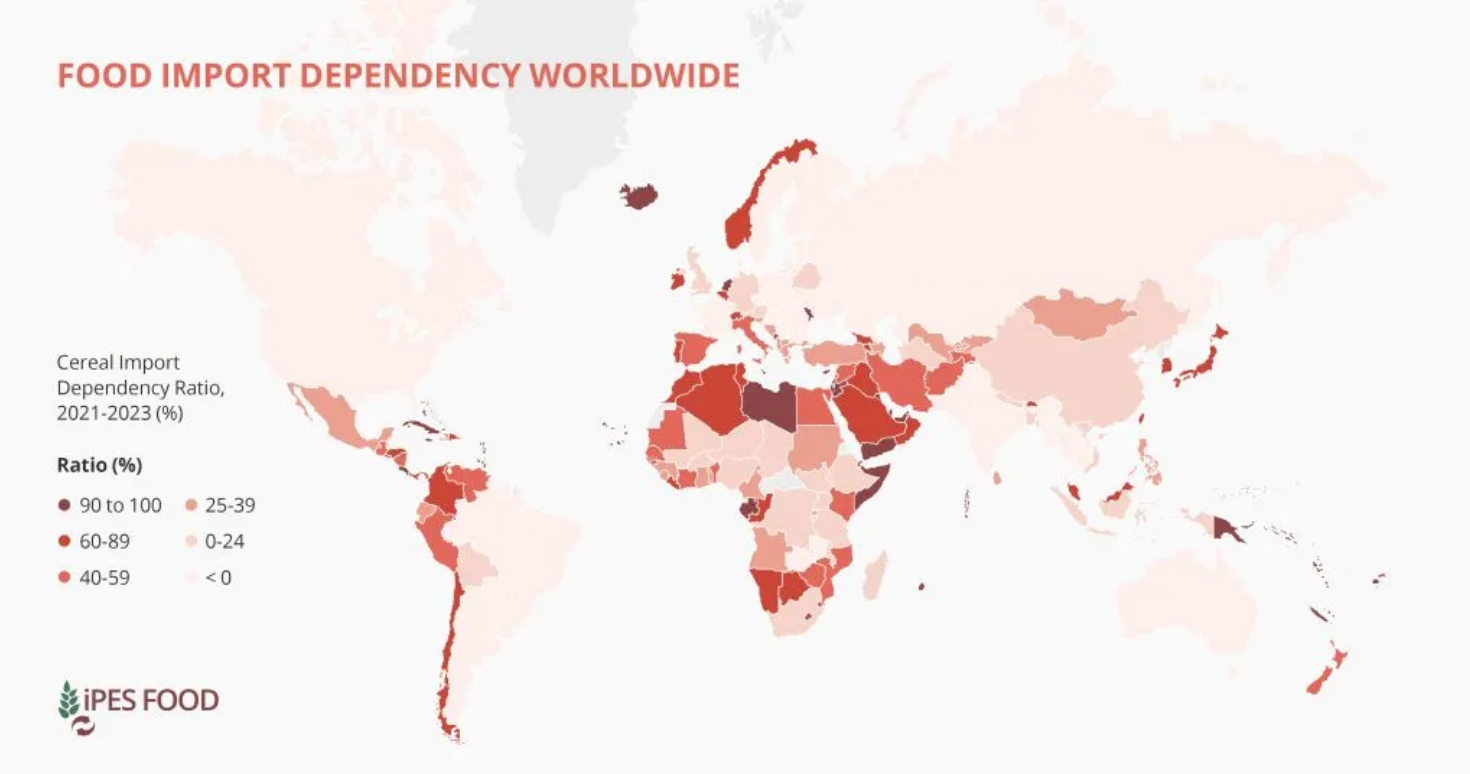
IPES-Food experts warn that conflict, trade tensions, fertiliser disruptions and climate shocks could trigger another surge in food prices in 2026 – reinforcing the need to reduce dependence on volatile global markets by building more resilient, self-reliant food systems.
IPES-Food’s analysis of the UN report highlights several key findings:
- Global hunger remains stubbornly high – 645 million people, 7.8% of the world population, faced hunger in 2025, 61 million more than before the Covid-19 pandemic in 2019. Despite some marginal progress, one in four people worldwide – 2.1 billion – were food insecure, lacking regular access to sufficient food for an active and healthy life.
- Africa is now the global epicentre of hunger. For the first time, it has overtaken Asia as the continent with the largest number of people facing hunger. One in five Africans – a record 309 million people – now face hunger, an increase of 81% since 2010, driven by conflict, climate shocks, debt and dependence on food imports. Two-thirds of Africans cannot afford a healthy diet, more than double the share in Asia and Latin America.
- The outlook for 2026 is even more alarming. The 2025 figures may soon be overtaken by war, fertiliser disruptions, aid cuts, trade disputes, and intense climate shocks linked to El Niño and the climate crisis, which together threaten another global food price crisis.
- Famine was confirmed in two territories for the first time by the UN – in Gaza and Sudan – exposing millions of people to catastrophic hunger.
- With just four years left, the world is nowhere near ending hunger by 2030 or achieving any of the seven global nutrition targets, underscoring the urgent need for far stronger political action.
- Healthy diets are out of reach. One in three people worldwide (2.7 billion) were unable to afford a healthy diet in 2025, after the cost of healthy eating rose by 45% since 2017. Around 70 to 75% of what consumers pay is added by traders, processors, distributors and retailers after food leaves the farm, pointing to where action is most urgently needed.
- Rising hunger is not inevitable. Asia and Latin America saw continued improvements – thanks in part to the success of anti-hunger programs like those in Brazil, which has eradicated hunger through a program of cash transfers to vulnerable families, universal school meals, city public food provision, and public procurement from family farmers. With the right policies, countries can build resilient food systems and bolster their food security.
Building resilient self-reliant food systems
The findings reinforce the conclusions of IPES-Food’s recent report, The New Geopolitics of Food, which argues that today’s food systems have become dangerously exposed to geopolitical conflict, trade disruptions, climate shocks and corporate concentration.
The answer is more resilient, self-reliant food systems that strengthen local and regional production, reduce reliance on volatile imports, curb excessive corporate concentration, and protect people’s access to healthy food.
When 645 million people are hungry and one in three cannot afford a healthy diet, this is a failure of political choices. Healthy diets are becoming a luxury for billions, while farmers are paid less and consumers pay more. That isn’t an accident – it’s the result of a food system where a handful of powerful traders, processors and retailers set the prices and pocket the profits. You cannot lower the cost of a healthy diet without asking who profits from an unhealthy one.
Raj Patel, IPES-Food expert
Global hunger remains stubbornly high. And the outlook for 2026 is deeply worrying. Geopolitics is increasingly shaping food security, with conflict, fertiliser disruptions, trade tensions, and El Niño-driven climate shocks threatening yet another surge in food prices.
The answer is not deeper dependence on volatile global markets – but more resilient, self-reliant food systems that keep food affordable and protect people from future shocks.
Jennifer Clapp, IPES-Food expert
This UN report confirms what African farmers and communities have long known – hunger is caused by the failure of our food systems. Africa has the land, the knowledge, and the farmers to end hunger. Yet one in five Africans now faces hunger because decades of dependence on volatile global markets and imported inputs have weakened local food systems and left millions vulnerable.
The answer is to put family farmers and local food economies at the centre of food policy, by investing in agroecology, strengthening farmer-managed seed systems, and supporting territorial markets. Food sovereignty is not just an aspiration, it is the pathway to ending hunger.
Million Belay, IPES-Food expert
( Press Release Image: https://photos.webwire.com/prmedia/7/358031/358031-1.jpg )
WebWireID358031
This news content was configured by WebWire editorial staff. Linking is permitted.
News Release Distribution and Press Release Distribution Services Provided by WebWire.