

MGallery Trends 2026: The Mediterranean Briefing
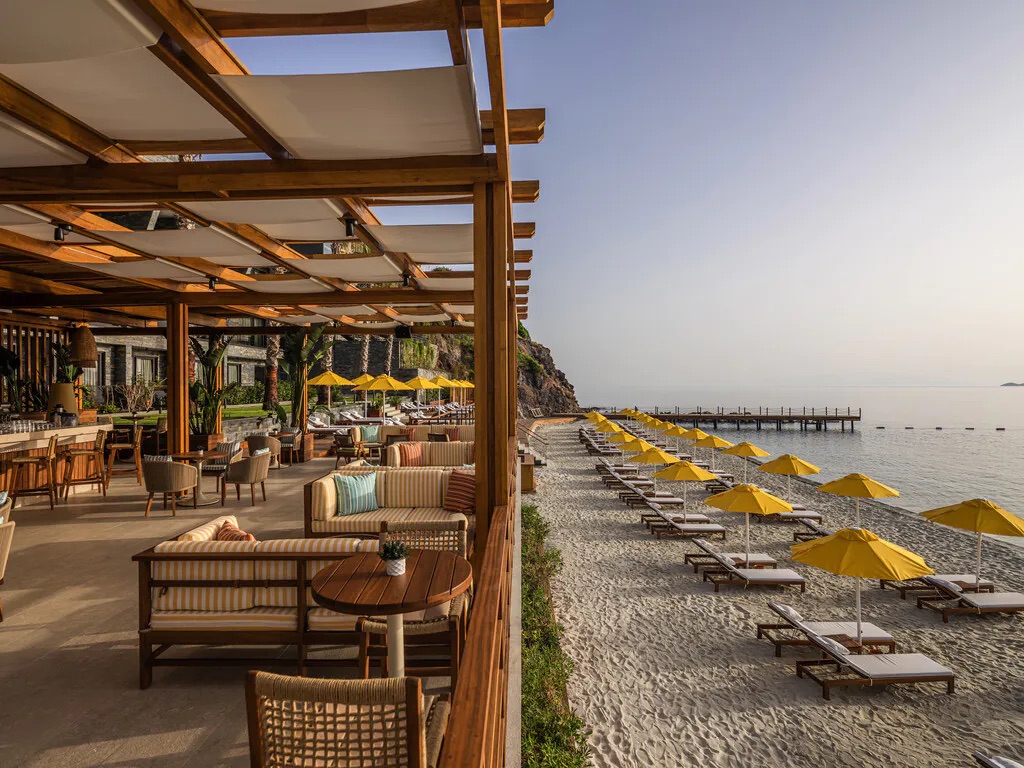
Explore the “MGallery Trends 2026: The Mediterranean Briefing”, produced in partnership with travel trend forecasting agency Globetrender. The report is also part of From Change To Opportunity, Accor’s insights and intelligence platform, which deep dives into the major themes and forces shaping the future of hospitality in today’s ever changing world.
This briefing explores three trends shaping how the region is being experienced in 2026: Micro-Cultures of the Med, Blue Mind Experiences and The Comeback Effect. Together, they reflect a Mediterranean that is still expanding, but also entering a more considered phase, where growth is matched by a deeper focus on how travel is explored, and how it can evolve.
The Med remains one of the most significant tourism regions in the world, and growth shows no sign of slowing. According to UN Tourism, Europe recorded 793 million international arrivals in 2025, marking a 4% increase on 2024. Within this, Southern Mediterranean Europe continues to perform strongly, reinforcing the region’s position at the centre of global travel demand.
The Mediterranean is no longer treated as a single, interchangeable destination, but as a collection of distinct environments, each offering a different experience.
The Mediterranean is often described as a unified way of life. In practice, it functions more like an archipelago of distinct micro-cultures even within the same country. Greece is the most obvious example, with thousands of islands (around 200 inhabited), but it is not unique. Croatia has over 1,200 islands, of which approximately 50 have permanent populations, each with its own agricultural base, dialect and culinary tradition. Italy’s coastline reveals similar fragmentation, from Ligurian olive oil culture to Sicilian citrus and North African influence. Across the Mediterranean, proximity does not produce uniformity. It produces divergence.
This is the result of geography. Islands and coastal regions developed in partial isolation, often relying on what could be grown or caught locally. Over time, this created highly specific systems not just in food, but in social rituals, architecture and daily rhythm.
In Bodrum, visitors encounter the Turkish meyhane tradition, where evenings unfold slowly over shared meze, seafood and raki. In Crete, cultural identity is closely tied to the island’s mountain villages and agricultural traditions, where olive harvesting, sheep farming and slow communal meals continue to shape daily life.
But lesser-trodden Mediterranean destinations with undiscovered cultures are also coming to the fore in particular, Albania. In recent years, as investment in its coastline has increased and a slew of high-profile hotel brands have opened luxury properties, so too has international curiosity about this often overlooked Mediterranean destination. Here, visitors can experience cultural expression such as iso-polyphony a UNESCO-recognised form of a cappella singing, where layered voices create a collective sound.
Albania’s growing popularity speaks directly to travellers’ interest in Mediterranean micro-cultures, with visitors taking time to discover a culture that feels notably distinct and exciting, despite being located between Italy and Greece two nations with a myriad of highly recognisable micro-cultures. Here, the food reflects a convergence of influences. Cuisine is shaped by both Balkan and Mediterranean traditions dishes such as byrek, tavë kosi and locally produced wine are part of everyday life. Hospitality remains informal and instinctive, with customs such as offering bread, salt and raki as a gesture of welcome. In total, the Mediterranean region spans 22 coastal states and territories. The sea connects them, but it does not make them the same. In 2026 and beyond, travellers are actively seeking out these distinctions. This shift aligns with broader industry direction.
The IUCN has called for tourism in the Mediterranean to move towards more locally rooted models, highlighting cultural tourism and community-led experiences as a way to reduce pressure on ecosystems while increasing economic value. In practice, this means moving away from standardised “Mediterranean” experiences and towards hyper-local ones. This is something MGallery Collection is actively leaning into through its off-site “M Moments”, which are designed to immerse guests in local practices rather than replicate generic luxury. In Albania, guests can spend a day as a beekeeper, harvesting honey alongside local producers, for example, while in Crete, those staying at the NIKO Seaside Resort can sail around Mirabello Bay on a private boat before exploring the island of Spinalonga.
Across the water in Mykonos, the contrast between global reputation and local culture is particularly pronounced. While the island is known for its high-energy nightlife, its culinary base is rooted in preservation and necessity. Kopanisti, a spicy fermented cheese, remains one of its defining ingredients, alongside almond-based sweets such as amygdalota and simple grilled seafood.
Travellers staying at Mykonos’s Kove Hotel and Spa can book an M Moment trip to the UNESCO-protected island of Delos, the mythical birthplace of Artemis and Apollo. Departing by boat at dawn, they then have the chance to traverse ancient Greek ruins in solitude with a dedicated historian, and enjoy a traditional breakfast by the sea. What connects these destinations is not similarity, but specificity. For travellers, this provides a way to move beyond surface level familiarity and engage with each place on its own terms.
2. Blue Mind Experiences : The Mediterranean as a natural antidote to modern stress.
“Blue mind” describes the mildly meditative state people enter when they are in, on, or near water. It can be intentionally evoked through design a massage or sound bath set beside softly lapping waves, for instance or arise more organically, through long, unhurried oceanside sundowners that ease guests into a sense of calm as evening settles.
The term, popularised by marine biologist Wallace J Nichols, refers to a shift in brain activity associated with calm, focus and reduced anxiety. Unlike high-adrenaline environments, blue spaces, seas, lakes, pools tend to slow cognitive pace, encouraging reflection rather than stimulation.
This concept is moving from niche theory into mainstream travel behaviour. As identified by Globetrender, “Blue Mind Experiences” are emerging as a defined category of travel, where proximity to water is not incidental, but central to the design of the stay. These experiences are characterised by repetition and ease, encompassing a broad range of activities. They appear in the growing popularity of private boat charters that whisk guests to untouched coves, and in architectural design shaped around the presence of water in 50 shades of blue. At the Green Coast Hotel in Albania, perched on its own hillside, sweeping sea views frame everything from breakfast in bed to long, leisurely meals in the hotel’s restaurants.
The rise of this trend is closely linked to increasing stress levels. Last year, the World Health Organization identified stress-related conditions, including anxiety and burnout, as a growing global concern, driven in part by constant connectivity and urban lifestyles. The WHO reported that more than a billion people worldwide are now living with mental health conditions such as anxiety and depression.
People living closer to the coast report better general and mental health, while even short interactions with water and improve mood and reduce stress In parallel, research into “blue space” has shown measurable benefits.
Studies from the University of Exeter’s BlueHealth project found that people living closer to the coast report better general and mental health, while even short interactions with water can improve mood and reduce stress.
The Mediterranean is particularly well suited to this type of experience. Its coastline is defined by accessibility. Waters are generally calm, swimmable and integrated into daily routines. Unlike more extreme coastal environments, the Mediterranean allows for frequent, low-effort interaction which is key to the effectiveness of blue mind states.
The benefit comes not from a single moment, but from repeated exposure over time. Replete with pools and sea in every shade of blue, MGallery Collection properties across the region reflect this shift in how water is valued. In Bodrum, the hotel’s position within a sheltered bay allows guests to move easily between land and brine throughout the day. In Crete, the NIKO Seaside Resort has infinity pools that appear to pour directly into the near-distant ocean. These are not occasional encounters, but environments that encourage sustained presence. As locals have known for centuries, whether you’re swimming, sailing or simply observing, the Mediterranean’s value is not just visual, it’s neurological.
3. The Comeback Effect : Why travellers keep coming back and expect more each time.
The Mediterranean is one of the world’s great “repeat” destinations according to the European Travel Commission (ETC), 90% of European travellers plan to travel within Europe in summer 2026, with cross-border trips across the region up 4% year-on-year (65%). Southern and Mediterranean Europe continue to be the top choice for spring and summer holidays, recording a strong surge in demand (+17%) and attracting nearly 60% of travellers. According to data from the Bank of Greece, inbound travel traffic rose by 5.6% in 2025 to almost 38 million visitors, up from almost 36 million in 2024.
Why The Comeback Effect? Travellers often return to the same coastlines, islands or towns because they already understand the climate, the journey time and the emotional reward. In 2026, this behaviour is becoming more sophisticated. Familiarity is no longer the end point. It is the beginning of a deeper relationship with place. As the ETC notes, vacations to more distant European destinations are also increasing (+4%), almost matching demand for neighbouring countries. A good example is the Albanian Riviera. For travellers familiar with Greece, Croatia or southern Italy, the destination offers recognisable Med conditions with a less established tourism narrative. The Green Coast Hotel can, therefore, serve guests who want the familiarity of the Med but the excitement of discovery.
When analysing website page views for its Mediterranean hotels in Albania, Greece, Turkey and Sardinia, MGallery Collection observed weekly traffic more than doubling (108%) in spring 2026 compared to 2025, indicating a significant boost in interest to Med destinations. Maud Bailly, CEO of Sofitel Legend, Sofitel, MGallery & Emblems, says: “By combining emotional storytelling, deep local connections and operational excellence, we are curating a portfolio of boutique hotels designed to inspire today’s travellers. We are confident that the Mediterranean will continue to play a central role in this exciting next chapter of growth.”
This level of maturity changes what travellers want. A first visit may focus on the obvious markers of a destination. A return visit usually asks more specific questions: which beach is quieter in September? Which restaurant do locals return to? Which part of the island reveals itself outside peak hours? The Comeback Effect describes this shift from recognition to progression. MGallery Collection is already turning this into a hospitality strategy.
Rather than offering the same experience each time, properties build a sense of accumulation. A first stay might orientate the guest. A second stay might reveal a lesser-known seasonal ritual. A third stay can feel personal, shaped by insider knowledge and a welcome by staff who remember them.
IN A NUTSHELL : A DESTINATION IN MOTION
While its coastlines, climate and lifestyle remain globally recognisable, what travellers increasingly value is not the idea of the Mediterranean itself, but the feeling of discovering a more personal version of it. Across the region, there is a noticeable shift away from high-speed itineraries and towards slower, more intentional experiences that are molded to the nuances and demands of the modern traveller.
This change is closely tied to how people want to feel when they travel. In an era defined by overstimulation and constant connectivity, the Mediterranean’s natural rhythm has become part of its appeal. Time spent near water whether through swimming, sailing, dining by the sea or simply observing it is increasingly recognised as a tool for restoring balance in lives governed by perpetual activity. At the same time, travellers are becoming more confident and informed in how they navigate the region. The Mediterranean has long inspired repeat visitation, but familiarity is now creating curiosity rather than complacency. Return travellers are seeking nuance: the quieter season, the hidden beach, the local producer, the neighbourhood restaurant that exists outside the tourism narrative.
But the most significant shift, perhaps, is the region’s fragmentation into a collection of highly specific cultural identities. Travellers are increasingly motivated by difference rather than uniformity, recognising that each island, coastline and community carries its own traditions, ingredients, architecture and social rituals. This interest in the region’s variety of micro cultures is pushing interest in long-overlooked destinations such as Albania, whose Riviera offers the comforts of the Mediterranean albeit with bold new flavours and cultural stories to tell.
As demand for Mediterranean travel increases, these shifts are setting a new template for innovation in the region making sure that the region thrives and harnesses interest to spread prosperity. Hotels are no longer functioning simply as places to stay, but as cultural gateways, where local identity and the environment are treasured and preserved.
For MGallery, this creates a clear opportunity. Maud Bailly, CEO of Sofitel Legend, Sofitel, MGallery and Emblems, says:
“The Mediterranean remains one of the most compelling regions for hospitality, and Greece is at the heart of our growth ambitions. With two existing properties in Athens, we have established a strong foundation from which we intend to more than double our footprint in Greece by 2029. This momentum extends into a new generation of emerging Mediterranean destinations. Following the opening of Green Coast Hotel in Albania in 2025, and with more than ten projects across the region, MGallery Collection continues to demonstrate its ability to thrive in culturally rich locations where authenticity, storytelling and local character matter most. As Accor’s most mature luxury collection brand, MGallery has proven its scalability, appeal and distinctive brand identity.”
MGALLERY ACROSS THE MEDITERRANEAN
NEW: Green Coast Hotel - MGallery Collection (Albania)
Albania is rapidly emerging as one of the Mediterranean’s most sought-after destinations, driven in part by Green Coast Hotel – MGallery Collection, one of the first internationally branded lifestyle hotels on the country’s southern Riviera (it opened in summer 2025). Set into the cliffside, the 131-room property blends with its surroundings, and offers experiences that extend beyond the hotel itself, from hikes through the alpine forests and meadows of Llogara National Park to a “day as a beekeeper” M Moment.
NEW: Kove Hotel and Spa Mykonos - MGallery Collection (Greece)
Opened in June 2026, Kove Hotel and Spa Mykonos encourages a more considered version of the island, where guests can move between quieter beaches, Cycladic traditions and slower island rituals. It’s located in Ornos, a short distance from Mykonos Town, providing access to both the island’s main attractions and a more contained beach setting. Simplicity and light are the centre of the property’s design; a refreshing contrast to the density and energy of central Mykonos. The signature M Moment is a trip to the ancient ruins of Delos.
NEW: Nirema Hotel & Spa Samos - MGallery Collection (Greece)
Samos, the Greek island closest to the Turkish coast, remains one of the Aegean’s quieter escapes – an ideal setting for Nirema Hotel & Spa Samos. Opening late summer 2026, the 72-room hotel reflects the island’s growing focus on premium hospitality, pairing mountain and sea views with access to landmarks including Heraion of Samos, Tunnel of Eupalinos, and Pythagoras Square. The property also features a private beach, a spa with hot and cold plunges, and a curated M Moment exploring the island’s Muscat wine heritage.
NIKO Seaside Resort Crete - MGallery Collection Hotel (Greece)
Overlooking the calm waters of Mirabello Bay on Crete’s north eastern coast, NIKO Seaside Resort is a five-star, adults-only retreat where all 137 rooms, suites, restaurants, and terraces face uninterrupted sea views, many with private plunge pools and infinity edges. Mediterranean and Cretan dining is paired with experiences beyond the property, including an M Moment private exploration of Spinalonga, offering a window onto the island’s storied coastline. The property’s Théa pool bar is the perfect place for a sundowner.
Bodrum Hotel Yalıkavak - MGallery Collection (Türkiye)
Positioned on the Yalıkavak Peninsula along Bodrum’s northwestern coast, the 97-room MGallery The Bodrum Hotel Yalıkavak is located in a quiet bay near Yalıkavak Marina. Opened in the early 2020s as part of Accor’s expansion into boutique, experience-led hospitality in Türkiye, the hotel reflects a contemporary design approach. The property offers a spa, dining venues, and a selection of guest experiences that align with the destination’s seasonal rhythm. There are also more than 200 works of art on display.
About MGallery Collection
MGallery Hotel Collection brand thoughtfully selects and curates unique properties around the world, forming a storied collection of boutique hotels with true soul where captivating stories are lived and shared. These more than 125 boutique hotels all around the world enjoy a unique history, inspired by the remarkable past of the building or by its destination that welcomes it allowing the guests to live memorable and meaningful moments.
The MGallery Collection establishments are hotels in which guests live an immersive experience, marked by exceptional interiors, an art of mixology that awakens all the senses, and a well-being focused on balance in everyday life and mindfulness. It is a brand committed to women but also to local communities, promoting the know-how of surrounding artisans and producers.
MGallery Collection customers leave with an unconditional desire to discover the other jewels of the brand to live a new unique experience. The most renowned hotels in this collection include the Hotel Molitor Paris in France, the Municipal Liverpool in the UK, the Santa Teresa Hotel in Rio de Janeiro in Brazil, The Brighton Hotel Sydney in Australia, Athens Capital in Greece or Hotel des Arts Saigon in Vietnam. MGallery Collection is part of Accor, a world leading hospitality group counting over 5,800 properties throughout more than 110 countries, and a participating brand in ALL Accor, a booking platform and loyalty program providing access to a wide variety of rewards, services and experiences.
mgallery.com ⎸all.com ⎸group.accor.com
About Globetrender
Globetrender is the world’s leading travel trend forecasting agency and online magazine dedicated to the future of travel.
Founded in 2019 by award-winning travel journalist Jenny Southan, we are experts in travel innovation, trend mapping and strategic foresight.
Globetrender works with top-tier travel journalists to deliver global insights fresh from the field.
Globetrender.com
( Press Release Image: https://photos.webwire.com/prmedia/8/357987/357987-1.jpg )
WebWireID357987
This news content was configured by WebWire editorial staff. Linking is permitted.
News Release Distribution and Press Release Distribution Services Provided by WebWire.