

2026 Leica Oskar Barnack Award Shortlist Finalised
Shortlist Finalised
The Leica Oskar Barnack Award celebrates not only exceptional photographic quality but also photography’s ability to make societal change visible and to create connections between people.
Twelve LOBA finalists present their series, and the winner of the first LOBA Women Grant has been chosen
The international jury for the 2026 Leica Oskar Barnack Award (LOBA) has shortlisted the 12 finalists in the photography competition. For the 46th time, Leica Camera AG is honouring exceptional photographers with the LOBA, chosen through a multi-stage selection process.
All of the shortlisted image series can now be found at www.leica-oskar-barnack-award.com and will be presented together with additional text and information over the coming weeks.
For the first time in 2026, the jury has also selected the winner of the newly established LOBA Women Grant, whose work will be presented next year.
The excitement will build until 8 October 2026 when the winners of the Main Prize, the Newcomer Award and the LOBA Women Grant will be announced. The awards ceremony will be accompanied by a grand celebration at the World of Leica in Wetzlar, Germany.
Jury
With the LOBA awards, Leica Camera AG has been recognising exceptional photographers who capture the relationship between human beings and our environment in remarkable series since 1980. The jury selected the shortlist based on candidates nominated by over 130 photography experts across 48 countries. Every nominator selected up to three photo series based on their personal expertise and experience. The Leica Oskar Barnack Newcomer Award is bestowed in collaboration with 28 international institutions and universities from 18 countries.
The 2026 LOBA jury is made up of the following members: Jane’a Johnson (Scholar and Curator, Curatorial Assistant, The Museum of Modern Art (MoMA), New York, USA), Celina Lunsford (Artistic Director and Curator of the FFF, Fotografie Forum Frankfurt, Germany), Paolo Pellegrin (Photographer, Italy), Gu Zheng (Professor, Fudan University School of Journalism, Shanghai, China) and Karin Rehn-Kaufmann (Art Director and Chief Representative of Leica Galleries International, Austria).
After the award ceremony on 8 October, all LOBA series will be presented in a large exhibition at the Ernst Leitz Museum until 4 February 27 and in a comprehensive accompanying catalogue. Following the show in Wetzlar, the 2026 LOBA exhibition will be displayed at various Leica Galleries and featured at photography festivals.
The LOBA is among the most renowned and highly endowed photography awards worldwide: the Main Prize winner will be awarded €40,000 and Leica camera equipment worth €10,000, while the winner of the Newcomer Award will receive €10,000 and a Leica Q3.
2026 LOBA Shortlist
An overview of the series (Main and Newcomer categories, in alphabetic order):
Saher Alghorra: Witnessing Gaza
The Palestinian photojournalist (born in 1997) has documented the war in Gaza in its full complexity and breadth in his series from 2025: from scarcity to starvation, from violence to loss – scenes that have made headlines internationally as well as interpersonal moments that did not make it into the news agency feeds.
Todd Antony: Buzkashi
In his black-and-white series of striking images, the New Zealand photographer (born in 1975) documents the archaic traditions of the eponymous sport, which is practised to this day in Tajikistan. Translated literally, buzkashi mean ‘goat pulling’ in Persian. The contest involves a struggle for a headless goat cadaver. The sport emerged among the nomadic horse-riding cultures of Central Asia. Strength and equestrian skill remain the defining hallmarks of the players involved.
Anush Babajanyan: The Aral Sea and the Battered Waters of Central Asia
The Aral Sea was once the world’s fourth largest lake. Today, however, the lake has shrunk by more than 90 per cent due to Soviet hydro projects. The Armenian photographer (born in 1983) not only documents the environmental crisis in this series but also shows how Uzbek and Kazakh communities have adapted in order to survive: they breed camels, harvest brine shrimp, practise beekeeping and fish the North Aral Sea, which has come back to life since the Dike Kokaral dam was built.
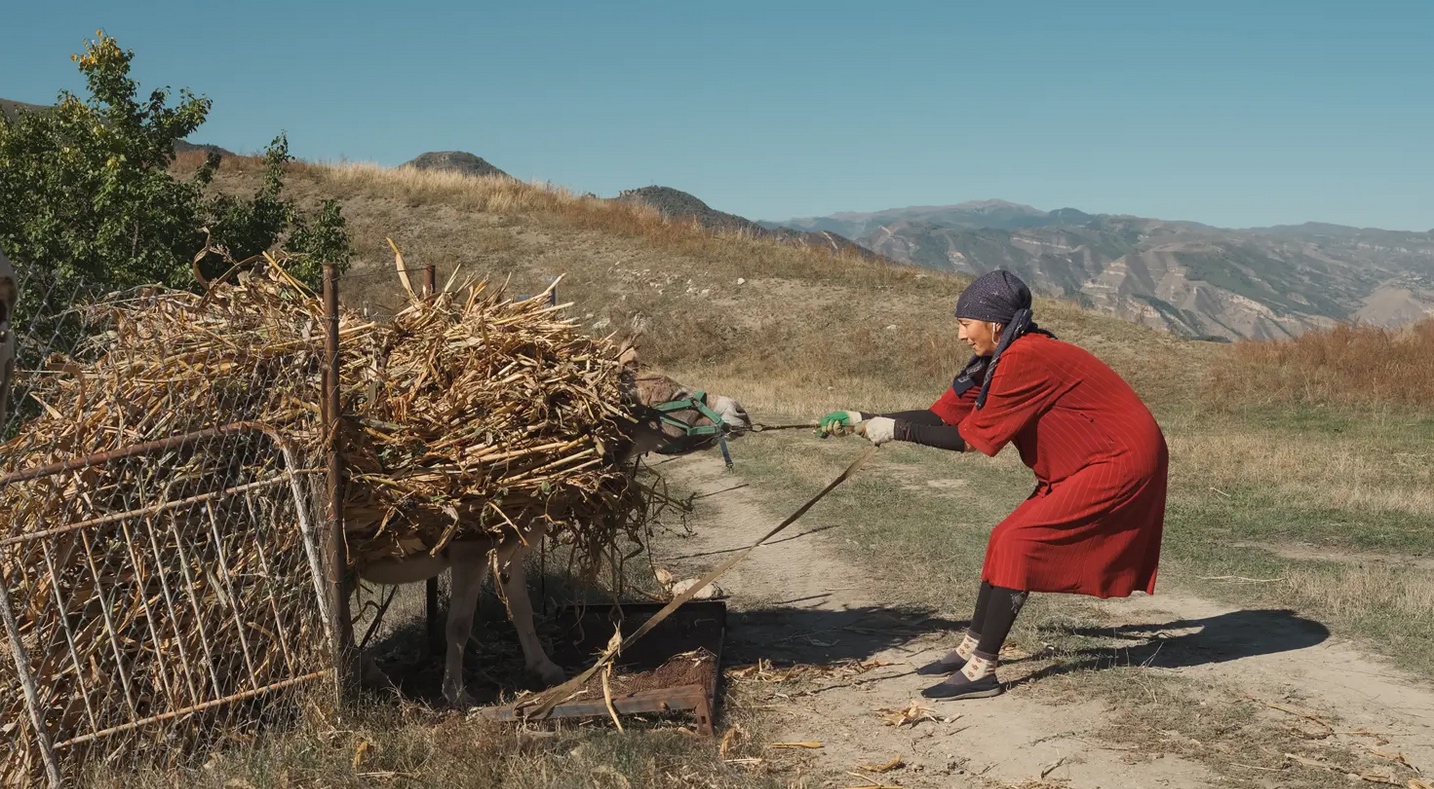
Damir Faizulin: Preserving Nature as Preserving Ourselves
The Russian photographer (born in 1986) draws our attention to the nature and way of life in the mountains of Dagestan in the North Caucasus of southern Russia. Faizulin illustrates the threats to the delicate balance between the inhabitants and nature in his images. He documents current developments and the emerging tourism industry, modern architecture and the neglect of established structures and culture, while at the same time celebrating the region’s beauty.
William Keo: Extramuros
The French photographer (born in 1996) offers us a glimpse of today’s France, in particular calling our attention to the youth of the banlieues. At the city limits, this milieu is characterised by social violence, the impact of economic crises and housing policy from the 1960s and 70s. But it is also a focal point for creativity and political innovation. Keo portrays an evolving post-colonial France where the country’s social, cultural and political future are at stake.
Slava Lyu-fa: Inner Distance
The Nizhnekolymsky district of the Yakutia region high in the Arctic is defined by distances – geographic, temporal and infrastructural. The communities in Russia’s extreme northeast “are part of a fragile system, which is connected by people, memories and the struggle for survival”, the Russian photographer (born in 1989) explains. In his series, Lyu-fa shows us various places where people, from fishers to field researchers, are affected by climate and economical changes.
Valery Melnikov: Mariupol – Open Wounds
The Russian photographer (born in 1973) puts the people of the Ukrainian port and industrial city of Mariupol at the centre of his series. After the Russian invasion of Ukraine and the siege of Mariupol at the end of February 2022, fierce battles followed, which led to heavy casualties among the civilian population. Melnikov’s continuing documentary project concentrates on the unbearable humanitarian consequences of the war for the residents remaining in the city.
Benedikt Renč: Cairo
In his series, the Czech photographer (born in 1982) presents his personal perspective on the Egyptian capital and the radical changes it faces. His goal: capturing everyday life in its purest form. “I wanted to document the last generation to live in this raw and uncouth reality”, says Renč. “Today, among the dust and rubble, I wanted to preserve an atmosphere that will soon disappear when Cairo changes beyond recognition.”
Elliot Ross: A Question of Balance
Water is not something that can be taken for granted in the Navajo Nation – the largest Native American reservation in the United States. The Taiwanese–American photographer (born in 1990) examines the history of water supply shaped by the division between settlers and Indigenous peoples – at a time when the American Southwest is suffering its worst drought. Per person, the municipalities of Utah’s affluent Washington County consume an excessive amount of water, while the Navajo communities lack the water they need in their everyday lives.
Annie Sakkab: We Used to Watch the Rivers Go By
In Jordan, water is more than a physical resource, it is also a memory – embodied in stone, earth and song. The Palestinian–Jordanian photographer (born in 1969) says: “What began as curiosity about a resource turned into a deep dive into my own history and my heritage, a search for roots in a country shaped by centuries of change and hardship. This is not only a study of water; it is also a story about people.”
David Sládek: People of Šumiac
The photographer born in Czechoslovakia in 1976, and now living in the UK and Ireland, made the Slovakian upland village of Šumiac his second home almost two decades ago. Since then, Sládek has been documenting the life, daily routines and traditions of the village’s inhabitants. The photographer sees his black-and-white series as a means to build a bridge between two groups who are separated by more than a stream: the local inhabitants and the Roma who live there as well but are severely ostracised.
Laila AnnMarie Stevens: Clayton Sisterhood Project
The American photographer (born in 2001) is inspired by her longing for memories of her ancestors, which is reflected in her series examining contemporary queer kinship structures and the continuing legacy of strong, self-confident Black women. The focal point of her work is the way of life created by the photographer’s two sisters and four nieces, who moved from Queens, New York, to a shared house on a plot in Clayton, North Carolina.
Learn more about the Leica Oskar Barnack AwardLOBA Women Grant
Starting this year, the Leica Oskar Barnack Award will not only include the awards for the Main and Newcomer categories but will also feature the LOBA Women Grant as an additional distinction. Unlike the existing categories, this new grant will be awarded for a project concept, which will be showcased for the first time at the LOBA taking place the following year.
The jury has selected one winner from among the many applicants for the LOBA Women Grant and is supporting her in continuing her project. The name of the first winner of the LOBA Women Grant will be announced at the Celebration of Photography on the evening of the LOBA ceremony.
Statements from the LOBA jury for 2026:
Karin Rehn-Kaufmann:
“The Leica Oskar Barnack Award celebrates not only exceptional photographic quality but also photography’s ability to make societal change visible and to create connections between people.”
“The LOBA draws attention to longstanding projects, which would not receive the visibility they deserve without this platform.”
Gu Zheng:
“Because the LOBA insists on facing up to reality, focusing attention on the ways of life and living conditions of marginalised communities in the context of globalisation, and – even more importantly – highlighting the complexity of human nature, the LOBA is playing an important role in the international photography community.”
( Press Release Image: https://photos.webwire.com/prmedia/7/357404/357404-1.jpg )
WebWireID357404
This news content was configured by WebWire editorial staff. Linking is permitted.
News Release Distribution and Press Release Distribution Services Provided by WebWire.