

“The Future of Silk Roads Heritage” Conference Held by UNESCO Chair on Silk Roads Heritage at Zhejiang University
The UNESCO Chair on Silk Roads Heritage at Zhejiang University convenes 30 experts to explore the future of Silk Roads heritage through collaborative initiatives
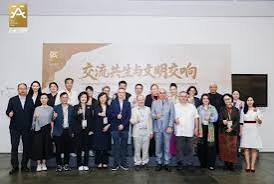
From 16 to 18 May 2026, the International Conference on Silk Roads and Asian Civilizations: “The Future of Silk Roads Heritage” was held at Zhejiang University as a flagship academic event of the Third Zhejiang University Asian Civilizations Week. The conference was organized by Zhejiang University, hosted by the School of Art and Archaeology and the Museum of Art and Archaeology of Zhejiang University, and co-organized by the UNESCO Chair on Silk Roads Heritage at Zhejiang University and the Silk Art and Silk Roads Research Centre. The conference opened with a video address by Dr. Shahbaz Khan, Director of the UNESCO Regional Office for East Asia. He underscored the value of intercultural dialogue, UNESCO’s long-standing commitment to Silk Roads cooperation since 1988, and the role of the Chair in bridging academia and policy. He also called for deeper international collaboration, youth capacity-building, and the use of digital technologies to ensure Silk Roads heritage remains a living resource for future generations.
The conference brought together 30 experts and scholars from 10 countries, including China, Singapore, the United Kingdom, Russia, Italy, Mexico, the United States, South Korea, Hungary, and Uzbekistan. Several UNESCO Chair holders and heads of international academic institutions were among the participants. The conference marked the first major international academic event organized by the UNESCO Chair on Silk Roads Heritage at Zhejiang University, which was formally established in 2025.
Over three days, the conference addressed core themes including the contemporary value of Silk Roads heritage, whole-chain cultural heritage cooperation, and fashion and material culture. Three academic panels were held.
The first panel examined the present and future of Silk Roads heritage, tracing UNESCO’s longstanding engagement with Silk Roads since the launch of the Silk Roads Project in 1988 and its role in fostering intercultural dialogue through concepts of “shared heritage” and “multiple identities.” Discussions also explored how digital technologies are opening new avenues for interdisciplinary research and heritage interpretation.
The second panel focused on whole-chain conservation and cooperation. Experts addressed the integration of heritage conservation with sustainable urban development, the challenges of safeguarding historic cities in Central Asia, and pathways for the restitution of cultural property. The panel also highlighted the importance of engaging youth in heritage education and the evolving understanding of intangible cultural heritage as “living heritage” within UNESCO practice.
The third panel explored fashion as a dimension of Silk Roads heritage. Scholars traced the transmission of dress cultures across regions and periods, examining how Central Asian, imperial, and frontier aesthetics interwove along the Silk Roads. Discussions also considered the role of traditional craftsmanship in contemporary design and cultural revitalization.
Three thematic side events were held alongside the conference: the Editorial Board Meeting of the Journal of Silk Roads Heritage (JSRH), the Cultural Heritage Conservation Collaboration Salon, and the Editorial Meeting for the Fashion along the Silk Roads publication.
These sessions advanced work on the JSRH’s development, the Fashion along the Silk Roads publication framework, and the draft statutes of the Alliance of UNESCO Chairs on Cultural Heritage. Youth engagement in heritage transmission also emerged as a key focus.
Throughout the conference, participants reached broad consensus on the contemporary value of Silk Roads heritage and the importance of collaborative approaches to conservation, research, and public engagement. The event significantly expanded international academic networks and generated new opportunities for joint research, faculty and student exchanges, and youth training.
The conference underscored the continued relevance of Silk Roads heritage as a bridge for intercultural dialogue and international cooperation. The UNESCO Chair on Silk Roads Heritage at Zhejiang University remains committed to advancing research, nurturing the next generation of heritage professionals, and strengthening the global network of UNESCO Chairs dedicated to cultural heritage conservation.
( Press Release Image: https://photos.webwire.com/prmedia/6/357269/357269-1.jpg )
WebWireID357269
This news content was configured by WebWire editorial staff. Linking is permitted.
News Release Distribution and Press Release Distribution Services Provided by WebWire.