

Transforming genocide memorial sites to places of dialogue and learning for peace in Rwanda
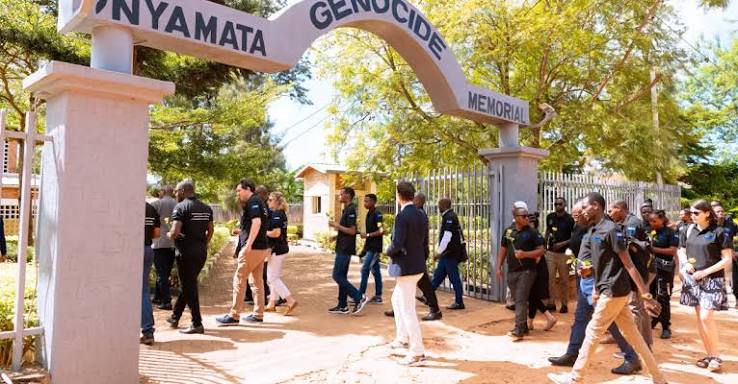
More than three decades after the 1994 Genocide against the Tutsi, Rwanda faces a new challenge: ensuring that younger generations remain engaged with a history they did not experience themselves. With more than 65% of Rwanda’s population born after 1994, education and institutions entrusted with preserving memory play an increasingly important role in transmitting this history and its relevance for the present and future. In this context, UNESCO is part of a collective effort to strengthen links between memorial sites and the formal education system.
Across the country, genocide memorial sites have become more than places of remembrance. Preserving the memory of over one million lives lost in just 100 days, they are also increasingly serving as spaces for learning, dialogue and reflection that can help strengthen social cohesion and support sustainable peace.
Recognizing their educational role, UNESCO, through the International Program on Holocaust and Genocide Education (IPHGE), officially launched the project “Strengthening Educational Capacities at Rwanda’s Memorial Sites” at the Kigali Genocide Memorial, in Kigali, Rwanda, on 9 June 2026.
Running until March 2027, the pilot project, implemented by UNESCO and Aegis Trust in collaboration with Rwanda’s Ministry of National Unity and Civic Engagement (MINUBUMWE) and Ministry of Education (MINEDUC), will support the development of educational resources and training opportunities for teachers, memorial guides and community educators. By strengthening the educational role of memorial sites, the project will also help lay the foundations for their wider impact, including through strengthening intergenerational dialogue and supporting the preservation and sustainable management of memorial sites.
As MINUBUMWE, our mandate is to promote national unity, values and resilience. We recognize education as one of the most effective tools to prevent genocide ideology, counter division and strengthen social cohesion. - Veneranda Ingabire, Executive Director of Memory and Genocide prevention, Rwanda’s Ministry of National Unity and Civic Engagement (MINUBUMWE)
As more young Rwandans learn about the genocide through education rather than personal memory, preserving and transmitting this history becomes increasingly important. How can places of memory foster learning, community dialogue and a commitment to preventing future atrocities?
This question was at the heart of a UNESCO roundtable held on 14 April 2026, in partnership with the Permanent Delegation of Rwanda to UNESCO as part of the commemorations of the International Day of Reflection on the 1994 Genocide against the Tutsi in Rwanda.
Education and community engagement can bridge generational divides and create opportunities for dialogue, in both formal and informal spaces of learning. As places grounded in historical evidence and remembrance, memorial sites provide environments where learners can ask questions, better recognize misinformation and historical distortion and better understand what made the genocide possible and its legacy today.
In Kinyarwanda there is a saying: ‘If you didn’t have the opportunity to speak with your parents, you will never know what your grandparents said.’ For the many that no longer have parents, how do we transmit this memory to the young generations? - Freddy Mutanguha, CEO of Aegis Trust
Focusing on the memorial sites of Bisesero, Gisozi, Murambi and Nyamata, the project will ensure that visits become meaningful and age-appropriate learning experiences, historically grounded and sensitive to the traumatic legacy of the genocide, and connect classroom learning with experiences of remembrance and reflection.
We acknowledge that this project cannot be overstated. Rwanda’s Genocide memorials are more than places of remembrance to us as educationists. They are powerful spaces for learning, for reflection and dialogue. - Rose Baguma, Head of Education Policy Department, MINEDUC
Education plays a crucial role in preventing group-targeted violence, preserving the memory of past atrocities and countering ideologies of hate and the denial and distortion of history. UNESCO promotes this type of learning as part of Global Citizenship Education, within the framework of the UNESCO Recommendation on Education for Peace and Human Rights, International Understanding, Cooperation, Fundamental Freedoms, Global Citizenship and Sustainable Development.
Educating about the 1994 Genocide against the Tutsi in Rwanda through memorial …
Learning about violent pasts to prevent future atrocities
Global citizenship and peace education
( Press Release Image: https://photos.webwire.com/prmedia/6/357134/357134-1.jpg )
WebWireID357134
This news content was configured by WebWire editorial staff. Linking is permitted.
News Release Distribution and Press Release Distribution Services Provided by WebWire.