

Why decarbonisation needs more than technology
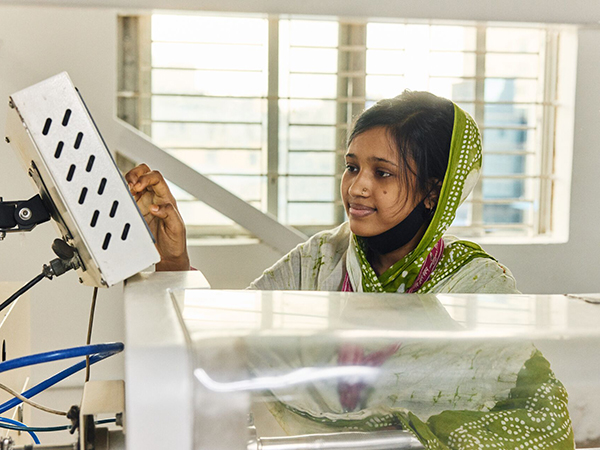
Of the textile industry’s emissions, 65 percent come from dye houses, finishing mills and production facilities. Most conversations about how to cut them orbit around technology: green machines, renewable energy and clean processes.
We’re closing in on 2030 and the solutions to cut textile industry emissions exist. Future Forward Factories, led by Fashion for Good and funded by H&M Foundation, is one example – developing open-source blueprints for near net-zero textile factories. Its first potential demonstrator facility in Gujarat is expected to reduce emissions by up to 93 percent and save around 60 litres of water per kilo of fabric produced.
These technologies that help decarbonise the industry are also changing what workers do, what skills they need and whether their roles will continue to exist. That is the uncomfortable question behind elevating the need to make decarbonisation just. No matter how low-carbon the machines are or how clean the processes become, they still need people who know how to run them.
“People are the backbone of this industry and workforce inclusion isn’t a moral concern, it’s a practical requirement for decarbonisation to work. On the ground, you can’t separate the climate question from the people question. Both are workers’ lived realities,” says Carola Tembe, Programme Director at H&M Foundation.
People are the backbone of this industry and workforce inclusion isn’t a moral concern, it’s a practical requirement for decarbonisation to work.
Carola Tembe, Programme Director, H&M Foundation
When Future Forward Factories was first designed by Fashion for Good, the focus was on technology, emissions and energy. As the project moved into practice, the picture changed, according to Priyanka Khanna, Innovation Director.
We realised pretty quickly that if we wanted these transitions to actually scale, we needed to understand the worker implications much earlier in the process, rather than as an afterthought.
Priyanka Khanna, Innovation Director, Fashion for Good
To map the social dimensions of the transition, Fashion for Good brought in impact advisory firm Sattva Consulting. Their assessment revealed worker benefits like reduced heat and chemical exposure, safer environments, and clearer pathways forreskilling. But it also revealed significant risks. When tasks become automated, female workers are often the first to be pushed out. This is the double edge of decarbonisation. The green transition can leave people behind or bring them along.
For Future Forward Factories, Sattva’s assessment helped redefine the project, incorporating workers’ voices, upskilling pathways and gender equity into the blueprints, side by side with the technical specifications.
Some of the strongest parts of Future Forward Factories came from recognising gaps along the way and being willing to expand the approach.
Priyanka Khanna, Innovation Director, Fashion for Good
The insights from initiatives across the industry point in the same direction: the earlier social realities are integrated into transition planning, the more durable the outcomes become. Drawing on years of work across the textile and recycling industry, Carola Tembe sees 3 things that brands, suppliers and policy makers have to get right for decarbonisation to work.
- Understand who is affected before deciding what to implement. Climate solutions change workflows, job roles and skills requirements. Those impacts need to be mapped early, as they shape whether a transition holds or stalls.
- Bring the full value chain into the room. Suppliers, for example, implement, brands set incentives and workers make solutions function. Without early alignment, and without shared policy and financing, solutions risk staying theoretical.
- Move from consultation to influence. Worker perspectives shape better outcomes when they are embedded into decisions, not just gathered as input. This requires co-creation and recognising the value in local knowledge.
In growing numbers, the machines and technologies that help decarbonise textile production are being installed in facilities in India, Bangladesh and countries around the world. Future Forward Factories shows what happens when people are part of the design from the start. Because the same technologies that decarbonise textiles can either deepen existing inequalities or open new pathways for those who operate them. The outcome of a just decarbonisation depends on three questions: who is consulted, what is funded and who is brought along.
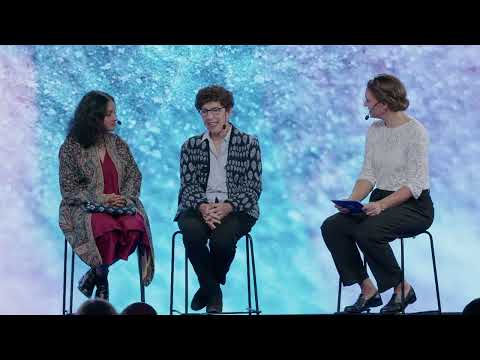
Want to learn more?Listen to Dr Linda Greer, Environmental scientist, and Aarti Mohan, Co-Founder and Partner at Sattva Consulting, in conversation about decarbonisation as not only a technical challenge, but a human one.
GCA Summit 2025: People & Planet – A Connected Conversation
( Press Release Image: https://photos.webwire.com/prmedia/7/356411/356411-1.jpg )
WebWireID356411
This news content was configured by WebWire editorial staff. Linking is permitted.
News Release Distribution and Press Release Distribution Services Provided by WebWire.