

Opel Grandland from Eisenach: Top SUV with Resource-saving, Elegant Design
- Highly efficient quality: Newly introduced monocoat process reduces water, energy and time consumption
- Setting standards: Eisenach as first Stellantis site in Europe to use monocoat method
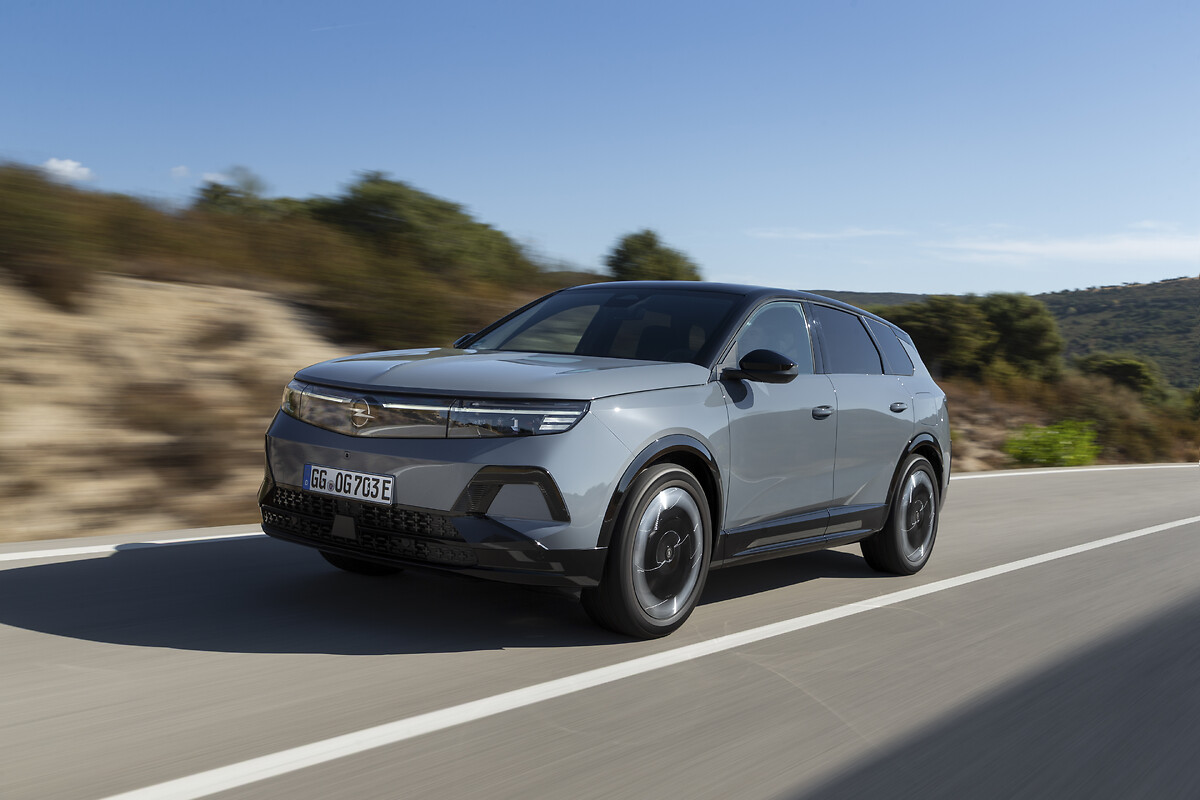
- Stylish appearance: Six out of ten customers choose Grandland in two-tone paint with black roof
Combined values for Opel Grandland Electric Long Range according to WLTP 1: Energy consumption 18.6 kWh/100 km, CO 2 emissions 0 g/km; CO 2 label: A.
Combined values for Opel Grandland Electric AWD according to WLTP 1: Energy consumption 18.1 kWh/100 km, CO 2 emissions 0 g/km; CO 2 label: A.
The Opel Grandland is making a name for itself in the C-SUV segment with its bold and pure design, clever technologies, and plenty of driving pleasure and comfort. When it comes to conserving resources, the top-of-the-line SUV ‘made in Eisenach’ excels not only with a wide range of electrified powertrains, including the Grandland Electric Long Range and the powerful Grandland Electric AWD all-wheel-drive version. Those in charge of production are also setting an example by looking at various elements of production. To make a particularly elegant statement with their car, six out of ten customers order their new Grandland in a two-tone paint finish with a black roof. Recently, this popular option has received an innovative makeover thanks to the introduction of the so-called monocoat finish.
Philosophy of production: “Conserving resources wherever possible”
The term ‘monocoat’ refers to a paint application process that is particularly efficient whilst maintaining consistently high quality. “We try to save energy and thus conserve resources wherever possible,” said Eric Katzmann, process manager at the Eisenach plant. The new procedure also makes a decisive contribution to this. Whereas previously the base coat and the clear coat had to be applied in two separate steps for the black Grandland roof, the monocoat method combines both in a single operation. This makes the entire process in the paint shop more efficient and sustainable than before in several respects.
Previously, the water-based base coat for the two-tone paint finish had to be applied first and then dried using infrared and hot air, before the clear coat could be applied afterwards. As these processes can now be carried out simultaneously, the plant has been able to switch off the so-called ‘base coat booth’, reducing water consumption in production by around 80,000 litres per month. Furthermore, the intermediate drying stage for the roof paintwork is no longer required. This saves both electrical and thermal energy, and of course time. Compared to the previous process, the demand for thermal energy per production hour has fallen by 150 kW and for electricity by more than 500 kW. Overall, CO 2 emissions at the Eisenach site can thus be reduced by 580 tonnes per year. And there are further environmental benefits thanks to the new monocoat process: the solvent concentration is lower and fewer waste products, such as paint sludge, are generated.
Eisenach plant leads the way: Team makes innovation possible
The Eisenach plant is the first Stellantis site in Europe to use the efficient, resource- and cost-saving monocoat process in series production. The introduction of this method means more than just a technical implementation. “It is the result of our shared mindset: curiosity, courage, cross-departmental collaboration and the determination to further develop processes as a team,” reflected Eric Katzmann.
Around two years ago, the colleagues in Eisenach first looked into this paint finishing process coming from the USA. It was not possible to implement the process straight away, since everything had to be adapted to specific EU requirements first. Once this had been achieved, the final step involved evaluating various suppliers to ensure that the precision and quality which the label ‘made in Germany’ stands for were maintained with the monocoat process. The new paint system has now been up and running for a few weeks and is helping the Eisenach plant to increase efficiency and reduce its carbon footprint every day – whilst customers can drive off in their new Opel Grandland with an elegant high-gloss black roof as usual.
Comfortable, high-quality, recyclable: Recycled materials in the interior
Elsewhere, Opel’s sustainability approach for the Grandland and other models goes far beyond the mere manufacturing process. Even during the development, the designers and engineers focussed on finding resource-saving solutions and thus reducing the CO2 footprint of the SUV. This is demonstrated, for example, by the Intelli-Seats for driver and co-driver available in the Grandland and also in the Frontera. With their recess running in the middle of the seat to relieve the tailbone, they offer relaxed driving pleasure and at the same time ensure a clear conscience. This is because the fabrics and covers for the surfaces of the seats, door panels, dashboards and centre consoles are made from materials from recycled PET bottles.
Even with vehicle parts that are not visible to customers, the developers have paid attention to a functioning circular economy: For example, processed aluminium as well as steel with recycled content along with more than 40 polymer elements, which consist of up to 80 per cent ‘green’ materials, are used in the top-of-the-line SUV. In total, more than 550 kilogrammes of the Grandland’s total weight is accounted for by recycled and regenerative raw materials.
[1] A vehicle’s values not only depend on the vehicle’s efficient use of fuel, but are also influenced by driving behaviour and other non-technical factors.
( Press Release Image: https://photos.webwire.com/prmedia/8/356347/356347-1.jpg )
WebWireID356347
This news content was configured by WebWire editorial staff. Linking is permitted.
News Release Distribution and Press Release Distribution Services Provided by WebWire.