

Next Generation Opel Astra to be Designed, Engineered and Made in Rüsselsheim
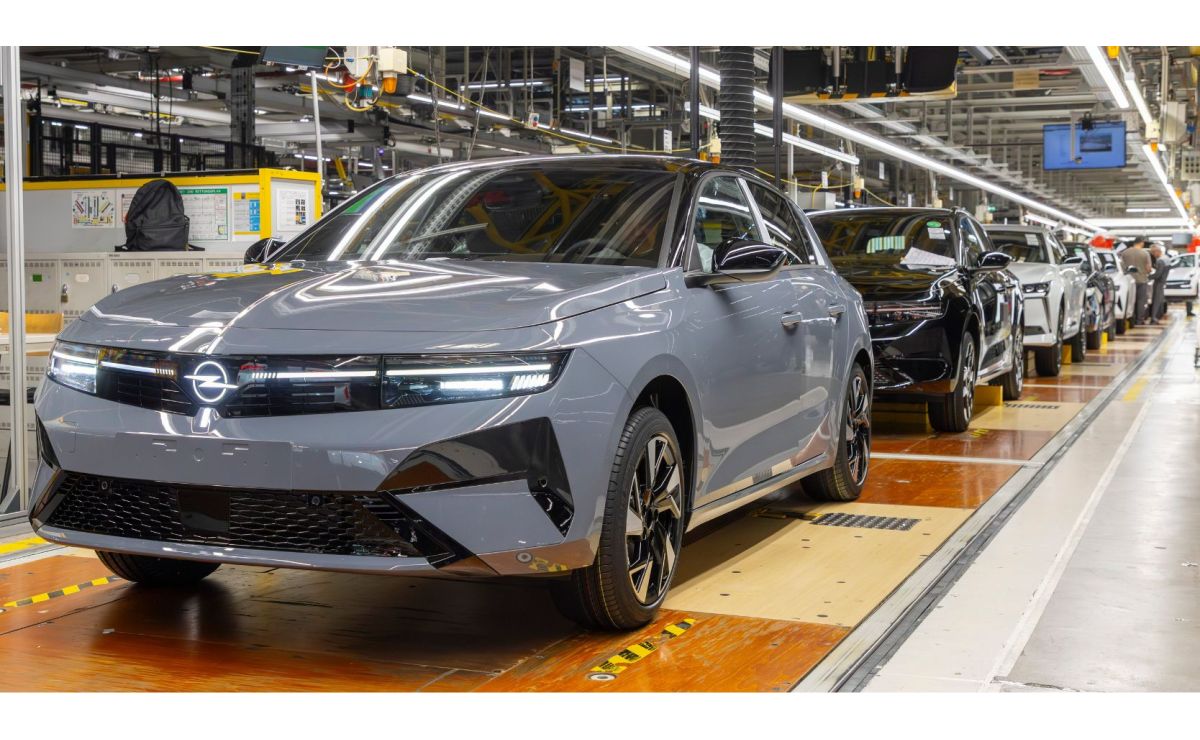
- Exciting newcomer: Next-generation compact class bestseller Astra to be produced at Opel home plant in Rüsselsheim
- At least four new models by 2030
- grEEn-campus Rüsselsheim: New global Opel headquarters and Stellantis Germany home under construction
- More than €1 billion to be invested overall in Germany until 2030
Combined values for Opel Astra Electric and Astra Sports Tourer Electric according to WLTP 1: Energy consumption 15.3-15.8 kWh/100 km, CO 2 emissions 0 g/km; CO 2 label: A
Combined values for Opel Astra Plug-in-Hybrid and Opel Astra Sports Tourer Plug-in-Hybrid according to WLTP 2: Energy consumption weighted 12.6-13.0 kWh electricity/100 km plus 2.2-2.3 l gasoline/100 km; CO 2 emissions 49-53 g/km; CO 2 class B. When the battery is empty: Fuel consumption 5.4-5.6 l/100 km; CO 2 label D
Combined values for Opel Astra Hybrid and Astra Sports Tourer Hybrid according to WLTP 2: Fuel consumption 4.9-5.1 l/100 km, CO 2 emissions 109-114 g/km; CO 2 label: C
Combined values for Opel Astra 1.5 Diesel and Astra Sports Tourer 1.5 Diesel according to WLTP 2: Fuel consumption 4.9-5.1 l/100 km, CO 2 emissions 130-134 g/km; CO 2 label: D
The next generation Opel Astra, based on the new Stellantis STLA ONE platform, will be produced at Opel’s home plant in Rüsselsheim. As communicated by Opel CEO Florian Huettl during the Stellantis Investor Day, the German manufacturer plans to introduce at least four new models by 2030. The newcomers include the next generations of the best-selling Opel Astra and Opel Corsa along with the recently announced new C-SUV in partnership with Leapmotor. Meanwhile, Opel will continue to invest in existing models in its portfolio.
“The investment into the production of the next Astra generation in Rüsselsheim underlines the focus of Stellantis on Germany and the importance of Opel,” said Stellantis Enlarged Europe COO Emanuele Cappellano. “The C-segment, which accounts for approximately 30% of total car sales in Europe, is a substantial part of Stellantis’ European strategy to strengthen the Company’s market coverage in our region, as outlined in our FaSTLAne 2030 strategic plan.”
“The allocation of the next-generation Astra to our plant in Rüsselsheim demonstrates Opel’s commitment to Germany as an industrial location. I am delighted that Rüsselsheim will remain the home of the Astra and be built in the direct vicinity of our new grEEn-campus,” said Opel CEO Florian Huettl. “This investment is a clear sign that together with our social partners we can reach agreements that benefit all stakeholders.”
“Opel and Vauxhall are important assets within Stellantis and fulfill a significant role especially within Europe,” Xavier Chéreau, Chairman of the Opel Board, said during his visit in Rüsselsheim today. “Made in Germany is a well-recognised quality label for customers worldwide and a defining strategic asset for Opel in the Stellantis group. This performance is supported by strong industrial foundations and high-quality social dialogue,” Chéreau added.
The German manufacturer is thus adding to current projects in Germany with total investments in the country to reach more than €1 billion by 2030. Opel and Stellantis Germany are already constructing a new state-of-the-art headquarter building, the grEEn-campus Rüsselsheim. The new global Opel headquarters and Stellantis Germany home will offer state-of-the-art workplaces that are designed for flexible working and collaboration. Sustainable building materials are being used to ensure a good interior atmosphere. The power supply is provided by a photovoltaic system, which is integrated into a green roof. This not only contributes to biodiversity but also ensures a pleasant microclimate and helps the cooling of the building, which is ensured in parallel via a geothermal system close to the ground.
C-segment models have been a staple of Opel’s portfolio for 90 years. The success story that started with the Kadett in 1936 has been seamlessly continued with the current generation Astra. With high-tech solutions such as the Intelli-Lux HD headlights and highly efficient powertrains including battery-electric, plug-in hybrid, hybrid and diesel the Astra – designed, engineered and made in Germany – caters for a broad range of customer needs. In total, around 25 million units of the Kadett and Astra have been sold to date.
Like the future Astra, the next generation Corsa will be based on the new STLA ONE Stellantis platform and take another step toward making electric mobility accessible and even more relevant. The current generation Corsa has been Germany’s best-selling small car for more than five years and continues to lead the way in 2026. In total, more than 15 million units of the iconic Corsa have been sold.
While the Astra and the Corsa represent two established products in the Opel line-up, the all-new C-SUV, announced to be produced in Zaragoza as part of the extension of the partnership with Leapmotor, will complete the coverage of the C-segment alongside the Opel Frontera and the Opel Grandland. The new vehicle will serve as a blueprint for efficient global collaboration: designed and created by Opel in Rüsselsheim and developed by international teams located in Germany and China. Simultaneously, it will enable the German manufacturer to take a major strategic step forward in terms of electrification and scaling in the shortest possible time with sales of the newcomer expected to start as early as 2028.
[1] A vehicle’s values not only depend on the vehicle’s efficient use of fuel, but are also influenced by driving behaviour and other non-technical factors.
( Press Release Image: https://photos.webwire.com/prmedia/8/355941/355941-1.jpg )
WebWireID355941
This news content was configured by WebWire editorial staff. Linking is permitted.
News Release Distribution and Press Release Distribution Services Provided by WebWire.