

Local food systems key as food prices rise and tensions grow
The tools are there: Experts urge governments to stabilise food prices amid rising geopolitical tensions
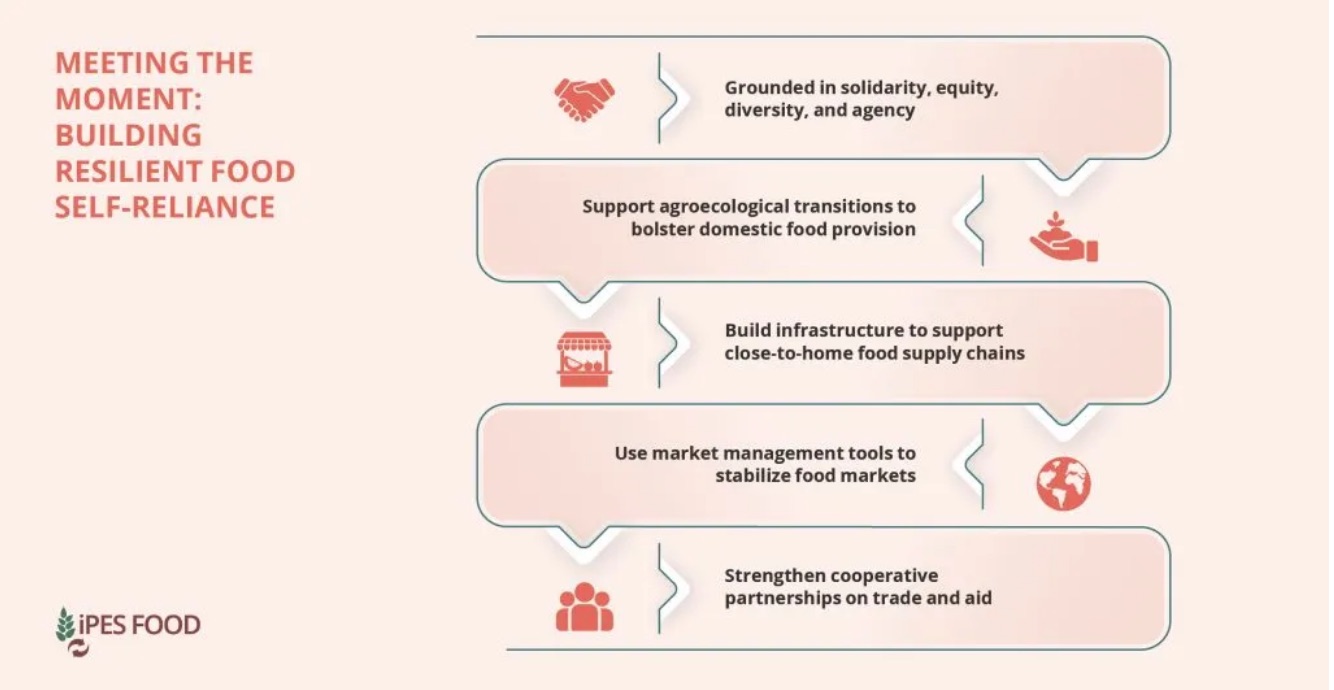
The way forward is resilient self-reliance – local food systems backed by fair trade.
Top lines:
▸ New IPES-Food special report, The New Geopolitics of Food highlights the need to cut reliance on volatile global markets and strengthen local food systems to stabilise prices.
▸ Global food prices still 35% above 2019 levels as repeated shocks from war, energy and trade disruptions drive spikes and expose fragility.
▸ Experts urge governments to shift course and invest in more self-reliant, resilient food systems to protect access to food.
The path to stable food prices lies in reducing dependence on global markets, a new report by IPES-Food finds.
Amid escalating geopolitical tensions, price volatility, and hunger, countries reliant on food imports and long, complex supply chains are increasingly exposed to shocks beyond their control.
Yet tools to stabilise prices and protect access to food – including food reserves, supply management, and stronger local food systems – are not being used at scale.
Critical vulnerability in food security
Global food prices remain more than 35% above pre-pandemic levels, as war, trade tensions, aid cuts, and energy shocks continue to disrupt food supply chains and drive up prices.
These shocks are exposing a critical vulnerability in global food security: heavy dependence on volatile global markets, imported food, and long supply chains controlled by a handful of countries and companies.
The global food import bill hit a record USD $2.2 trillion in 2025, with the sharpest increase falling on low-income countries least able to afford it. Without a change in course, food prices, hunger, and corporate concentration are set to worsen.
Building resilience
However, governments are not without options. The report finds that countries can reduce their exposure to global shocks by building resilient self-reliance – based on equity, sustainability, and democratic participation. This means strengthening local supply chains and markets, supporting farmers, reducing reliance on volatile global supply chains, and maintaining fair, cooperative, and diversified trade.
The tools are there
Practical tools are already in use. Public food reserves, supply management, and market interventions have helped countries from India and across West Africa to Canada and Norway to stabilise prices and support local production.
In an increasingly volatile world, these approaches prioritise food access and local production over narrow economic efficiency – and will be critical to keeping food affordable.
Governments face a choice, the report concludes, continue with a fragile system, or build one that can withstand the shocks ahead.
We’re entering a new geopolitics of food, where food prices are shaped by conflict, trade disruption, and power play. Crisis after crisis exposes the risks of outsourcing food security to distant markets and fragile supply chains controlled by a handful of countries and companies.
The way forward is resilient self-reliance – local food systems backed by fair trade. The tools to stabilise prices already exist, from food reserves to supply management, but governments are not using them at scale.
Jennifer Clapp, IPES-Food expert
For communities across the Global South, this is about whether people can afford to eat. When countries are forced to depend on imported food and farm inputs, every shock hits hardest at the local level – farmers, workers, and low-income families are the ones who pay the price. This system is not only fragile, it is unjust.
We need to rebuild food systems from the ground up, closer to home, with food sovereignty – stronger local production, fairer markets, targeted distribution systems and food subsidies, and the tools to protect people when shocks hit.
Shalmali Guttal, IPES-Food expert
Geopolitical tensions are tightening the squeeze on Global South countries as they struggle to secure affordable food. As food and fertiliser import bills rise, so does debt, leaving governments with less room to act just when they need it most. This is why reducing dependence is not a choice, but a necessity.
We already have solutions. The West African regional food security reserve shows that cooperation and public tools can stabilise markets – what is needed now is the political will to scale these efforts, cut reliance on volatile global markets, and build lasting resilience.
Mamadou Goïta, IPES-Food expert & farmer
( Press Release Image: https://photos.webwire.com/prmedia/7/354610/354610-1.jpg )
WebWireID354610
This news content was configured by WebWire editorial staff. Linking is permitted.
News Release Distribution and Press Release Distribution Services Provided by WebWire.