

Greenpeace launches “Deep Arctic Expedition” livestreaming deep sea science from 3000m depth
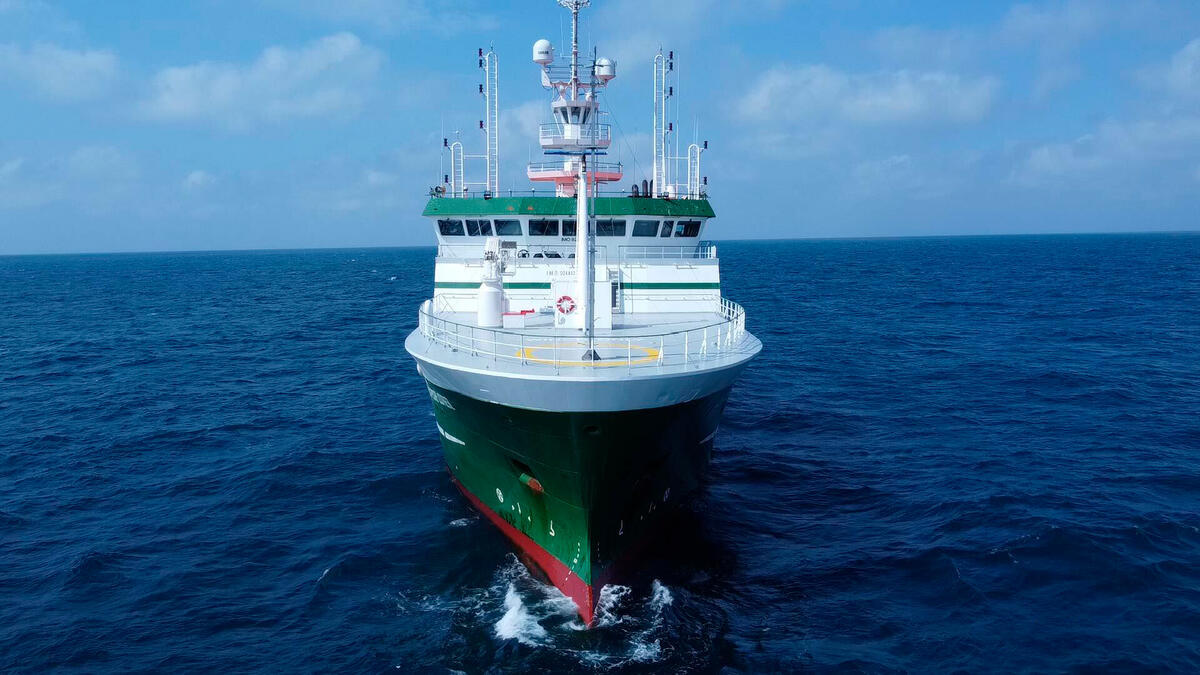
On 8 May 2026, Greenpeace departs on a month-long mission to the Arctic deep-sea. The Deep Arctic Expedition brings together world-leading scientists to explore Arctic seamounts and hydrothermal vent fields – ecosystems so remote they remain largely a mystery to humanity.
“We are sailing into the planet’s uncharted and unexplored territory and will probably find new species that haven’t been described and named up to now,” said Dr. Paco Cárdenas, deep-sea sponge expert at the Museum of Evolution, Uppsala University. “These animals have survived for hundreds of millions of years, and we are connected to them in many ways. They are the chemical libraries of the ocean, holding potential cures for diseases and have the important function of cleaning our oceans. To lose these species before we even understand them would be a tragedy of global proportions. It’s essential that we protect them.”
The area of the expedition was opened for deep sea mining by the Norwegian government in 2024, but was halted last year after protests from environmental organisations, scientists and the green opposition parties in Norway.[1] Deep sea mining would, according to many scientists, cause irreversible damage to vulnerable deep-sea ecosystems, including the destruction of habitats, and possibly species extinction.
The expedition will focus on exploring seamounts, which are biodiversity hotspots in the deep sea, and hydrothermal vent fields – underwater volcanic hot springs that support life in total darkness. Greenpeace and the external scientists onboard will be livestreaming from depths down to 3000 metres.[2]
Dr. Anne Helene Tandberg, from the University Museum of Bergen, is a specialist on the crustaceans that live in these environments, and has described many species previously unknown to man. She also works with Red Listing marine species and habitats and provides scientific background for establishing Marine Protected Areas. She emphasizes the connectivity of these ecosystems.
“The Nordic and Arctic deep seas are the heartbeat of our northern oceans,” says Dr. Tandberg. “From the smallest amphipod to the largest seamount, these sites are interconnected. We see this in both species composition and genetic variability. We aren’t just looking at rocks, animals and water; we are documenting the vital organs of a global ecosystem that keeps our planet habitable.”
The Arctic is one of the most rapidly changing and underprotected regions on Earth. As the industrial frontier expands toward the deep sea, Greenpeace warns that unique ‘biodiversity hotspots’ are now at risk of irreversible disruption.
“We cannot protect what we do not know,” said Dr. Sandra Schöttner, chief scientist with Greenpeace International. “This expedition will gather scientific evidence of the Arctic’s vulnerable deep-sea ecosystems. By safeguarding these waters in a network of ocean sanctuaries, we can create a resilient safety net for marine life and protect the health of our global oceans for generations to come.
The expedition will conclude in Bergen, Norway in early June, presenting its initial findings to the public and policy-makers. Greenpeace is campaigning globally for a moratorium on deep sea mining and to protect 30% of the ocean by 2030.
Photos, video and maps available in the Greenpeace Media Library.
Notes:
[1] Deep-sea mining: Norway halts controversial practice until 2029 (Euronews)
[2] Expedition dates: 8 May – 5 June. Livestreams from the Arctic seabed are planned between 15-30 May. Scientists onboard from Sweden (Uppsala University), Spain (University of Madrid), Norway (University in Bergen), and Germany (Senckenberg Society for Nature Research). Languages spoken: English, French, German, Spanish/Catalan, Norwegian, Swedish
[3] Greenpeace International, Greenpeace Germany and Greenpeace Nordicare leading the Deep Arctic Expedition.
( Press Release Image: https://photos.webwire.com/prmedia/7/354291/354291-1.jpg )
WebWireID354291
This news content was configured by WebWire editorial staff. Linking is permitted.
News Release Distribution and Press Release Distribution Services Provided by WebWire.