

Study: Immigrants help address the US eldercare shortage
Economists find that in metro areas with more immigration, nurses are spending more time with elderly patients.
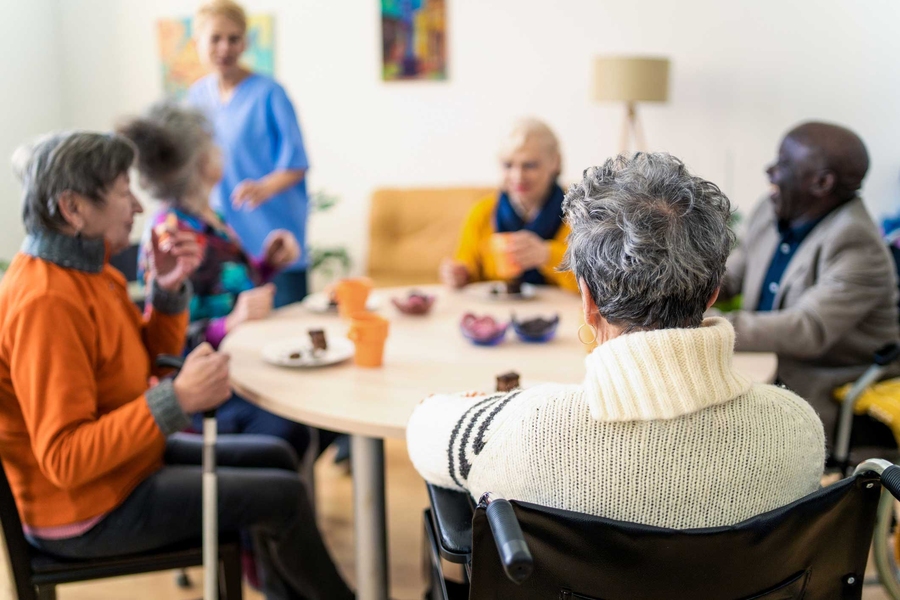
Good caregivers are often in short supply, but after the Covid-19 pandemic hit the U.S. in early 2020, staff levels at nursing homes dropped by 10 percent. What was a simple personnel shortage has moved closer to being a nursing-care crisis.
“We have an aging population, care for them is labor-intensive, and there are shortages everywhere in that supply chain,” says MIT economist Jonathan Gruber.
As it happens, about one-fifth of health care support workers in the U.S. are immigrants. And as a newly published study of the nation’s metro areas shows, changes in immigration levels can affect how much nursing care the elderly receive.
“When immigration rises in a city, it significantly increases the health care workforce,” says Gruber, co-author of the study and a paper detailing its findings.
Overall, Gruber and his colleagues determined that when there is more immigration, registered nurses and other aides work more hours at nursing homes, without displacing already-employed caregivers, while patient outcomes improve. Essentially, a 10 percent increase in female immigrants in a given metro area leads to a 1.1 percent increase in hours that registered nurses spend with elderly patients, while hospitalizations for those patients drop, among other things.
“Even if immigration actually increases labor supply to the medical sector, it was an open question if that would improve outcomes, and it does,” adds Gruber, the Ford Professor of Economics and head of the MIT Department of Economics.
The paper, “Immigration, the Long-Term Care Workforce, and Elder Outcomes in the U.S.,” appears in the American Journal of Health Economics. The authors are Gruber; David C. Grabowski, a professor in the Department of Health Care Policy at Harvard Medical School; and Brian E. McGarry, an assistant professor in the Department of Medicine and the Department of Public Health Sciences at the University of Rochester.
More care, fewer hospitalizations
To conduct the study, the researchers tapped into multiple data sources, including immigration information from 2000 to 2018 appearing in the U.S. Census Bureau’s American Community Survey. Extensive nursing home data came from different types of reports that facilities are required to file in order to maintain Medicare and Medicaid eligibility, allowing the scholars to examine care staffing levels and patient outcomes.
All told, the study encompasses 16 million Medicare beneficiaries in over 13,000 nursing homes in metropolitan statistical areas of the U.S., and evaluates immigrations flows for two decades.
“One of the key groups that’s taking care of our nation’s elders is immigrants,” Gruber says. “So I thought it would be fascinating to understand how much does immigration actually matter for elder care.”
More specifically, the scholars find that for every 10 percent increase in immigration above the norm in metro areas, in addition to the 1.1 percent increase in registered nurse hours, there is a 0.7 percent increase in hours of care provided by certified nurse assistants. There is a 0.6 percent decline in hospitalizations for patients making short-term stays, of up to a month, in nursing homes.
Beyond that, the study yielded other markers showing that patient outcomes improve in these situations. The roughly 1 percent increase in hours of care was accompanied by a decline in the use of physical restraints needed for patients, who also needed less psychiatric medication prescriptions and had fewer urinary tract infections, among other things.
The fact that those outcomes improved in more immigrant-staffed situations is among the new insights provided by the research.
“There’s a lot of evidence that providing more labor supply to the elderly sector improves patient outcomes,” Gruber says. “But it wasn’t clear whether more immigrants would work the same way, because of language issues or other factors.”
A new lens
The study comes as immigration policy has become a major issue in the U.S., something that Gruber says helped spur his curiosity about its health care implications — although he did not know what the study would reveal, one way or another. In this case, he notes, the impact of immigration on eldercare may be another factor to be considered in the larger debates about the subject.
“I think it provides a new lens on the debate over immigration,” Gruber says. “The debate over immigration has been solely about what will it do to native workers, what will it do to the crime rate, what will it do to tax collection. This adds a new element, which is: What will it do to our citizens’ care? By having more immigration, we provide more care.”
Gruber, Grabowski, and McGarry are continuing to study this issue. In a new working paper, released in February, they found that increases in immigration are consistent with a reduction in the mortality rate, in part by allowing more elderly people the opportunity to receive care at home.
Gruber recognizes that there will continue to be sharp policy disagreements over immigration. Still, as the just-published paper states, to this point, when it comes to nursing care, the “results paint a consistent picture of improved quality of care resulting from increased immigration.”
( Press Release Image: https://photos.webwire.com/prmedia/6/354105/354105-1.jpg )
WebWireID354105
This news content was configured by WebWire editorial staff. Linking is permitted.
News Release Distribution and Press Release Distribution Services Provided by WebWire.