

NASA, Organ Sharing Network UNOS to Study Faster Organ Transport
Every second counts in the life-saving world of medical transplants. To help address that urgency, NASA’s Langley Research Center in Hampton, Virginia, is teaming up with the United Network for Organ Sharing (UNOS) to explore faster, more reliable ways to transport donor organs using advanced aviation technologies.
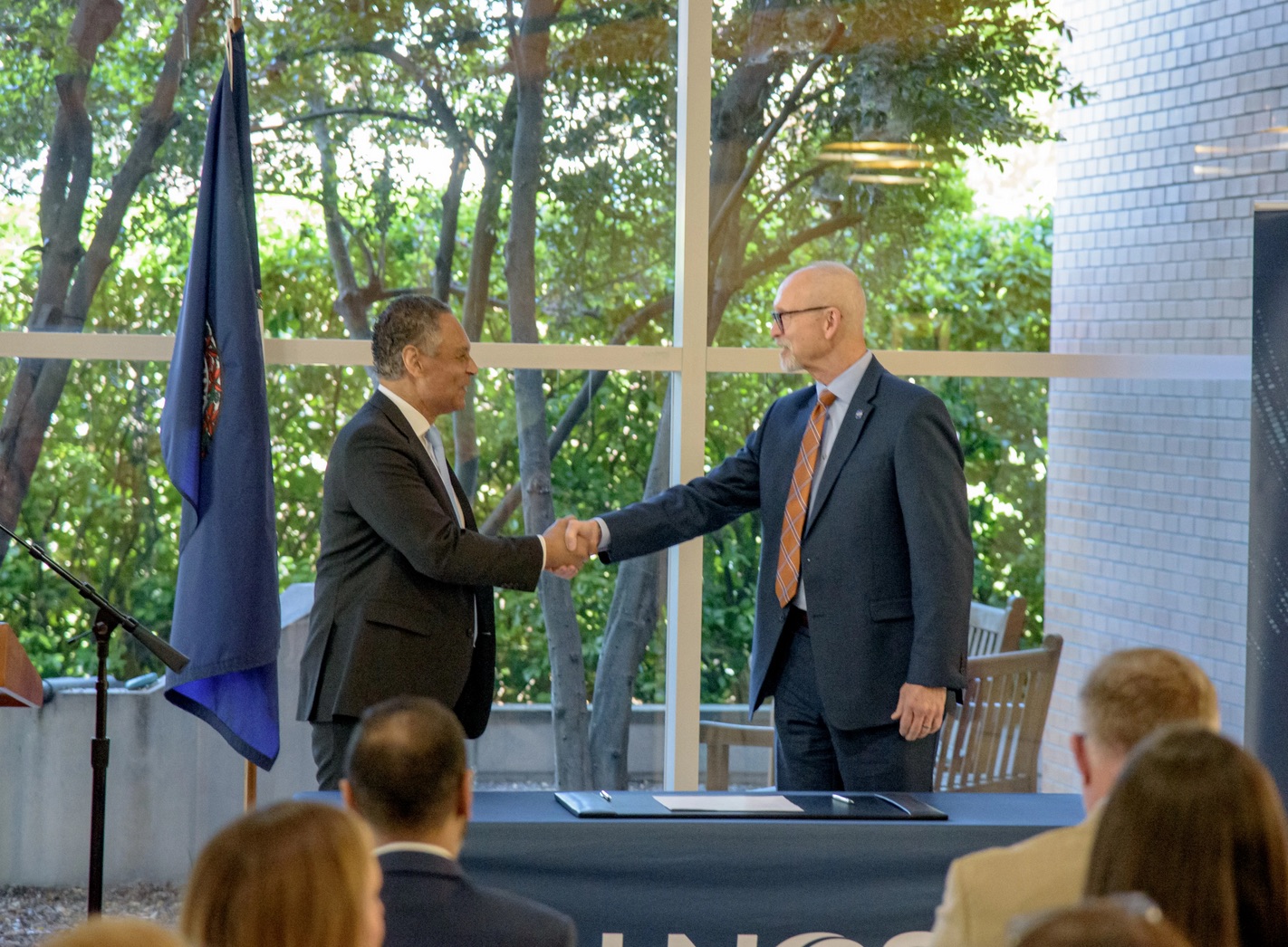
NASA Langley and UNOS will collaborate under a new Space Act Agreement announced during a ceremony Tuesday at UNOS’ headquarters in Richmond, Va.
The partnership brings together NASA’s expertise in aviation research and UNOS’ role at the center of the U.S. transplant network. UNOS is a nonprofit organization that manages parts of the national organ donation and transplant system under contract with the federal government and has long supported innovation across the system.
While organs are routinely transported between cities by aircraft, ground logistics can introduce time-sensitive challenges, especially in congested or hard-to-reach areas. Through this agreement, NASA will apply its aeronautics expertise and flight research capabilities to evaluate whether drones can help reduce those delays, improve delivery timelines, potentially improving medical outcomes.
“This is a chance to apply NASA Langley technology to a real-world problem that can save people’s lives who are waiting for transplants,” said John Koelling, director, Aeronautics Research Directorate at NASA Langley. “There’s nothing more rewarding than seeing your technical work have a positive impact on people’s lives.”
The collaboration focuses on identifying key challenges in organ transportation and determining how NASA-developed tools such as advanced modeling, flight planning, sensing technologies, and safety systems can help. It allows UNOS and NASA to design research that meets medical field standards.
The work also includes evaluating how drones perform when carrying sensitive biological materials in realistic environments. The first test will be conducted using NASA Langley’s City Environment Range Testing for Autonomous Integrated Navigation (CERTAIN), which provides a unique capability to safely fly drones in real-world conditions beyond visual line of sight (BVLOS) without the need for ground-based spotters. This capability enables researchers to explore longer-distance and more complex delivery scenarios that better reflect the time-sensitive nature of organ transport.
After the initial flight evaluations, an animal test organ will be assessed to determine whether it remains viable for transplant, including assessing factors such as temperature stability and potential tissue damage caused by a lack of blood flow.
“The idea that something of worldwide benefit could be created in our own backyard is pretty exciting,” Koelling said.
For NASA, the agreement demonstrates how technologies developed for aviation and space can directly benefit people on Earth. For UNOS, the partnership reflects its commitment to exploring innovative solutions to strengthen the organ donation and transplant system.
If early drone testing proves successful, the partnership may expand to further evaluate operational feasibility and scalability, helping determine whether drones could become a viable option for time-critical medical deliveries.
“It feels great that we’ve made real steps forward in research that is paving the way for life-saving measures using drones,” said Lena Pascale, regional partnerships lead, Strategic Partnerships Office at NASA Langley.
As this collaboration progresses, it highlights how NASA Langley’s research and expertise could revolutionize the medical transplant process, make a lasting impact on patient care, and save lives.
Kimiko Booker
NASA Langley Research Center
*Caption
Mark Johnson, left, interim CEO of UNOS, and John Koelling, director of the Aeronautics Research Directorate at NASA’s Langley Research Center, shake hands during a signing ceremony marking an agreement to study drone transport for organs.Photo courtesy of UNOS
( Press Release Image: https://photos.webwire.com/prmedia/7/353724/353724-1.jpg )
WebWireID353724
This news content was configured by WebWire editorial staff. Linking is permitted.
News Release Distribution and Press Release Distribution Services Provided by WebWire.