

The Met Presents Works by Renowned Artist Alberto Giacometti in Dialogue with the Iconic Temple of Dendur, Illuminating the Enduring Influence of the Ancient World on Modern Art
For the first time, rare loans from the Fondation Giacometti place the artist’s sculptures in conversation with one of The Met’s most iconic spaces.
Exhibition Dates: June 12–September 8, 2026
Exhibition Location: The Met Fifth Avenue
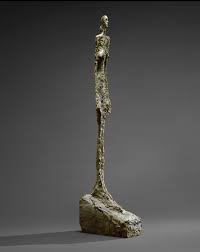
From June 12 through September 8, 2026, The Metropolitan Museum of Art will present Giacometti in the Temple of Dendur, a presentation that brings the work of renowned modern artist Alberto Giacometti (1901–1966) into dialogue with the Temple of Dendur, one of the Museum’s and New York City’s most iconic spaces. The exhibition, in co-organization with the Fondation Giacometti, will feature 17 sculptures—14 figures in bronze and plaster on loan from the Fondation Giacometti, including rarely seen painted plasters, and three from The Met collection—installed in and around the temple and will highlight the enduring impact of ancient Egyptian art on one of the defining figures of 20th-century art. Long preoccupied with how sculpture might convey solitude, vulnerability, and the persistence of the human figure, Giacometti found in ancient Egyptian art a model of formal restraint and spiritual intensity that would shape his mature work.
The exhibition is made possible by the Kate W. Cassidy Foundation.
“The Met is not only a collection of extraordinary works but also of outstanding sites for the display of seminal works of art. By situating Giacometti’s work in dialogue with the Temple of Dendur, this installation underscores how deeply the ancient world shaped modern artistic expression,” said Max Hollein, The Met’s Marina Kellen French Director and Chief Executive Officer. “Giacometti in the Temple of Dendur reflects The Met’s unique ability to offer new perspectives by bringing works of art from different times and cultures into conversation—an approach that also informs the vision for the Museum’s Tang Wing for Modern and Contemporary Art, opening in 2030.”
“Giacometti continuously returned to the question of how to infuse his work with the experience of being human,” said Stephanie D’Alessandro, The Met’s Leonard A. Lauder Curator of Modern Art and Senior Research Coordinator, Department of Modern and Contemporary Art. “His sustained engagement with ancient Egyptian art offered not only formal clarity but a model for how the figure could embody both stillness and intensity. Seen within and around the Temple of Dendur, his sculptures sharpen our understanding of his lifelong effort to distill the human presence to its most essential form.”
“Ancient Egyptian temples were conceived as sacred houses for the gods, with encounters between divine images and the wider public taking place outside the sanctuary on terraces and ceremonial spaces,” said Aude Semat, Associate Curator in The Met’s Department of Egyptian Art. “Placing Giacometti’s sculptures around and within the Temple of Dendur invites us to reconsider the monument not only as an extraordinary work of ancient architecture but as a living sacred environment. The installation foregrounds the temple’s original spatial and symbolic functions while opening a dialogue across millennia about how sculpture mediates presence and belief.”
“From an early age, Alberto Giacometti was deeply engaged with ancient Egyptian art, encountering it in collections across Europe—from Florence and Turin to the Louvre Museum—as well as through books,” said Emilie Bouvard, Curator at the Fondation Giacometti. “At once naturalistic and highly symbolic, Egyptian art resonated with his enduring search for both monumentality and humanity. The opportunity to present his work within a setting of such profound historical and architectural significance offers a rare and compelling perspective on his oeuvre.”
Throughout his career, in his search for the means to express the experience of human existence, Alberto Giacometti was profoundly shaped by the art of ancient Egypt. Early encounters with Egyptian sculpture in Florence and Rome in 1920–21 left a lasting impression on the young artist, who was drawn to their stillness, rigid frontality, and enduring composure. After moving to Paris in 1922, he spent considerable time in the Egyptian galleries of the Louvre, where sustained study refined his understanding of form, proportion, and the symbolic power of the human figure. His engagement extended beyond the museum: in 1920 he acquired Hedwig Fechheimer’s Egyptian Sculpture (1914), a publication that deeply informed his conception of art—particularly the performative, almost magical nature of ancient statuary and its capacity to embody spiritual presence. He also drew directly from Ludwig Curtius’s Egypt and Western Asia (1923), tracing reproduced figures to internalize their structural clarity and frontal authority. His sketchbooks from the 1920s and 1930s bear witness to this sustained engagement, revealing how ancient models helped him distill the human figure to its essential, expressive core. Studies of walking figures in profile would later culminate in works such as Walking Woman (I) (1932), in which elongation and stillness coexist in poised equilibrium—forms that evoke not only physical movement but the fragile persistence of being in space and time.
Completed around 10 BCE, the Temple of Dendur was dedicated to the goddess Isis and two deified brothers, Pedesi and Pihor. Priests performed rituals within the temple and on its terrace, mediating the human and divine realms. Gifted by Egypt to the United States in 1965 and awarded to The Met in 1967, the temple opened to the public at the Museum in 1978, and has since become one of its most beloved and enduring works of art. The temple’s historical role as a site of passage and encounter resonates with Giacometti’s lifelong exploration of the charged relationship between sculpture and viewer. In placing modern sculpture within this ancient sanctuary, the installation emphasizes the Temple of Dendur’s architectural power and invites renewed consideration of its ritual and spatial design. In this setting, Giacometti’s figures—at once solitary and monumental—assume heightened emotional resonance, their fragility and endurance intensified against the temple’s stonework.
Within this architectural framework, the placement of Giacometti’s sculptures carries particular resonance. Walking Woman (I) (1932) will be positioned in the temple’s offering hall to recall the placement of a deity’s statue within the sanctuary, evoking the moment before the sacred image emerged to meet worshippers outside. Elsewhere, figures will stand alone or in quiet groupings on the temple’s raised platform—recalling the terraces of Egyptian temples and how those outside the sanctuary could approach the divine presence during festive occasions. In this setting, Giacometti’s works engage questions central to both ancient and modern sculpture: distance and access, elevation and withdrawal, visibility and concealment. Groups of hieratic female figures, including postwar works such as Women of Venice (1956), further suggest the terraces where divine presence was revealed during festivals, while underscoring the artist’s enduring meditation on the human condition and the body’s relationship to time and mortality. The presentation evokes both the processions that unfolded around Egyptian temples and the poetic figural gatherings Giacometti produced throughout his career. Confronted with this ancient structure, Giacometti’s sculptures appear both timeless and precarious.
Giacometti in the Temple of Dendur exemplifies The Met’s forward-looking approach to presenting modern art within a global and cross-historical framework. The installation anticipates the curatorial vision of the Tang Wing for Modern and Contemporary Art, which will situate modernism and its legacies within a continuous, global history. Seen together, ancient monument and modern sculpture illuminate a powerful continuum across time—one that lies at the heart of The Met’s mission.
Credits and Related Content
Giacometti in the Temple of Dendur is curated by Stephanie D’Alessandro, The Met’s Leonard A. Lauder Curator of Modern Art and Senior Research Coordinator, Department of Modern and Contemporary Art, and Aude Semat, Associate Curator in The Met’s Department of Egyptian Art, and Emilie Bouvard, Curator, Fondation Giacometti, Paris. The exhibition is co-organized by The Metropolitan Museum of Art and the Fondation Giacometti, Paris.
The Met will host a variety of related programs in conjunction with the installation. Details will be announced at a later date.
###
( Press Release Image: https://photos.webwire.com/prmedia/6/353532/353532-1.jpg )
WebWireID353532
This news content was configured by WebWire editorial staff. Linking is permitted.
News Release Distribution and Press Release Distribution Services Provided by WebWire.