

Unified Speed Restrictions: Why fresh, accurate information is crucial for drivers and automation
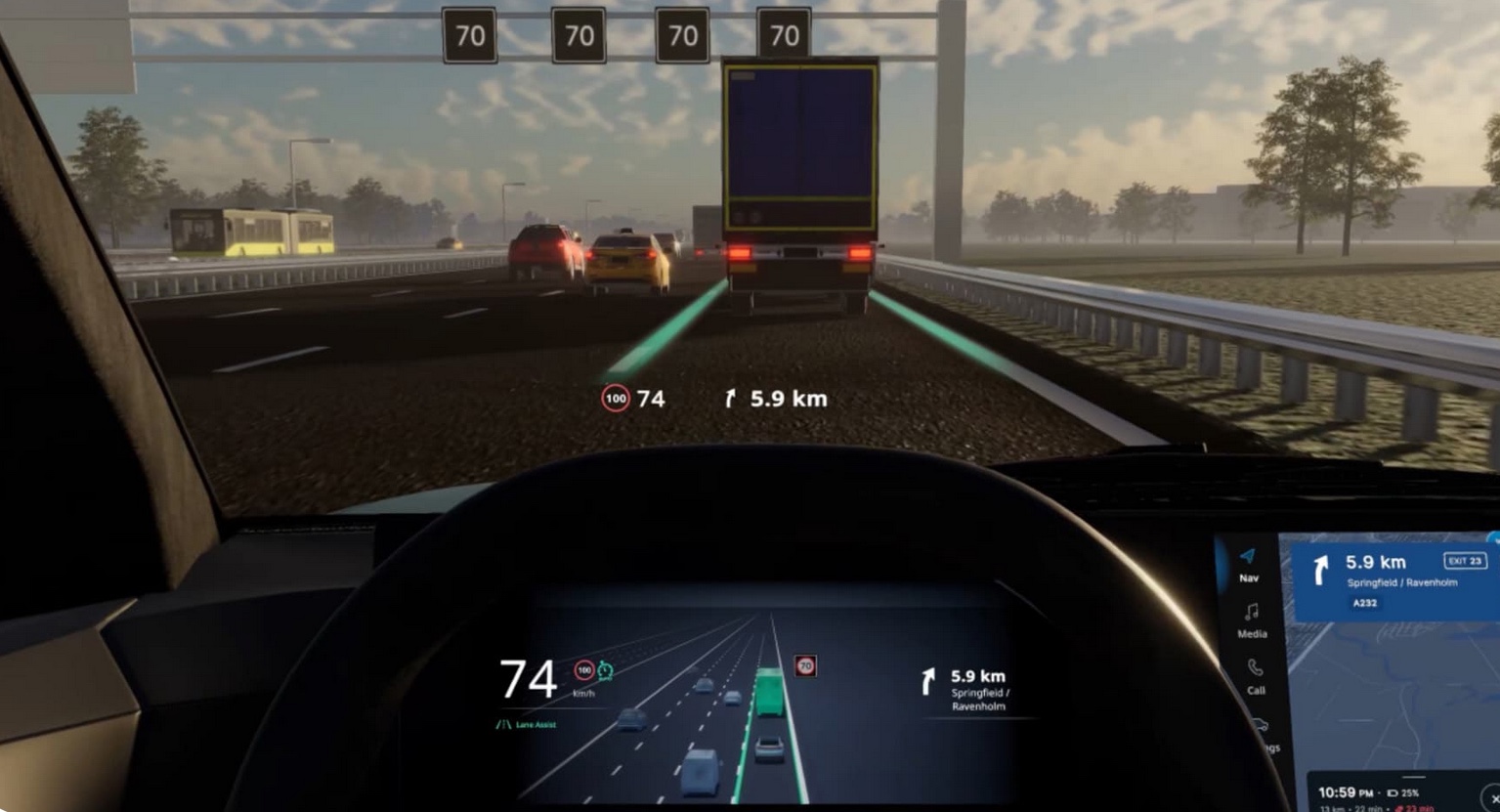
Construction zones, congestion, severe weather — when road conditions change, so do speed restrictions. But with these temporary, time-critical and often impromptu adjustments making up over 10% of all speed limits, how do carmakers ensure that both drivers and automated driving systems receive the correct information? Enter Unified Speed Restrictions.
We want to prove to the world that TomTom has the freshest map.
TomTom’s out to prove that it has the freshest, most accurate map in the world. The latest evidence? A consolidated live feed of always up-to-date speed limit data — including permanent and temporary restrictions — which provides carmakers with an integration-ready alternative to combining multiple feeds.
Giovanni Giancaspro, Market Segment Manager, explains the importance of continuously improving the accuracy of in-vehicle speed information. “On the one hand, it keeps the driver safe, comfortable and in control. Displaying incorrect or outdated speed restrictions leads to frustration and, in the long term, damages driver trust in the vehicle.
“On the other hand, accurate information is critical for ADAS adoption. From determining the safest travel speed to transitioning smoothly from one speed limit to another, the data automated driving systems receive directly impacts how well this technology performs.”
Accurate speed information also keeps carmakers compliant with Intelligent Speed Assistance (ISA) regulations. The speed data that comes standard with TomTom’s map already exceeds the 90% accuracy threshold for regulatory compliance. But Unified Speed Restrictions builds on this and takes things further, providing drivers with an unprecedented level of speed limit accuracy in real time.
Understanding speed limit types
“Essentially, what Unified Speed Restrictions offers is the effective speed limit at any given moment,” says Stuti Srivastava, Group Product Manager. “This means it accurately captures every speed limit type in a single feed.”
Speed limits fall under two overarching categories: permanent and temporary. Permanent limits — which TomTom provides in its standard speed service — make up around 80 to 90% of all speed limits. We can break these down into three subtypes:
-
Explicit: speed limits clearly conveyed via road signs.
-
Implicit: speed limits that aren’t overtly stated but understood by virtue of the road or area type, such as national default limits.
-
Conditional: speed limits that change depending on time or other conditions. These are usually specified on the subplates of road signs.
The rest fall under the temporary limits category. These are live speed restrictions, usually in response to changing road conditions, such as traffic incidents, roadworks, obstructions, road closures and reroutes, traffic management, weather — the list goes on.
“Whatever the reason, these speed limits are very dynamic; so, they’ll come in, last for minutes, hours or maybe a few days and then disappear.”
Taking automation to the next level
TomTom’s permanent speed data alone is accurate enough for ISA compliance. By bringing in temporary and live limits, Unified Speed Restrictions provides even safer, smarter speed assistance — further elevating automation capabilities.
“This goes above and beyond compliance,” says Giovanni. “This is about the quality of the automated driving experience.”
Car sensors are important for picking up immediate surroundings, such as proximity to another vehicle or passing road signs. But map data like speed information provides a greater level of context, allowing vehicles to “see” beyond their sensors. For example: if sensors alone pick up a sudden speed change, the vehicle might respond just as suddenly — which would be jarring and potentially harmful for passengers.
“With a constant feed of live speed information, automated systems can pre-empt these sorts of changes. It’s the difference between reaction and anticipation.”
[Read more: Map-powered automation is winning over the industry]
The quality of the driving experience is dependent on the quality of the data that an automated system receives. And because Unified Speed Restrictions is an online service, it’s constantly updated with the freshest, most accurate speed information available — which translates into safe, reliable, restriction-compliant journeys.
How it works: Pinpoint accuracy with multi-source fusion
Available as both a standalone API and pre-integrated in TomTom’s ADAS SDK, Unified Speed Restrictions presents a lightweight, versatile and easily integrable building block, designed for rapid implementation across different OEM architectures.
[Read more: ADAS SDK to accelerate driving automation and regulatory compliance]
TomTom collects live speed data through a process called multi-source fusion. “By cross-validating several sources against one another, TomTom ensures every bit of information is correct before it makes its way into the vehicle,” says Stuti.
These sources include sensor-derived observations (SDOs), as vehicle cameras and sensors pick up temporary road signs.
Another is probe data, which reveals how vehicles are moving and their positional accuracy. If successive vehicles’ speeds begin to deviate from the permanent speed limit, it suggests a temporary change. This also helps identify exactly where one speed limit ends and another begins — an important aspect of automated driving, as it prepares the vehicle for changing speeds and mitigates harsh braking.
Government data is another important source. In certain countries, road authorities provide live speed information, such as the limits being displayed on variable message signs (VMS) — the usual medium for relaying temporary changes to drivers.
Although rigorous, this process is fast, ensuring up-to-the-minute freshness alongside pinpoint precision.
“We want to prove to the world that TomTom has the freshest map.
Stuti Srivastava
Group Product Manager
A step towards the world’s first real-time map
Unified Speed Restrictions is a small piece of a larger vision — to map the world in real time. It exemplifies TomTom’s approach to mapmaking: creating highly versatile, easy-to-integrate building blocks that prioritize accuracy, reliability and freshness.
The automaking industry is changing rapidly, from the manufacturing process and turnaround time to automation viability and the vehicle’s role in the digital world.
[Read more: How TomTom brings AI into the car]
By developing services and solutions that help carmakers adapt to these shifting conditions, they’re empowered to focus on what matters: improving safety and driving experiences for their customers.
To demo this technology or hear more about it, you can reach our product specialists here.
( Press Release Image: https://photos.webwire.com/prmedia/7/353194/353194-1.jpg )
WebWireID353194
This news content was configured by WebWire editorial staff. Linking is permitted.
News Release Distribution and Press Release Distribution Services Provided by WebWire.