

In Lebanon, UNESCO allocates $650,000 to support the continuity of education for displaced populations
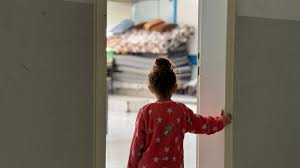
Amid the escalation of hostilities in the Middle East and Lebanon, more than 1 million people are now displaced within the country, including approximately 500,000 school-aged children. In this context, many schools have been destroyed, closed, or converted into shelters, jeopardizing the continuity of learning for hundreds of thousands of students. To respond to this emergency, and thanks in particular to renewed support from France (EUR 200,000) and Portugal (EUR 150,000), UNESCO is strengthening its cooperation with the Lebanese Ministry of Education and Higher Education (MEHE) to establish Teaching Hubs—temporary learning spaces designed to maintain access to education and provide psychosocial support to children affected by the crisis. UNESCO has also already reallocated more than USD 250,000 to support the emergency education response, using funding previously received from Oman and Japan.
As of April 8, according to the MEHE, 339 schools are located in war zones and have been closed (of which 133 are now providing online teaching). Additionally, 431 educational institutions—including 358 public schools, 56 VET centers, and 17 facilities of the Lebanese University—have been repurposed as collective shelters, affecting the education access of more than 250,000 children. These figures remain fluid: up to 100 additional schools in high-risk areas could become inaccessible if the security situation worsens further.
The Teaching Hubs are aligned with the national framework and the educational content developed by the Center for Educational Research and Development (CERD), thus ensuring consistency and harmonization with the Lebanese education system. They aim to maintain access to education while providing mental health and psychosocial support to affected children.
The emergency response by UNESCO and MEHE is based in particular on:
- Activating public schools with multiple shifts to accommodate displaced students and those from host communities through optimized organization of available spaces;
- Setting up temporary learning centers in safe areas, equipped with educational materials and essential school supplies;
- Providing technical support to develop flexible and accelerated learning modalities to limit learning loss and facilitate the gradual reintegration of students into the formal education system.
- Integrating mental health and psychosocial support (MHPSS) services, including building teachers’ capacities and the supervised mobilization of university students as facilitators;
- Promoting social cohesion by supporting MEHE in launching and implementing its National Education for Social Cohesion Program, in partnership with the First Lady’s Citizenship Schools initiative. This program initially addresses the emergency situation caused by the conflict and population displacement in public schools, and will gradually expand to include other educational institutions and stakeholders. UNESCO also supports MEHE in institutionalizing this initiative to establish a permanent policy framework promoting social cohesion across all educational institutions. The aim is to strengthen social cohesion and contribute to lasting peace in Lebanon by fostering trust, dialogue, and collaborative practices within the education system, while equipping learners and educators with the skills needed to engage constructively in diverse communities.
Beyond the emergency response, the Teaching Hubs represent a strategic investment in the resilience of the education system. Maintaining access to learning during a crisis is essential to limit learning loss, provide protection, and restore a sense of stability for children and teachers.
( Press Release Image: https://photos.webwire.com/prmedia/6/353131/353131-1.jpg )
WebWireID353131
This news content was configured by WebWire editorial staff. Linking is permitted.
News Release Distribution and Press Release Distribution Services Provided by WebWire.