

Hope for the Amazon: Stories of resilience, empowerment, and conservation
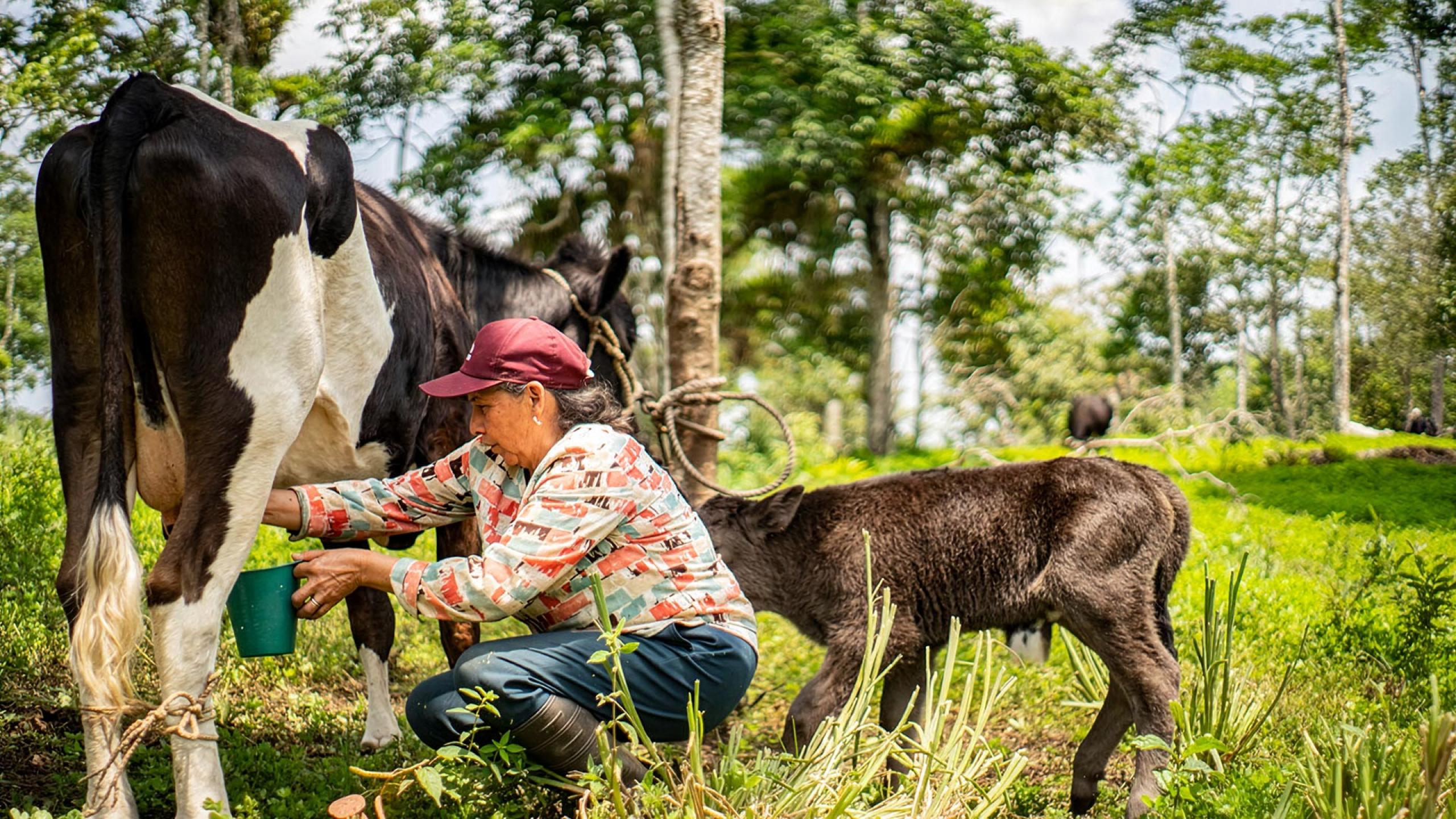
Ecuador is one of the world’s “mega-diverse” countries, with an extraordinary concentration of plant and animal species despite its relatively small size. Its forests – from the Amazon rainforest to high-altitude cloud forests – host exceptional biodiversity but are under threat. Agriculture, a primary source of income for local populations, remains the main driver of deforestation, particularly cattle ranching. Amazonian soil is poorly suited for farming, further endangering the delicate ecosystem.
Through PROAmazonía, a Comprehensive Amazon Programme for Forest Conservation and Sustainable Production, Ecuador pioneered a deforestation-free future by building sustainable value chains for coffee, cocoa, palm oil, and livestock production in 2017. Farmers are trained in sustainable agricultural techniques through ‘Field Schools for Farmers’, where they learn to balance production with forest conservation. These schools also created a supportive environment for women.
Ecuador is now a regional leader in deforestation-free certification, with over 93,000 hectares in various stages of transition. Products such as coffee, cocoa, palm oil, and livestock are being sold through traceable, profitable international markets. Partnerships with companies like Lavazza Group and Silva Cacao have led to the export of deforestation-free coffee and cocoa, positioning Ecuador as a global leader in sustainable production.
Empowering Indigenous women in the Amazon
Central to PROAmazonía’s success has been empowering Indigenous women and fostering gender equality. Luzmila Huatatoca, a representative of the Indigenous Kichwa Center Río Guacamayos in Napo province, explains: “The whole community got involved, according to planning that was aligned. Those activities led us to meet the goals that we proposed. We were able to express ourselves and explain what we want to do; how we want our initiatives to improve the quality of life of the communities.”
Women like Florita Gallegos have directly benefited from these initiatives. Florita, a livestock farmer in Sinaí, shared how sustainable practices transformed her work: “Before, we didn’t take care of the forests. We would cut down all the trees, even along the riverbanks. But now I leave the forest untouched and take care of it. I’ve left trees and pastures so that the cattle have shade. I’ve switched to better grasses, like forage peanut and other types of pasture, and have a forage bank.”
Such transformations have also extended to gender roles. “Before, only men had the right to do things like sell cheese,” Florita explained. “Women were confined to the house. But now, through these trainings, we are equals. Many of us women no longer ask for permission. We can sell a chicken ourselves or conduct business, even become leaders. Together, we’re improving—my husband, kids, and I—all working as equals.”
The Green Climate Fund (GCF), in collaboration with other partners such as the Global Environment Facility (GEF), played a crucial role in financing and fostering collaboration to address deforestation and promote sustainable development in the Ecuadorian Amazon. Their support helped the United Nations Development Programme (UNDP) assist Ecuador in tackling deforestation, protecting Indigenous communities, empowering women, and promoting sustainable livelihoods in the Amazon.
“It is fascinating to see what is possible when Indigenous communities have access to commercial value chains and more sustainable sources of finance. It is a good example of how countries can achieve a virtuous cycle: setting targets, attracting finance to meet those targets, and leveraging more funding, including from the private sector,” said Marc Dumas-Johansen, a REDD+ focal point and specialist on agriculture, food security and forests at GCF.
Uniting conservation and development to protect the Amazon
Ecuador’s Ministry of Environment and Energy is sending a strong message that production and conservation can go hand in hand. This milestone approach has protected Indigenous communities, preserved the Amazon forest, and helped secure the future of one of the world’s most biodiverse regions.
“When conditions are created for Indigenous women and local organisations to make decisions, and international companies align with national and local plans, critical progress is made to protect nature and boost incomes and opportunities,”
Mónica Andrade, UNDP Coordinator for Environment and Energy
Lessons for the future
The success of PROAmazonía offers valuable lessons for other Amazon basin countries facing challenges of deforestation and gender inequality. Partners are now prioritising South-South cooperation and knowledge exchange, highlighting the importance of building trust among communities, governments, and other stakeholders.
By uniting Indigenous groups, producers, civil society, private-sector actors, and international partners around a common vision, Ecuador has built the partnerships needed to make deforestation-free production both viable and profitable. The journey of farmers like Florita Gallegos shows how that shared vision becomes reality on the ground – through time, patience, and strong partnerships.
Today, Ecuador’s policies and programmes stand as a global model for balancing conservation and development, ensuring a sustainable future for the Amazon and its people.
Developed by Jin Hee Dieu and Carmen Bie, based on a UNDP story.
To learn more:
- Ecuador’s PROAMAZONÍA completes first phase
- FP019: Priming Financial and Land Use Planning Instruments to Reduce Emissions from Deforestations
- REDD+ Results-Based Payment Pilot Projects: Enhancing Climate Action in Latin America and the Caribbean
- Sustainable Development of the Ecuadorian Amazon: Integrated Management of Multiple Use Landscapes and High Value Conservation Forests
- Funding Proposal: Ecuador REDD-plus RBP for results period 2014
( Press Release Image: https://photos.webwire.com/prmedia/7/352892/352892-1.jpg )
WebWireID352892
This news content was configured by WebWire editorial staff. Linking is permitted.
News Release Distribution and Press Release Distribution Services Provided by WebWire.