

Research into PFAS in soil and water at Schiphol
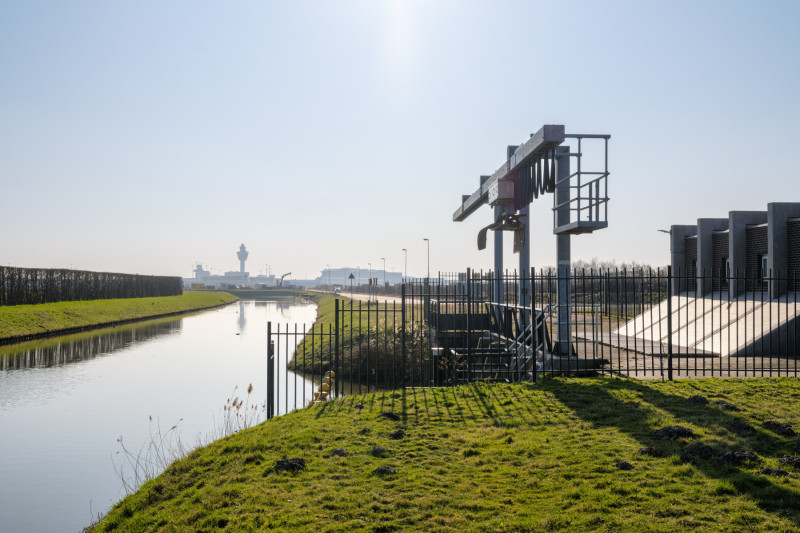
Schiphol has commissioned a study into PFAS in the soil and water quality on the airport site due to the importance attached to a safe and healthy working and living environment at and around the airport. The historical soil survey shows that there is (potentially) contaminated soil at various locations and that this contamination is causing elevated concentrations of PFAS in the surface water at the airport. Water quality is insufficient at two points where water from Schiphol meets water outside Schiphol. Further investigation is required at most locations. The airport is working on an action plan to prevent the spread of PFAS as much as possible and to take appropriate measures.
PFAS are found in soil and water throughout the Netherlands. Schiphol has taken the initiative to carry out research and involve several parties with relevant expertise. By conducting these investigations, Schiphol is able to identify (potentially) contaminated sites. This enables the airport to take measures and prevent the spread of PFAS as much as possible. All provinces in the Netherlands have now been instructed by the government to assess PFAS. By commissioning research, Schiphol aims to contribute to resolving the PFAS problem in the Netherlands.
PFAS-related studies are being carried out by the independent consultancy firm Terrascan. Schiphol is consulting with the North Sea Canal Area Environmental Service (Omgevingsdienst Noordzeekanaalgebied) and the Rijnland Regional Water Authority (Hoogheemraadschap van Rijnland) on the approach to PFAS. Schiphol has also sought advice from the Kennemerland Municipal Health Service (GGD Kennemerland) on the health risks of PFAS to residents. Each of these parties has its own role and expertise when it comes to assessing risks and monitoring water and soil quality.
Soil survey
In the past, fire-fighting foam containing PFAS was used at the airport, as this was mandatory for the airport fire service. This represents a complex and extensive legacy from the past. In a historical soil investigation into PFAS, research agency Terrascan examined all available information from Schiphol’s past.
This study identified over 100 locations on the Schiphol site as places where PFAS could be present in the soil based on historical records.* Of these, it is now clear that 11 are not PFAS sites, whilst 27 do contain PFAS in the soil. Follow-up investigations are being carried out, but soil surveys are extensive and time-consuming. Terrascan has provided advice on which sites should be prioritised, based on the risks of contamination spreading through soil and water. At least 10 to 15 soil investigations will be launched this year.
The locations where PFAS are found in the soil at Schiphol do not pose a health risk to employees. Prior to any ground works, investigations are always conducted and work is always carried out in accordance with established safety regulations.
Water survey
Soil contamination is causing elevated concentrations of PFAS in the surface water at the airport. The investigation into water quality at the airport shows that consistently higher concentrations of PFAS are being measured in the water at four locations compared to other areas on the airport site. These areas are near the Sloten Fire Station, the area around the terminal and the Schiphol main building, Schiphol Zuidoost, and the area to the east of the 36R end of the Aalsmeerbaan runway.
At two points where water from Schiphol meets water outside Schiphol, PFAS levels have been measured that exceed the National Institute for Public Health and the Environment (RIVM) advisory limits for bathing water and irrigation. At four other discharge points where water leaves the Schiphol site, the water quality was within the applicable advisory limits. The patterns observed by the Rijnland Regional Water Authority in its own published measurements correspond with the findings described in Schiphol’s water survey.
Schiphol will enter into discussions with the competent authorities regarding the action plan. The Rijnland Regional Water Authority is advising on the identification and prioritisation of locations where measures will be most effective, and on measures to limit the spread to surface water.
Advice for local residents
Many people in the Netherlands consume more PFAS through food and drinking water alone than is considered safe according to the public health limit. PFAS are present in the environment throughout the Netherlands, and we all have PFAS in our bodies. PFAS do not break down in the environment and can be harmful to humans. It is therefore important to prevent these substances from entering the environment.
To prevent additional exposure to PFAS via surface water, the Health Service advises swimming only at official swimming locations, not eating fish caught in the waters around Schiphol as a precaution, and not using water from areas with PFAS levels above advisory limits for vegetable gardens.
Follow-up research and measures
Schiphol will continue to carry out soil surveys and water measurements in collaboration with Terrascan. Schiphol is taking measures to minimise the risks posed by PFAS to people and the environment as effectively as possible. Work is already underway on soil remediation and groundwater treatment, including at the airport’s cargo apron. Later in 2026, the soil treatment plant at the airport will be commissioned.
Schiphol is following the advice of Terrascan and coordinating further steps with the North Sea Canal Area Environmental Service, the Rijnland Regional Water Authority and the Kennemerland Municipal Health Service, to ensure that measures comply with the applicable regulatory and health frameworks.
For each location, an assessment is being made of whether there are any risks, what those risks are, and which approach is most appropriate. Schiphol is also exchanging knowledge on this subject internationally, for example with Copenhagen Airport. As PFAS sites vary greatly and there is no standard solution, each site requires a customised approach.
( Press Release Image: https://photos.webwire.com/prmedia/7/352797/352797-1.jpg )
WebWireID352797
This news content was configured by WebWire editorial staff. Linking is permitted.
News Release Distribution and Press Release Distribution Services Provided by WebWire.