

UNESCO launches next phase of We Are ABLE to expand inclusive STEAM education in Viet Nam
UNESCO, together with partners, has launched a new project phase to expand gender-transformative STEAM learning in Viet Nam
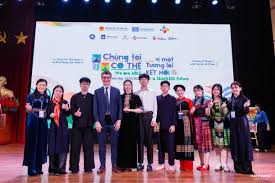
On 24 March, UNESCO, the Ministry of Education and Training, Hanoi National University of Education and CJ Group launched a new phase of We Are ABLE project, building on results achieved during Phase 2. The event brought together 1,000 participants, including education officials, teachers, students and development partners from Khanh Hoa, Vinh Long, Cao Bang, Thai Nguyen, Hanoi, and Ho Chi Minh City.
Implemented from 2023 to 2025 in Cao Bang, Vinh Long and Khanh Hoa, Phase 2 reached 8,313 students in 15 lower secondary schools serving large ethnic minority student populations, strengthened the capacities of more than 650 teachers, and supported 300 student leaders to carry out communication and advocacy initiatives on gender equality. The project also helped inform national discussions on gender equality in education.
Beyond the numbers, the event also highlighted the confidence and self-belief that the project has helped nurture among students. “I realized that when I dare to believe in myself, when I dare to speak up, I can create change,” said Pupur Thi Thu Thuy, a Raglai student from Khanh Hoa province who took part in the project. Her words captured a central ambition of We Are ABLE: helping girls learn with confidence, speak up, and see themselves as capable of shaping their own futures.
Dr. Vu Minh Duc, Director General of the Department of Teachers and Educational Administrators under the Ministry of Education and Training, highlighted the importance of building on the results of the project’s earlier phases by strengthening teacher capacity and integrating gender equality more systematically into teacher education, curricula and school practice. He noted that this would be essential to advancing the National Strategy on Gender Equality for 2021–2030 and ensuring longer-term impact across the education system.
The new phase comes as demand for skills in science, technology, engineering, arts and mathematics continues to grow in Viet Nam. Yet girls, especially those from ethnic minority communities, still face significant barriers to participation. Women account for only around 37% of the workforce in STEM-related industries, highlighting the need for more inclusive pathways from learning to future careers.
Over the next three years, the new phase, We Are ABLE for a Seamless Future: From Learning to Leading through STEAM Education, will build on earlier results by strengthening teacher capacity, expanding hands-on learning opportunities, and deepening collaboration among schools, communities, teacher education institutions and private sector partners. It is expected to directly benefit at least 6,000 students, including 3,000 girls, and strengthen the capacities of more than 100 educators and counsellors in gender-responsive approaches to STEAM educationn.
Speaking at the event, Mr. Jonathan Wallace Baker, UNESCO Representative to Viet Nam, emphasized the importance of ensuring that girls, especially those from ethnic minority communities, are equipped not only to participate in education, but also to build the skills, confidence and leadership needed to shape their futures. He said:
“In a rapidly changing world shaped by technology, every learner, especially girls and those from disadvantaged communities, must have the opportunity to succeed. By working together, we can continue to build a seamless pathway from learning to leading, leaving no one behind.”
Supported by CJ Group and its affiliates, the new phase will be implemented by UNESCO in partnership with the Ministry of Education and Training, local education authorities, teacher education institutions, social organizations, private sector actors and local communities.
At the heart of this next phase is a simple but powerful idea: when girls are trusted, supported and given real opportunities to learn and lead, they can help shape a better future. As Tran Anh Khoi, lecturer at Hanoi National University of Education, put it:
“We must believe in their abilities and in their future. And if that future is entrusted to them, we can be confident that it will be a bright one.”
******
Additional event highlights included an exhibition of student posters on gender equality, a panel discussion on lessons learned from the project, and a short theatre performance by students from Cao Bang addressing early marriage. The event also featured artistic exchanges between Vietnamese and Korean artists, reflecting the cross-cultural partnership behind the initiative.
View more photos of the event on our official Flickr channel
( Press Release Image: https://photos.webwire.com/prmedia/6/352783/352783-1.jpg )
WebWireID352783
This news content was configured by WebWire editorial staff. Linking is permitted.
News Release Distribution and Press Release Distribution Services Provided by WebWire.