

Vodafone and WWF celebrate collecting one million unused phones
A second life for phones and a boost for nature as Vodafone raises £1 million for WWF conservation projects across Europe and Africa
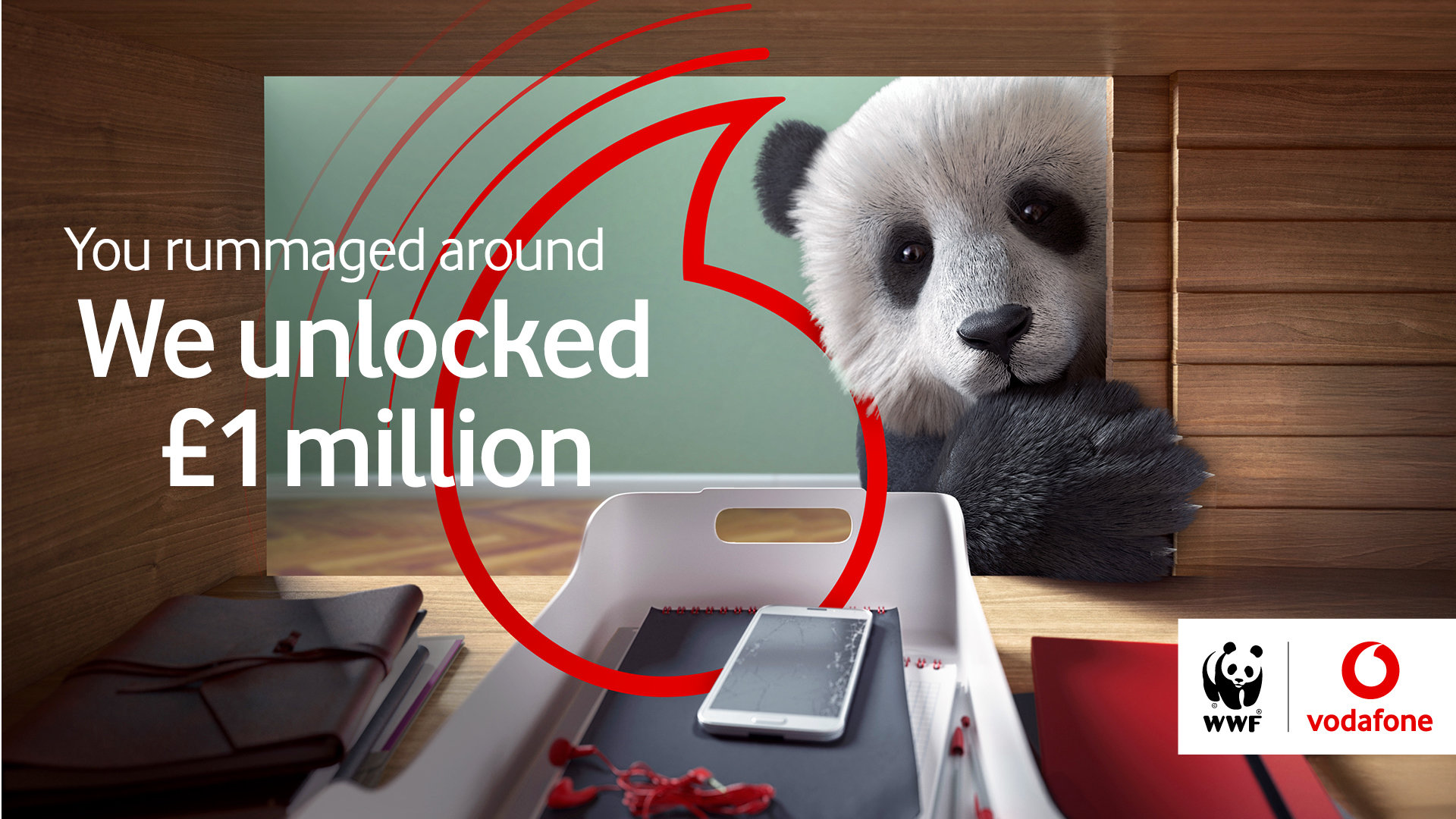
Vodafone and WWF today celebrated reaching their target of collecting one million phones for the planet as part of their wider programme to promote a shift towards a more sustainable circular economy.
The One Million Phones For The Planet campaign has raised £1 million towards international WWF conservation projects focused on addressing the climate and nature crisis, with Vodafone donating £1 for every phone collected.1
Launched in November 2022, the campaign encouraged Vodafone customers and the public across Europe and Africa to give up unused phones via trade-in, donation or responsible recycling - supported in 2025 by the playful “We Need The Phones You Don’t” creative featuring animated animals rummaging through homes.
By partnering with WWF, One Million Phones for the Planet made participation simple while reinforcing the environmental value of reuse, recycling and reducing device waste.
Joakim Reiter, Chief External and Corporate Affairs Officer at Vodafone Group said: “Collecting one million phones for the planet shows just how powerful change is possible through small, everyday actions. Our partnership with WWF has turned unused phones into funding for conservation and is a practical example of the circular economy in action. We are incredibly grateful to our customers for backing our campaign with WWF and together showing how technology can help drive a more sustainable future for the planet.”
Tanya Steele, Chief Executive of WWF-UK, said: “Our partnership with Vodafone shows what we can achieve when technology and conservation come together. The One Million Phones for the Planet campaign has helped turn small individual actions into global impact, helping protect wildlife and support communities across Europe and Africa. We want to say a huge thank you to Vodafone customers for supporting this campaign and generating donations which protect wildlife such as tigers, black rhinos and loggerhead turtles and habitats around the world.”
Over the past three years, Vodafone’s support, as part of wider unrestricted funding, has contributed to WWF’s efforts to safeguard species and habitats across vital landscapes, rivers and oceans to support conservation work across Europe and Africa.
- UK: WWF has returned oysters and seagrass to the Firth of Forth for the first time in 100 years, training hundreds of volunteers and restoring habitats that improve water quality, reduce erosion and support marine life.
- Kenya: WWF is working to improve coexistence between people and wildlife in southern Kenya and northern Tanzania, using monitoring technology and interventions to safeguard people’s lives and livelihoods, and protect wildlife such as lions and elephants from retaliation.
- Greece: WWF has strengthened Marine Protected Areas, driving an increase in loggerhead turtle nesting and expanding citizen science to support marine conservation and sustainable fisheries.
- Germany: WWF is strengthening nature protection laws and supporting rewilding in the Caucasus, including the return of European bison to the region after a century of extinction in the wild.
- South Africa: WWF is protecting endangered species, expanding protected land and empowering coastal communities, including relocating black rhinos, growing conservation areas and supporting community led fisheries with mobile enabled digital platforms and AI driven monitoring.
In addition to the impact enabled by these projects, the £1 million raised is supporting WWF’s wider conservation work around the globe. These include:
- A new national park established in Colombia’s Serranía de Manacacías National Park, helping secure protection for 30% of Columbia’s land by 2030 and protecting some of the world’s richest biodiversity, including jaguars.
- An Earth Engine App developed in Brazil that displays real-time environmental data, such as water temperature, pH levels, and pollutant concentrations, to help mitigate heat and drought impact on river dolphins.
- WWF’s conservation efforts have helped wild tiger numbers to increase in several countries, taking their numbers from as few as 3,200 in 2010 to an estimated 5,574 in 2024.
- Supporting 327 women in Tanzania with training to promote sustainable fishing practices and protect the rich freshwater biodiversity of the Mara wetlands.
Across its international footprint, Vodafone is supporting customers to give mobile phones a longer life cycle through repair and recycling, and, in some markets, through refurbishing and re-selling devices with partners like Recommerce.
Purchasing a refurbished smartphone instead of a new device helps to avoid around 50 Kg CO2e of greenhouse gas emissions. And the climate impact of a refurbished phone is 20% or less that of a newly manufactured smartphone – and removes the need to extract over 70 Kg of raw materials.2
Vodafone believes business success should not come at a cost to the environment and is committed to reducing the impact of the company’s activities. Digital connectivity provided by Vodafone’s networks is enabling technology solutions that can help address climate change by saving energy, using natural resources more efficiently and creating a more circular economy.
More widely, Vodafone is working to reduce its environmental impact to reach ‘net zero’ carbon emissions across its full value chain by 2040. Together with our partners, Vodafone is also driving action to reduce electronic waste and increase the proportion of materials recovered during e-waste recycling, to help build a more circular economy for devices and network equipment.
- The total contribution across the world was a maximum of £1,000,000. In the UK, every phone collected paid £1 to WWF-UK (WWF-UK is a charity registered in England and Wales (1081247) and Scotland (SC039593)
- This is based on a lifecycle assessment study (Erwann Fangeat, ADEME, et al, Assessment of the environmental impact of a set of refurbished products – Final Report (2022)), which found that a refurbished phone used for two years creates 24.6kg CO2e less carbon emissions per year when compared to a new phone used for 3 years (according to the study results shown on page 64). Over the 2-year period of use of the refurbished phone, this avoids around 50kg CO2e of carbon emissions.
The study found that a refurbished phone has an 87% lower contribution to climate change (or ‘GWP’) compared to a new phone. The study also found that buying and using a refurbished phone instead of a new phone requires the extraction of 76.9kg less raw materials (page 64).
For the full study, see https://librairie.ademe.fr/dechets-economie-circulaire/5833-assessment-of-the-environmental-impact-of-a-set-of-refurbished-products.html
About Vodafone Group
Vodafone is a leading European and African telecoms company.
We serve over 360 million mobile and broadband customers, operating networks in 15 countries with investments in a further five and partners in over 40 more. We have capacity on more than 70 subsea cable systems – the backbone of the internet – and we are developing a new direct-to-mobile satellite communications service to connect areas without coverage. Vodafone runs one of the world’s largest IoT platforms, with over 230 million connections globally, and we provide financial services to around 94 million customers across seven African countries – managing more transactions than any other provider.
From the seabed to the stars, Vodafone’s purpose is to keep everyone connected.
For more information, please visit www.vodafone.com follow us on X at @VodafoneGroup or connect with us on LinkedIn at www.linkedin.com/company/vodafone.
WWF (World Wide Fund for Nature) is a global environmental charity, and we’re bringing our world back to life. With nature in freefall, we’re urgently tackling the underlying causes that are driving the decline – especially the food system and climate change. And we’re finding solutions so future generations have a world with thriving habitats and wildlife.
It’s a huge challenge, but there is hope. We’re working globally with governments, companies, communities and others who have the will to act and the power to transform our world. We’re using our ground-breaking scientific research, our global influence, and the backing of our many supporters to make sure the natural world’s vital signs are recovering by 2030.
WWF. Bringing our world back to life.
Find out more about our work, past and present at wwf.org.uk
( Press Release Image: https://photos.webwire.com/prmedia/7/352570/352570-1.jpg )
WebWireID352570
This news content was configured by WebWire editorial staff. Linking is permitted.
News Release Distribution and Press Release Distribution Services Provided by WebWire.