

Three actions for UK government and industry to unlock regional barriers and boost regional climate tech growth
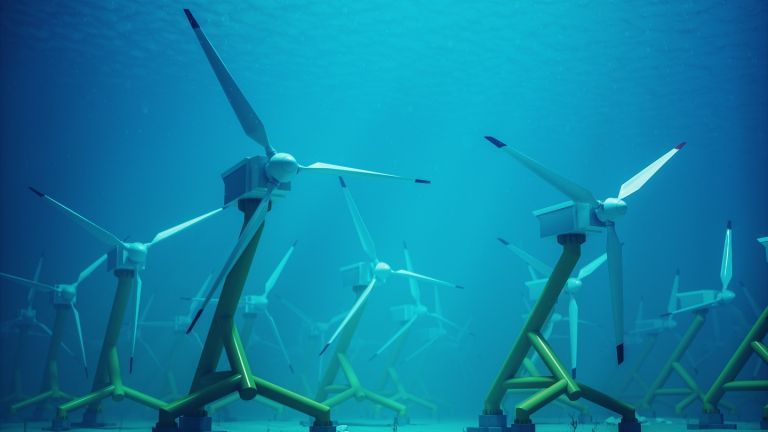
Scaling regional industrial strengths will be critical to maintaining the UK’s global climate tech leadership, according to a new report from Barclays and Sustainable Ventures. While widening disparities between London and the regions risk slowing the scale-up of promising companies, the report, Harnessing UK regions as the engines for national economic growth through climate tech, outlines how government and industry can help regional clusters scale climate tech companies.
Capital concentrated in London
From Scotland’s renewables to the North East’s offshore wind and the Midlands’ EV batteries and clean transport expertise, the UK’s regions are home to rich climate tech capabilities built on world-class academic and industrial foundations. This provides a strong platform for growth - across all regions the climate tech industry already supports more than 72,000 jobs and received £15.5bn in investment between 2020 and 2024 alone. Yet investment remains heavily concentrated in the capital - in 2024, London captured 66% of all UK climate tech funding.
This imbalance is restricting growth of early-stage climate tech companies and nearly half in the North West, Yorkshire and the West Midlands fail to progress beyond their first funding round.
To address this, the report urges government and industry to develop nationally consistent, regionally tailored climate tech plans aligned with Industrial Strategy Zones and Local Growth Plans, backed by the British Business Bank, GB Energy and the National Wealth Fund. It also recommends simplifying complex grant processes and accelerating the integration of the UK Business Climate Hub into the Business Growth Service, improving the flow of capital to early-stage companies.
Accelerator quality and access vary by region
Climate tech companies participating in accelerators have higher average valuations of up to 10% (£13.2m versus £12m), but access and programmatic focus on critical commercial skills is uneven. Participation varies widely across the country with Scotland and Northern Ireland leading the way (46% and 47%), but this drops to 24% in the North West and 21% in Yorkshire and the Humber. Non academic climate tech founders also note challenges in navigating often insular university linked programmes.
To close this gap, government should develop a national network of connected climate tech accelerators and hubs, embedding commercial expertise and leveraging best practice to better support companies to scale.
AI investment is creating a new and growing divide
AI is reshaping climate tech investment, in 2024 AI-enabled climate tech accounted for 36% of the UK’s total climate tech investment - 96% of which was in software-led ventures typically clustering around London, the South East and the East of England.
To support hardware-led climate tech companies in the AI race, the report calls for AI education to be built into regional ecosystems, including dedicated “AI for hardware” modules within accelerator programmes.
Sophie Fry, Head of Sustainability Policy Development, Barclays said: “Climate tech is a growing UK success story and Barclays is playing a leading role in supporting the sector. From having a mandate to invest up to £500m of our own capital in early-stage climate tech companies, through Barclays Climate Ventures, to supporting founders through our Climate Tech Escalator and our UK-wide Eagle Labs network, we see the talent and potential across every region of the country. If growth is rebalanced, regional companies will be able to scale faster, becoming major drivers of innovation, jobs and economic growth supporting the next wave of exciting new climate tech companies.”
Andrew Wordsworth, CEO and Founder Sustainable Ventures said: “Regional climate tech startups are powering the future and supporting the UK’s leadership globally. Their ability to deliver economic growth, jobs, and a sustainable economy on the ground in the regions is vital for the UK to meet its net zero targets. Growth partners such as Sustainable Ventures play a key role in connecting corporates, university partners and local government with startups across the regions. Acting as a conduit, growth partners bridge the gap between centres of funding and expertise, like those in London, with the regions, building a stronger and better connected network of climate tech clusters across the UK. This is enabling more climate tech startups to turn the tide on their ability to scale across the regions.”
( Press Release Image: https://photos.webwire.com/prmedia/6/352225/352225-1.jpg )
WebWireID352225
This news content was configured by WebWire editorial staff. Linking is permitted.
News Release Distribution and Press Release Distribution Services Provided by WebWire.