

UNESCO and African Network of Judicial Trainers lead regional action on AI and Justice
Artificial intelligence (AI) is no longer a future prospect for Africa’s courts. From translation tools to legal search engines, AI technologies are already supporting judicial work. As they become more widespread, judicial actors are confronting new questions about transparency, accountability and human rights.
Strengthening judicial capacity on AI
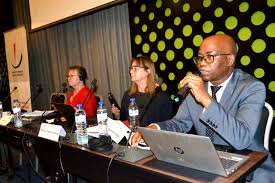
Thirty-one members of the African Network of Judicial Trainers (ANJT) met in Maputo for a regional workshop on Artificial Intelligence, Justice and Human Rights. The event gathered directors of judicial training institutes, Supreme Court justices and senior magistrates from across the continent to explore how technological change is reshaping justice systems.
Opening the session, Michael Croft, UNESCO’s Regional Director in Mozambique, called for equipping judges and educators to make informed choices about new technologies, reminding participants that “justice must remain human‑centred, especially in the digital age.”
Participants exchanged experiences from their countries, noting experiments with AI‑assisted translation and data analysis in some courts. While these innovations can improve efficiency and access, they also raise concerns about bias, discrimination and opacity. Discussions focused on how to ensure fairness and accountability when AI tools enter judicial workflows — and how judges can interpret evidence produced by algorithms.
The exchanges highlighted both the diversity of national approaches and a shared determination to guide digital transformation with ethical safeguards.
To support training efforts, UNESCO introduced two practical resources: the Guidelines for the Use of AI in Courts and Tribunals and AI Essentials for Judges. These tools help judicial professionals understand AI concepts and implement responsible practices in their institutions.
By the close of the workshop, participants committed to adapting the materials and lessons learned into national training curricula — multiplying knowledge throughout Africa’s judicial systems.
For ANJT and UNESCO, this regional dialogue marked an important step toward ensuring that technological change strengthens, rather than undermines, the rule of law. Africa’s judicial trainers are leading the way, embracing innovation while safeguarding the fundamental values of justice.
( Press Release Image: https://photos.webwire.com/prmedia/6/351811/351811-1.jpg )
WebWireID351811
This news content was configured by WebWire editorial staff. Linking is permitted.
News Release Distribution and Press Release Distribution Services Provided by WebWire.