

Slovenia: Amnesty joins Constitutional Court challenge to stop vulnerable communities being stripped of critical social support
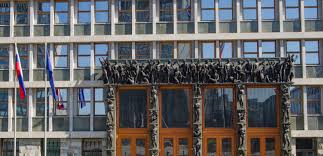
Slovenian authorities must amend the -Security Law- and end punitive seizures of social assistance which disproportionately affect the Roma community, said Amnesty International today as the Legal Network for the Protection of Democracy, a collaboration of NGOs Amnesty International Slovenia is a part of, filed an appeal to Slovenia’s Constitutional Court.
This harmful law is being used to target individuals and communities that already face daily discrimination, exclusion and poverty
The Act on Urgent Measures to Ensure Public Security, rushed through parliament last November, granted the Tax Office new powers to seize social assistance from individuals who have at least three unpaid fines for minor offences over the past two years. In January, more than 1,000 individuals and their families had critical social assistance seized, leaving many unable to afford food and other basic necessities.
“Just months after coming into force, this harmful law is being used to target individuals and communities that already face daily discrimination, exclusion and poverty,” said Esther Major, Amnesty International’s Deputy Director for Research in Europe.
“As predicted, these unjustified measures are disproportionately affecting Roma communities, violating their right to social security and leaving some families with no social support at all.”
Unlike ordinary enforcement regimes, the Security Law imposes no effective limits on how much social assistance can be taken and lacks provisions to protect the most vulnerable. The law lacks crucial safeguards regarding the recovery of outstanding fines in the context of social security and thus significantly expands the powers of the Tax Authority, as well as unduly infringes upon affected individuals’ rights to social security, access to legal remedy and privacy.
As a result of the January seizures, families – including children – already on the poverty line have been pushed into destitution. Many people only learned of the seizure of their social assistance when they sought to access it at the bank. Centers for Social Work, an organization which offers advice and assistance to social security recipients, did not receive notification of the January seizures either, in breach of a requirement in the new law.
“Access to social assistance is a right for everybody, regardless of their circumstances, and should never be weaponised to penalize individuals, families or communities,” said Esther Major.
“Authorities must immediately stop enforcing these punitive measures, ensure adequate social assistance is restored to those affected and amend the law to comply with Slovenia’s human rights obligations.”
Background
The appeal was prepared and filed by the Legal Network for the Protection of Democracy, a collaboration between four NGOs, including Amnesty International Slovenia.
The Act on Urgent Measures to Ensure Public Security was passed in November 2025, as a knee jerk response to a fatal incident in the city of Novo Mesto a few weeks earlier involving a member of the Roma community.
The safeguards which exist in the context of cost recovery in other contexts which mean that the Tax Office could only recover outstanding fines by seizing no more than two thirds of an individual’s salary and leave them with a minimum of 76% of the minimum wage were not put in the new Act. Following the passing of the law, the Tax Authority immediately increased its cooperation with police in confiscating the cars of Roma individuals with debts. Two appeals against these confiscations have so far been filed.
On 14 January, the Supreme Court filed a motion to the Constitutional Court asking it to rule on the constitutionality of provisions in the Security Law that prolong the maximum length of pretrial detention from two to three years.
On 23 January, police announced that in Ljubljana and Novo Mesto they are introducing two high-risk security areas where they will have greater powers to monitor and record data under the Security Act.
Slovenia is a party to a number of international and regional human rights treaties which oblige it to guarantee an adequate level of social security to everybody without discrimination to ensure an adequate standard of living.
( Press Release Image: https://photos.webwire.com/prmedia/6/350565/350565-1.jpg )
WebWireID350565
This news content was configured by WebWire editorial staff. Linking is permitted.
News Release Distribution and Press Release Distribution Services Provided by WebWire.