

UNESCO and IEEE host STEM Bootcamp Empowering Girls in Engineering for Sustainable Cities
UNESCO and IEEE in collaboration with South Africa’s Department of Science, Technology and Innovation, Department of Basic Education and the University of Pretoria, hosted a 2-day STEM Bootcamp to mark the International Day of Women and Girls in STEM.
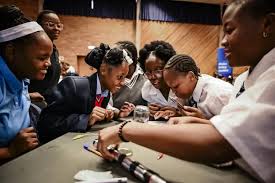
The United Nations Educational, Scientific and Cultural Organization (UNESCO) and IEEE, the world’s largest technical professional organization and a public charity dedicated to advancing technology for humanity, have collaborated with South Africa’s Department of Science, Technology and Innovation (DSTI), Department of Basic Education (DBE) and the University of Pretoria (UP), hosted a STEM Bootcamp on Electricity, Skyscrapers and Engineering for Sustainable Cities from 11 to 12 February 2026 at the University of Pretoria in South Africa.
Organised to mark the International Day of Women and Girls in STEM (11 February), the bootcamp aims to promote hands-on STEM learning while encouraging individuals to pursue studies and careers in engineering, electricity-related fields, and the built environment.
Speaking at the launch of the bootcamp, Chief Director for Multilateral Cooperation and Africa of South Africa’s Department of Science, Technology and Innovation (DSTI), Mmampei Chaba highlighted the need to prepare young people for the economy by empowering them with relevant skills. “By 2030 over 50% of the African population will be young people however we are not producing the right skill sets that we need for the economy. DSTI is committed to addressing this and this is why we have partnered with UNESCO -IEEE UP for this bootcamp” she said.
As rapid urbanisation and technological change continue to shape societies and labour markets, foundational knowledge in electricity, structural engineering and urban infrastructure is increasingly critical for sustainable development. Despite this, young learners still face obstacles to participation within the STEM fields, due to persistent structural barriers and limited access to quality STEM education.
Speaking about this, Peter Wells, Head of Education for UNESCO in Southern Africa stated, “UNESCO is committed to ensuring that every young person—especially girls—has access to quality STEM education, because science, technology, and innovation are not optional for the future we are building; they are essential. Too many girls continue to be excluded from STEM pathways due to persistent gender stereotypes, unequal access to resources, and limited opportunities to engage with science in meaningful ways. Hands-on STEM initiatives, such as this Bootcamp, respond directly to this challenge. Through partnerships with institutions such as IEEE, government, and universities, UNESCO is working to create inclusive STEM ecosystems that open doors for girls, strengthen education systems, and ensure that innovation reflects the talents, perspectives, and potential of all.”
The two-day, in-person bootcamp will bring together 200 secondary school students, with a strong focus on learners from rural schools, alongside 40 STEM teachers, IEEE youth volunteers from South Africa, expert facilitators from UNESCO, IEEE representatives and volunteers and the Organization of Women in Science in the Developing World (OWSD) South Africa Chapter representatives.
Prof Sunil Maharaj, Vice-Principal: Research, Innovation and Postgraduate Education at UP, said, “for many young people, especially girls, STEM can feel distant or out of reach when they have never seen themselves represented in these fields. This bootcamp creates a space where curiosity is welcomed, confidence is nurtured and possibilities begin to feel real. At the University of Pretoria, we believe that early, hands-on exposure to science and engineering can change how young people imagine their futures. By opening our campus and working with partners such as UNESCO, IEEE and government, we are helping young girls see themselves not only as learners of science, but as future engineers, problem-solvers and leaders shaping sustainable cities.”
Participants will engage in inquiry-based, hands-on activities drawn from IEEE REACH, exploring core concepts in electricity, engineering design, and skyscraper construction. “IEEE is excited to be part of such an important event,” stated Dr. Udochukwu B. Akuru, IEEE South Africa Section Chair. “Given the IEEE’s mission to advance technology for the benefit of humanity, IEEE continues to find opportunities to provide excitement for all within the engineering and technical arena.”
The programme also featured motivational talks and mentorship sessions led by UNESCO L’Oréal awardees and IEEE ambassadors, showcasing real-world career pathways and leaders in STEM.
In addition to inspiring learners, the bootcamp was also designed to strengthen teachers’ capacity to deliver low-cost, practical STEM instruction and to foster collaboration among national institutions, education stakeholders, and international partners. Expected outcomes include increased confidence among students in pursuing STEM careers, improved teaching methodologies and enhanced visibility of STEM initiatives aligned with national, continental and global development priorities.
The Bootcamp reflects a shared commitment to advancing STEM education and equipping the next generation with the skills needed to design resilient, sustainable cities for the future.
*****
About UNESCO:
UNESCO is the United Nations organization that promotes cooperation in education, science, culture and communication to foster peace worldwide. The Organization provides key services for its Member States, setting global norms and standards, developing tools for international cooperation, producing knowledge for public policies and building global networks of sites and institutions inscribed on its lists. Learn more at www.unesco.org/en
About I EEE:
IEEE is the world’s largest technical professional organization and a public charity dedicated to advancing technology for the benefit of humanity. Through its highly cited publications, conferences, technology standards, and professional and educational activities, IEEE is the trusted voice in a wide variety of areas ranging from aerospace systems, computers, and telecommunications to biomedical engineering, electric power, and consumer electronics. Learn more at www.ieee.org
About UP:
The University of Pretoria (UP) is one of the largest contact and residential universities in South Africa. Spread over seven campuses, it has nine faculties and a business school, the Gordon Institute of Business Science (GIBS). It is the only university in the country with a Faculty of Veterinary Science, which is ranked the best in Africa. UP has 120 academic departments and 92 centres and institutes, accommodating more than 56 000 students and offering about 1 100 study programmes. It has the most academic staff with PhDs (70%), NRF-rated researchers (613). For more information, please go to www.up.ac.za
About DSTI
The DSTI seeks to boost socio-economic development in South Africa through research and innovation. To achieve its goals, the Department provides leadership, an enabling environment and resources for science, technology and innovation. Through its Programmes (Administration; Technology Innovation; International Cooperation and Resources; Research Development and Support; and Socio-economic Innovation Partnerships) and several entities that work alongside it, the Department is accomplishing groundbreaking science and enhancing the well-being of all South Africans. www.dsti.gov.za
( Press Release Image: https://photos.webwire.com/prmedia/6/350560/350560-1.jpg )
WebWireID350560
This news content was configured by WebWire editorial staff. Linking is permitted.
News Release Distribution and Press Release Distribution Services Provided by WebWire.