

Olympics on little or fake snow - a global event running out of winter
Why is no one speaking openly about the climate crisis threatening the Winter Olympics? asks Mariagrazia Midulla, WWF Italy’s Climate and Energy Head.
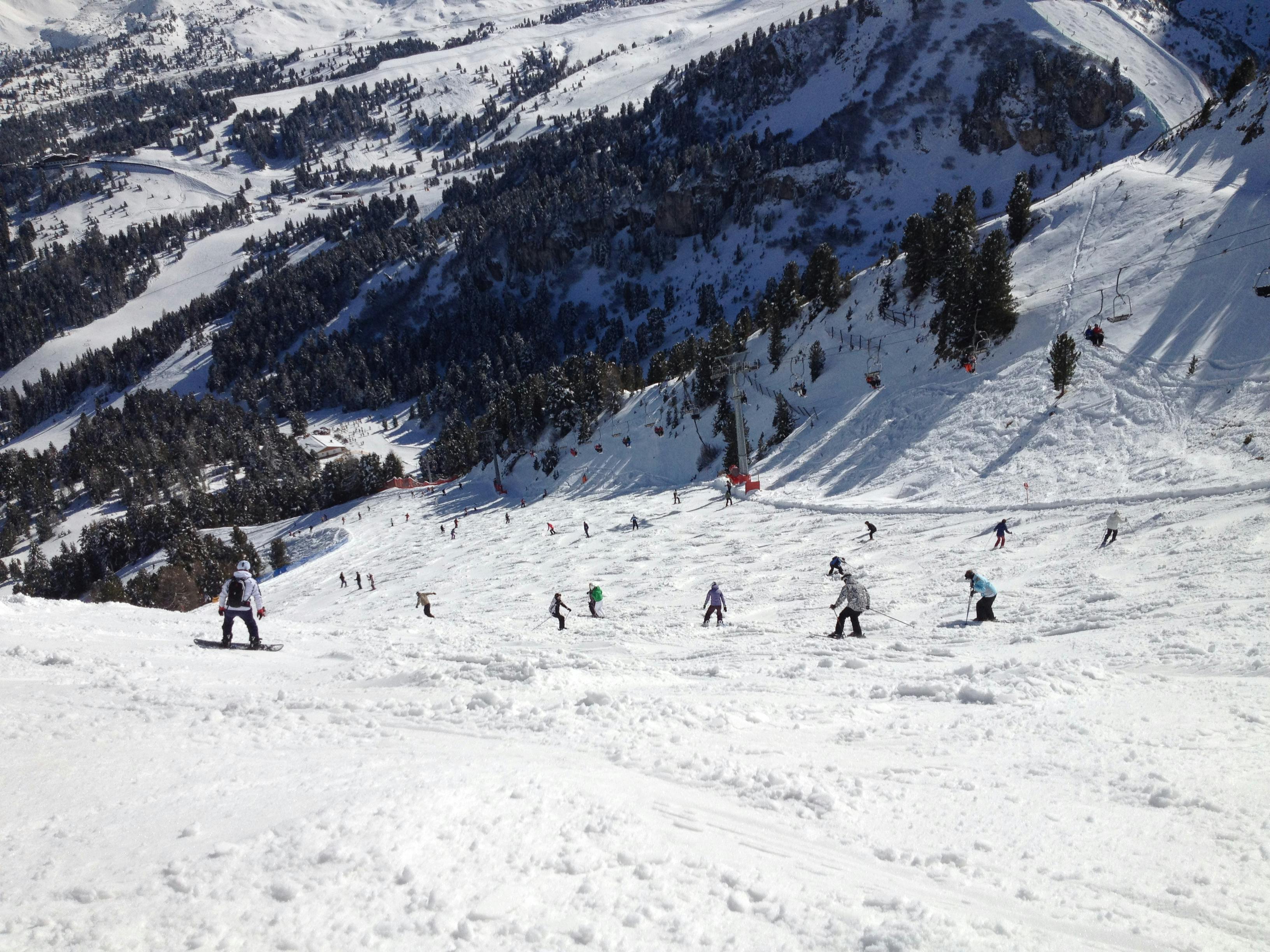
The 2026 Winter Olympics, which kicked off this past weekend, are taking place in a landscape already transformed by the climate crisis. Yet political and economic leaders continue to avert their eyes — choosing to sidestep the science and ignore what is unfolding in real time across the Alps.
Organisers have long known that snowfall in the Italian Alps is declining. Instead of confronting that reality, they built vast artificial‑snow systems that draw on water reserves already under severe pressure. This global event could have opened a much‑needed conversation about the future of mountain regions in a warming world. Instead, the moment evaporated.
The Alps are warming - and It shows
The evidence is stark. A new study warns that Alpine temperatures could climb by up to 4.5°C in summer and 3.5°C in winterbefore the century’s end. Last winter already hinted at the dangers: very little snow and a worrying number of avalanche accidents.
This season offers little comfort. The data from National Snow Water Equivalent shows a 61% deficit compared to the historical average. Both the Alps and the Apennines are experiencing dangerously low snow levels, and early‑season readings from the CIMA Research Foundation and the National Institute for Environmental Protection warn of likely consequences for water supplies in the coming months.
When winter sports stop being winter
The Olympic host areas paint an even clearer picture of how fast things are changing. New Climate Central analysis shows that higher temperatures, unreliable snow and growing dependence on artificial snow are eroding the safety and long‑term future of outdoor winter sports.
In Cortina d’Ampezzo, this year’s host town, February temperatures have risen by 3.6°C since 1956, and the town now endures 41 fewer frost days each year. Snow depth has dropped by roughly 15 centimetres since the 1970s. This is winter - rewritten.
And the 2026 Games will rely heavily on artificial conditions: more than 2.3 million cubic metres of man‑made snow. For sports like alpine skiing, snowboarding and bobsleigh, this means shorter seasons, more cancellations and heightened risks for athletes competing on surfaces that are increasingly engineered rather than natural.
A global stage, a missed moment
Concerns about the future of winter sports have been growing for years. Yet instead of using the Olympics to highlight what is at stake, organisers invested in more artificial snowmaking and continued to treat climate impacts as an inconvenient backdrop, not the central story they clearly are.
Meanwhile, transparency around the Games’ environmental footprint remains limited. The Milano Cortina Foundation estimates over one million tonnes of CO₂‑equivalent emissions for the full event cycle - a figure that excludes unfinished works and indirect emissions. Even the known numbers suggest these Games may leave a heavy mark on a region already under strain.
Pretending isn’t a plan
If the 2026 Games send a message, it is not the one the world needs. They show what happens when institutions attempt to replicate a past that no longer exists, using more energy, more water, more resources, instead of facing the crisis reshaping our winters.
But denial is not adaptation. And silence is not neutrality. The climate crisis is advancing quickly, reshaping ecosystems, endangering communities and destabilising traditions that depend on cold, reliable winters.
Unless we rapidly cut fossil fuel emissions and rethink how major events are planned, the future of the Winter Olympics - and winter itself - becomes increasingly fragile. We are entering an era where the world’s most iconic winter sports festival may be less about snow and more about the struggle to hold onto a climate that is slipping away.
The story of the 2026 Games is not just about sport. It is a warning, one we ignore at our peril.
WWF works across many strategic areas to reduce global emissions and build resilience in the face of growing climate impacts.
Key Facts
- In the 70 years since Cortina d’Ampezzo first held the Winter Olympics in 1956, February temperatures in the nothern Italian town have warmed by 3.6°C.
- Cortina d’Ampezzo now experiences 19% fewer freezing days annually than when the Games were first held there in1956.
- Milan and Cortina d’Ampezzo are not alone. All of the other cities that have hosted the Winter Olympics since 1950 have also warmed significantly since then. Out of 93 potential host sites, only 52 would have reliable conditions for the Winter Olympics in the 2050s.
- Due to being held in March, the Paralympic Winter Games face even greater risks with only 22 out of 93 climate-reliable locations likely to be suitable by the 1950s. (all the above facts come from Climate Central).
- According to the Guinness World Records, fake snow first appeared at the Winter Olympics in 1980, when Lake Placid, in New York, used artificial flakes to keep events running. Time magazine reported that the 2022 Beijing Games marked a stark turning point – becoming the first Winter Olympics held entirely on man‑made snow. No official estimates of the percentage of artifical snow to be used in Cortina are available, but figures between 70% and 80% have been mentioned in news reports.
- The Winter Olympics will run from 6 -22 February 2026. The Paralympics will follow, from 6 -15 March 2026.
( Press Release Image: https://photos.webwire.com/prmedia/7/350436/350436-1.jpg )
WebWireID350436
This news content was configured by WebWire editorial staff. Linking is permitted.
News Release Distribution and Press Release Distribution Services Provided by WebWire.