

Quiet currents of change in the Sundarbans
In the unique coastal wetlands of India’s Sundarbans, an electric ferry glides through the waterways without sound or pollution. With WWF’s support, a boat operator sees how cleaner transport can protect mangroves, people and the wider planet.
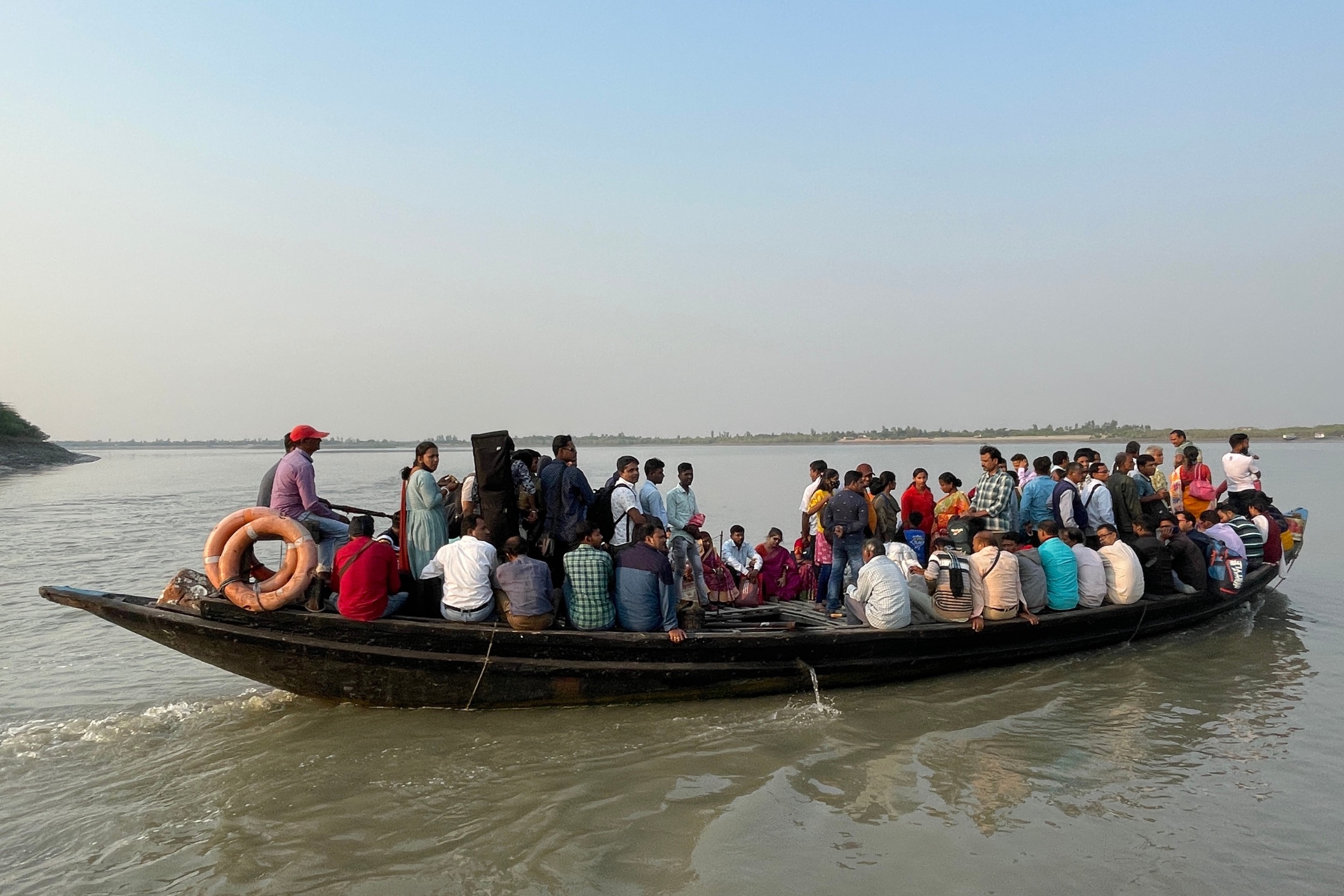
With a practiced hand on the throttle, Madhab Mondal guides his electric ferry boat through a strip of blue-green water. He is flanked on both sides by mangrove trees, with leaves that glisten in the afternoon sun.
“This place is one of the last remaining mangrove systems of the world, and being a part of it makes me responsible for its upkeep.”
Mondal has been a ferry boat operator for over 30 years in the Indian Sundarbans, a delta in India and Bangladesh where the Ganges converges with the Brahmaputra and Meghna rivers. The result is the world’s single largest mangrove forest, stretching 10,000 square kilometers across a mosaic of islands and rivers.
It’s a land of biodiversity miracles – tigers are the apex predator, unlike any other mangrove forest on Earth. Complex root systems provide a nursery for hundreds of fish species. Diving, wading and fishing birds find safe havens among tidal, brackish and freshwater ecosystems.
“The mangroves have always been a part of our lives,” Mondal reflected. “During the high tide, the river water flows into the forest, and we get to see lots of birds and small animals. We gradually realized that the mangrove forests and our livelihoods are intertwined.”
A silent sail: Strengthening climate resilience
About 4.5 million people, spread over 35 islands, call the vibrant Sundarbans home. Mondal makes his living transporting residents through the maze of waterways to the mainland. Each morning, he makes at least five trips on his ferry before returning home to care for his family. His son also joins him on ferry rides to learn about the family trade.
In the last month, Mondal’s daily life underwent some subtle, yet drastic changes. The engine on his ferry stopped emitting noxious fumes. He no longer needed costly fuel, which occasionally spilled into the water. He could even hear and respond to questions, previously impossible over the roaring sound of the engine.
These are a few of the benefits that an electric ferry, powered by batteries rather than diesel, has provided Mondal. Offering the same capacity as diesel-powered boats, the e-ferry runs without smoke, vibration or noise. To sweeten the deal, his operational costs are down over 85 per cent thanks to savings on fuel and maintenance.
It’s a win-win for ferry drivers, passengers and the environment. “It is soundless and environmentally friendly,” he explained. “In fact, a lot of people opt for the e-ferry, especially if they are with sick patients or people suffering from asthma.”
Ferries powered by fossil fuels pose dire threats to people and our planet. Engines are often repurposed from heavy machinery, releasing toxic pollutants like heavy metals and high levels of greenhouse gases. Diesel spills can harm the development of local vegetation and fish species. All while the region sinks and shrinks amidst rising sea levels on a warming Earth. To address this dilemma, WWF-India introduced the first electric ferry to the Sundarbans in 2023, following letters of interest from local boat owners.
A boat was retrofitted with an electric propulsion system powered by rechargeable batteries. After the pilot’s success, WWF-India developed two more electric ferries – this time with a higher capacity of 15 horsepower. Mondal operates one of these boats.
“I got to know about the e-ferry from a friend and contacted WWF-India for support,” he said. “They helped us with the engine and the training to run it, and gradually my son and I learned how to use it,” Mondal said.
WWF-India also introduced a solar charging station, so ferry drivers can now recharge batteries with energy from the sun. But this is just the beginning. Through government collaborations and policy advocacy, WWF-India aims to scale up solar-powered solutions across the Sundarbans by lowering barriers and expanding electric infrastructure.
Mondal feels proud of his part in this work as head of the local boat owners’ association. He sees a ripple effect taking shape. “I feel good that I am leading change. A number of other boat operators have approached me for a similar engine to be fitted onto their boats,” he said.
A breath of fresh air
Passengers are also feeling – and hearing – the change. Students commuting to class can chat together. Relatives can hear each other over the phone. They sit comfortably and breathe in fresh air without noxious fumes.
One local named Sampa Bor, a woman in her thirties, has been riding ferries all her life to see family and do essential tasks on the mainland. She is impressed with the e-ferry and glad to have a smoke and noise-free solution for the environment.
“I have seen the mangroves since childhood, and there were a lot of birds and animals around when we were kids,” Bor said. She thinks many are gone now, but she still believes this place offers something special to the world. “If you want to see how we stay close to nature, you must come and visit the Sundarbans,” she said.
Now, you can ride there while bathed in sounds of nature. The sun shining overhead is a reminder that renewable energy can power your journey – and a better future for people and nature.
Mondal’s e-ferry is one of millions of vehicles around the world that are going electric, bringing us one step closer to addressing the climate crisis. With renewable alternatives replacing polluting, climate-damaging fossil fuels, a quiet current of change is making life better on our roads, rivers and planet.
WWF-India has brought solar energy solutions to the Sundarbans for over 15 years, supporting essential needs like electricity access and water filtration for natural disaster resilience. Learn more about WWF-India’s efforts to decarbonize water transport or about WWF’s wider efforts to tackle the climate crisis.
( Press Release Image: https://photos.webwire.com/prmedia/7/349985/349985-1.jpg )
WebWireID349985
This news content was configured by WebWire editorial staff. Linking is permitted.
News Release Distribution and Press Release Distribution Services Provided by WebWire.