

Artists unveil street art around the world as historic Global Ocean Treaty comes into force
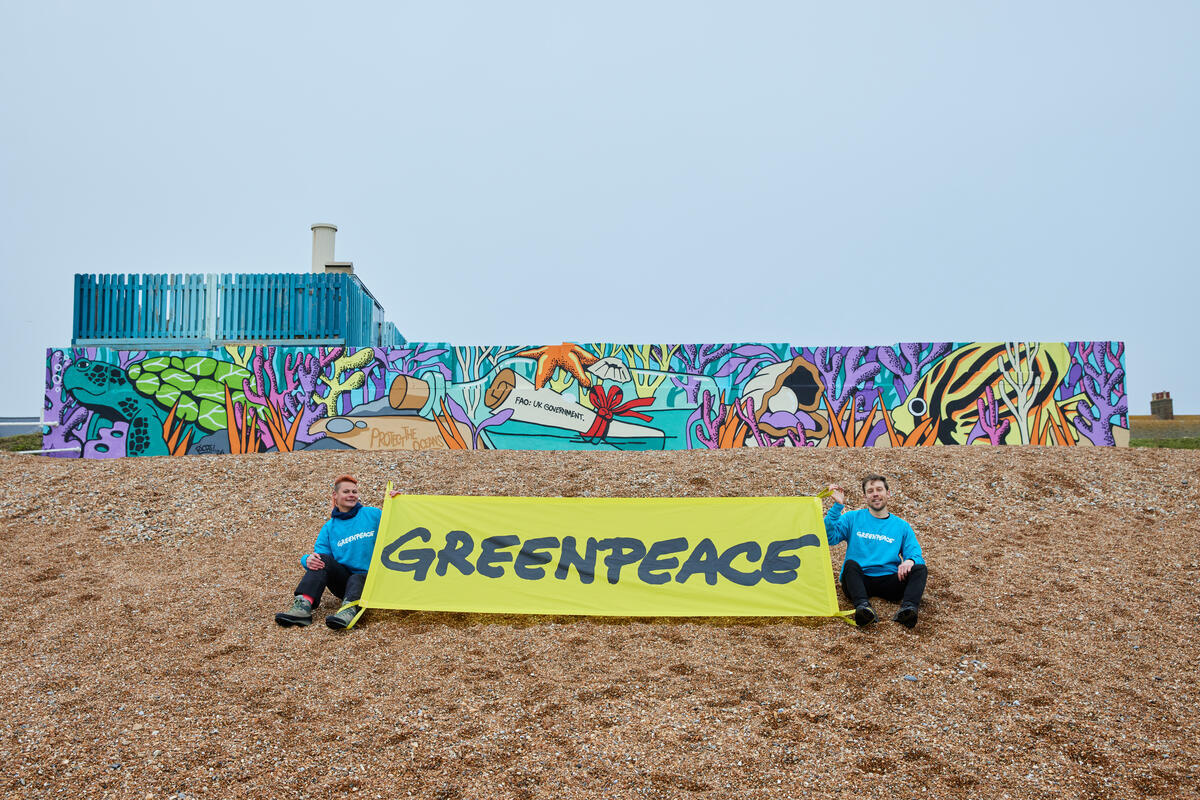
As the Global Ocean Treaty officially comes into force, artists worldwide unveil large-scale street art, celebrating the hard-won victory after two decades of campaigning. The global action, coordinated by Greenpeace, also marks the beginning of a crucial countdown to protect 30% of the world’s ocean by 2030.
Images of the artworks can be found in the Greenpeace Media Library.
The treaty enters into force on 17 January, and to celebrate this extraordinary achievement, artists, Indigenous Peoples, activists, and local communities from 13 countries across five continents representing every ocean, have joined Greenpeace to create vibrant, ocean-protection-inspired street art including murals, sculpture and moving artworks.
Lukas Meus, Ocean Campaigner, Greenpeace CEE said: “We are celebrating the result of two decades of tireless campaigning to protect the high seas, home to millions of species and crucial ecosystems. Now governments which have ratified the treaty are legally bound to take action to protect it.
“But we only have four years left to protect 30% of the ocean by 2030. We can’t trust big fishing industry players to simply prioritise ocean protection and stop exploiting it for profit, we need governments to force their hands.
“Our message to governments is clear: you must work fast to create the first wave of sanctuaries and do everything you can to limit the power of corporations who have destroyed the ocean. Every month of delay means more damage to beautiful and fragile ecosystems upon which we all rely.”
The Global Ocean Treaty, the most significant piece of environmental legislation since the Paris Agreement, achieved its landmark 60th ratification in September 2025, triggering its entry into force. Currently 0.9% of the High Seasis fully or highly protected, and for the first time, the treaty provides the legal tools to create High Seas sanctuaries that will help mitigate the climate crisis, halt biodiversity collapse, and safeguard food security for the billions who depend on the ocean.
From 17 January, a number of specific legal obligations will come into force for countries which have ratified, but this historic milestone must be followed by a commitment from governments around the world to act fast, and limit the power of industrial fisheries during the creation of the first sanctuary sites.
Closing the High Seas protection gap from under 1% as it is currently to 30% in four years will require governments to protect ocean areas larger than entire continents and to do so faster than any conservation effort in history.
At the 2025 United Nations General Assembly, 16 countries launched the Ocean Pioneers Coalition, a group of countries committing to strong ocean protection by ratifying the ocean treaty and committing to a moratorium on deep sea mining. Greenpeace is calling on governments to join them.
ENDS
Notes:
- Greenpeace spokespeople are available for interview or further comment.
- Photographs of the murals will be available from 14 January as the murals are finished, with full library of pictures uploaded in the following days.
- A short history of the Ocean Treaty
- Bios about the artists
- Lukas Meus is Greenpeace Global Ocean Campaigner employed by Greenpeace Central and Eastern Europe.
- The full list of countries participating are: Slovenia, Austria, The Philippines, Mexico, Mauritius, Senegal, Germany, Australia, the UK, Japan, Canada, The Netherlands, and the USA.
( Press Release Image: https://photos.webwire.com/prmedia/6/349282/349282-1.jpg )
WebWireID349282
This news content was configured by WebWire editorial staff. Linking is permitted.
News Release Distribution and Press Release Distribution Services Provided by WebWire.