

UNESCO Peru held the “Workshop on Safeguarding Intangible Cultural Heritage” in Huayllabamba, Cusco.
The workshop on safeguarding intangible cultural heritage was carried out in Cusco within the framework of UNESCO’s global project, which seeks to document, value, and transmit food traditions.
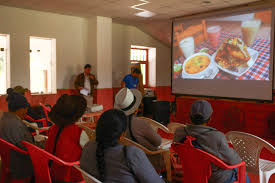
On November 28 and 29, the “Workshop on Safeguarding Intangible Cultural Heritage” took place in the district of Huayllabamba, Cusco, as part of the implementation of the project “Atlas Internacional de Alimentos y Plataforma Digital para salvaguardar, promover y transmitir las prácticas alimentarias a las generaciones futuras” in Peru. The project aims to generate new knowledge and develop interactive tools to document, safeguard, and transmit food traditions as living heritage to future generations.
The workshop focused on the knowledge, techniques, and values related to the production and use of maize in the Sacred Valley of Cusco as a food practice that forms part of intangible cultural heritage.
Likewise, the workshop served as a meeting space for various stakeholders linked to the production and consumption of maize. Factors threatening the continuity of this food practice were identified, such as the effects of climate change on the agricultural calendar, the decline in the diversity of cultivated maize varieties, and the reduction of rituals performed during the planting of this crop.
Based on this, participants identified actions for safeguarding this living heritage, oriented toward research, protection, transmission, and promotion of the knowledge, techniques, and values associated with the production and use of maize.
The workshop brought together farmers who work with different maize varieties from several peasant communities in the Sacred Valley, such as Huayoccari, Raqchi, and Urquillos, as well as representatives of the Association of Vegetable Producers and Small Animal Rearing – SUMAQ LLANKAY. In addition, representatives of the District Municipality of Huayllabamba attended; this institution is an allied partner with whom the workshop was jointly organized.
In this way, the workshop became a meaningful space for training, dialogue, and organization for the participants. The importance of safeguarding the knowledge, values, and know-how linked to the production and consumption of maize was shared, recognizing them as generators of identity and tradition for the communities of the Sacred Valley.
( Press Release Image: https://photos.webwire.com/prmedia/6/349240/349240-1.jpg )
WebWireID349240
This news content was configured by WebWire editorial staff. Linking is permitted.
News Release Distribution and Press Release Distribution Services Provided by WebWire.