

Updated WHO manuals provide guidance to strengthen foodborne disease surveillance and response capacities worldwide
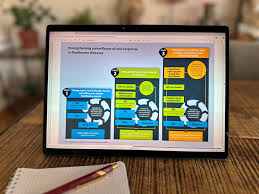
When a food safety incident is identified, INFOSAN members must act quickly. Timely detection, clear information, and coordinated response determine whether an event remains local or becomes an international emergency. The World Health Organization has now released updated editions of its full set of manuals on strengthening surveillance of and response to foodborne diseases, providing countries with practical guidance to build these essential capacities.
The manuals, which span introductory concepts through to advanced approaches for integrated surveillance across the food chain, form a coherent package that supports national authorities at every stage of system development. Their release provides countries with clear guidance and practical tools to strengthen national systems and, in turn, contribute to faster and more reliable communication through INFOSAN during food safety emergencies.
Why stronger surveillance matters for INFOSANEvery notification shared through INFOSAN begins with detection at the national level. Whether through indicator-based surveillance, event-based surveillance, or outbreak investigation teams in the field, the speed and clarity of early information influence every subsequent decision and action. The updated manuals explain how countries can strengthen these systems so that signals of concern are identified sooner, verified reliably, and shared through INFOSAN when there are international implications.
The manuals also describe how to integrate laboratory data, environmental assessments, food chain information, and public health investigations. This type of integration supports more comprehensive risk assessments and strengthens the evidence supporting the notifications that countries send to INFOSAN. As a result, members receive clearer, more actionable information to support timely risk management decisions.
Practical tools that help countries prepareEach manual includes practical instruments that national authorities can use immediately. Self-assessment tools enable authorities to review their current capacities and identify areas for investment. Decision trees provide structured guidance on surveillance and response functions. Templates, field investigation tools, and case studies help teams apply consistent approaches to outbreak investigations.
These resources support countries in improving the quality of their national systems. The stronger these systems are, the more effectively countries can collaborate through INFOSAN when foodborne risks cross borders.
A step toward more resilient global food safetyThe updated manuals also reflect emerging priorities, including the growing impact of climate and environmental change on foodborne risks and the expanding role of integrated surveillance across the food chain. By offering examples, typologies, and guidance on transitioning from pilot activities to sustainable surveillance arrangements, the manuals help countries build resilient, adaptable systems.
For INFOSAN, this means its members will be better equipped to detect unusual patterns, assess emerging hazards, confirm contamination sources, and share findings rapidly and reliably. The manuals, therefore, support not only national capacity strengthening but also the effectiveness of the global network.
Supporting a safer and more connected worldINFOSAN relies on timely communication and reliable evidence. By strengthening the systems that generate this evidence, the new WHO manuals aim to support national efforts to reinforce the foundation of trust and collaboration that underpins the network.
As countries use these manuals to strengthen their surveillance and response capacities, INFOSAN becomes better positioned to protect consumers, limit the impact of food safety emergencies, and safeguard health across borders.
Read all the manuals on strengthening surveillance of and response to foodborne diseases here:
- Introductory manual
- Stage one manual (part A): Using indicator- and event-based surveillance to detect foodborne events
- Stage one manual (part B): Investigating foodborne disease outbreaks
- Stage two manual: Strengthening indicator-based surveillance
- Stage three manual: Integrating surveillance data to better understand risks across the food chain
( Press Release Image: https://photos.webwire.com/prmedia/6/349236/349236-1.jpg )
WebWireID349236
This news content was configured by WebWire editorial staff. Linking is permitted.
News Release Distribution and Press Release Distribution Services Provided by WebWire.