

Alstom to supply 47 trains and associated maintenance for new rail corridors in Mexico
- The contract is valued at approximately 20,2 billion Mexican pesos (approximately 920 million euros)
- New, state of the art trains will be manufactured at Alstom’s Ciudad Sahagún plant, with over 76% of national content
- The contract also includes comprehensive maintenance for 5 years, fitting out of maintenance depots, inspection and refuelling stations
“This project exemplifies Alstom’s commitment to Mexico. 76.6% of the content for the trains will be made in Mexico. This level of local content boosts the Mexican railway industry, promotes technical specialization and strengthens the network of local suppliers, creating good jobs across the value chain.” Maite RamosAlstom’s general manager for the North Latin American region
Alstom, global leader in smart and sustainable mobility, has signed a contract with the Railway Transport Regulatory Agency (ARTF) for the supply of 47 DMU (Diesel Multiple Unit) passenger trains, 33 long-haul and 14 short-haul, aimed for the Mexico City–Querétaro–Irapuato and Saltillo–Monterrey–Nuevo Laredo corridors, in Mexico. The ruling was announced on December 15 at a public meeting of the decentralized agency of the Ministry of Infrastructure, Communications and Transportation. This project is part of the National Development Plan 2025-2030 and represents a decisive boost for passenger rail mobility in Mexico, connecting key regions in the center and north of the country and consolidating the revival of passenger train service.
The contract is valued at approximately 20,2 billion Mexican pesos (approximately 920 million euros)[1]. In addition to the supply of 47 trains, the contract also includes comprehensive maintenance for five years, fitting out of maintenance depots, inspection and refuelling stations, as well as technical training and commissioning of the trains.
With this new project, Alstom reaffirms its commitment to advancing railway mobility and innovation in Mexico. Alstom forecasts this project will allow them to create and retain upwards of hundreds of jobs, including both skilled engineering and project management roles as well as manufacturing opportunities.
“This project exemplifies Alstom’s commitment to Mexico. 76.6% of the content for the trains will be made in Mexico. This level of local content boosts the Mexican railway industry, promotes technical specialization and strengthens the network of local suppliers, creating attractive jobs across the value chain. Manufacturing trains for Mexico, made in Mexico, isn’t about just one project, it is our long-term contribution to sustainable mobility and the development of the country" said Maite Ramos, Alstom’s general manager for the North Latin American region.
State of the art trains, which are comfortable and reliable
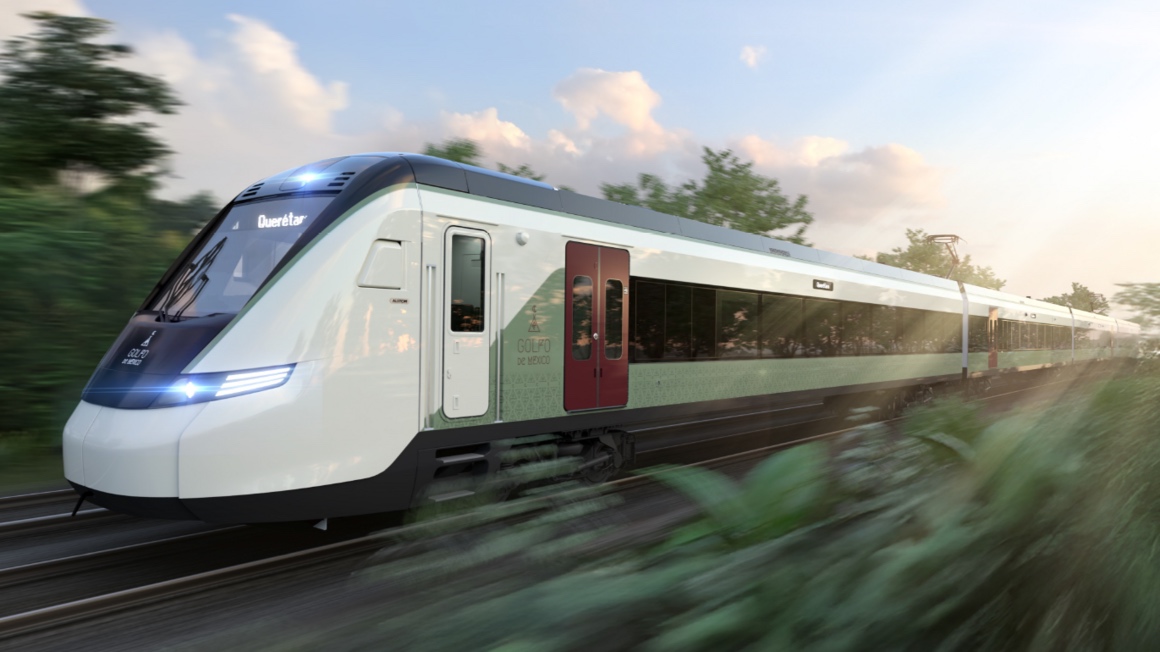
Locally called ‘Trenes des Norte’ (Northern Trains), Alstom’s Adessia Stream trains for catenary-free operation will meet the highest international standards of modern mobility, reaching maximum speeds of around 165 km/h. Each unit will have an approximate length of 100 meters and will allow double coupling, forming configurations of up to eight cars. The capacity will be flexible: around 300 passengers on long-haul services and up to 600 on short-haul services, guaranteeing efficiency and comfort on each journey. The trains will offer a comfortable, safe and contemporary experience, with full accessibility for people with reduced mobility (PRM) and real-time information systems.
Alstom’s Adessia commuter rail solutions are a global benchmark in urban and suburban mobility, connecting the heart of cities with the surrounding metropolitan areas. With more than 40,000 cars sold in 60 commuter systems in 15 countries, this platform offers a versatile portfolio that includes multiple units, ensuring efficiency and sustainability on every journey. Made from high-quality materials such as aluminum and stainless steel, Alstom’s Adessia trains represent solutions that transform the urban experience and contribute to a more connected and sustainable future.
Design: inspiration and cultural pride
Beyond performance and efficiency, the design of the Trenes del Norte seeks to resonate with Mexico’s identity and cultural pride, projecting a vision of modernity and innovation. The concept takes as a reference Nahuatl, a living language since the seventh century, and the Codex Boturini, an iconic manuscript that inspires the chromatic palette with earthy ochres, warm browns and pink tones that evoke the richness of the earth.
The front of the train is a striking embodiment of regional pride: inspired by the intense gaze of the puma, a symbol of strength and agility, with aerodynamic lines that convey dynamism and three horizontal lights that evoke the whiskers of the feline, creating a unique and recognizable visual signature.
On the outside, the long-distance train features a deep black ribbon flowing from the nose along the roof, reinforcing the sense of movement. A green band, taken from the Codex Boturini, provides refined contrast, while earth-brown doors ensure intuitive accessibility. The iridescent finishes reflect light and surroundings, giving the train a sophisticated and vibrant presence.
The short-distance design preserves this visual continuity, consolidating a solid identity for the Trenes del Norte. Windows integrated into a continuous black surface project modernity and safety, while the front light signature reinforces the promise of speed and cultural connection.
Five years of maintenance
In addition to the supply of 47 trains, the contract also includes comprehensive maintenance for five years, fitting out of maintenance depots, inspection and refuelling stations, as well as technical training and commissioning of the trains. Alstom stands out for delivering exceptional results in availability and reliability, supporting its solutions with strong technological and systems engineering capabilities. Alstom’s expertise in maintaining railway assets and systems ensures safe, efficient, and cost-effective operations, strengthening customer confidence in every project.
The company operates in more than 250 locations worldwide, performing corrective and preventive maintenance, overhauls, obsolescence management, cleaning, warehouse operation and modernization, and much more.
Moreover, as the largest private provider of operations and maintenance in North America, Alstom supports its customers throughout the entire lifecycle of their railway assets. From design and construction for operations, through modernization, to end-of-life, its solutions cover fleet maintenance, infrastructure, signalling, and specialized technical support.
Alstom’s HealthHub predictive system, which will also be part of the Trenes del Norte service, monitors over 10,000 cars, operates in more than 30 cities, and has cut energy use by 20% since 2014.
Made in Mexico
The trains will be manufactured at the Alstom plant in Ciudad Sahagún, located in the state of Hidalgo, which has international certifications and advanced processes for working with stainless steel and aluminium, ensuring quality and efficiency at each stage of production.
The Sahagún Plant is Alstom’s first largest manufacturing center in the Americas – and the company’s third globally – and will be in charge of the manufacture of the 47 DMU trains. Located in an industrial area with more than seven decades of manufacturing experience, the location of the site offers strategic connectivity with the main logistics corridors of the country, allowing the efficient mobilization of materials, subassemblies and complete trains to any national or international destination. 2,000 locomotives and more than 3,500 train cars have been manufactured at the site.
In 2025, Alstom officially received the “Made in Mexico” label, a government distinction that certifies products designed, manufactured, and assembled in the country under high standards of quality and innovation - underscoring the company’s commitment to strengthening the national industry and positioning Mexico as a key hub for world-class rail manufacturing. For more information, read the press release: Made in Mexico.
Alstom in Mexico
Present in the country since 1952, Alstom has participated in the development of the first line of the Mexico City Metro. Since then, it has been a fundamental ally in the development of mobility and urban connectivity, as well as in the economic growth of the states where it operates. Over the years, Alstom has pioneered the introduction of the metro and its maintenance in Mexico City, Monterrey and Guadalajara. In addition, it has developed modern railway systems, signalling and maintenance for trains and tracks of the main railways in the country. The company has a plant in Ciudad Sahagún (Hidalgo), where it has been manufacturing trains for national and international projects for more than 70 years. Alstom currently plays a key role in the Mayan Train project that drives connectivity and economic development, reaffirming its commitment to innovation and a more sustainable future.
ALSTOM™, Adessia™, Adessia Stream™ and HealthHub™ are protected trademarks of the Alstom Group.
[1] This contract will be booked in the 3rd quarter of Alstom’s 2025/2026 financial year.
( Press Release Image: https://photos.webwire.com/prmedia/7/348469/348469-1.jpg )
WebWireID348469
This news content was configured by WebWire editorial staff. Linking is permitted.
News Release Distribution and Press Release Distribution Services Provided by WebWire.