

Seventh UN Environment Assembly opens, aiming to advance solutions for planetary resilience
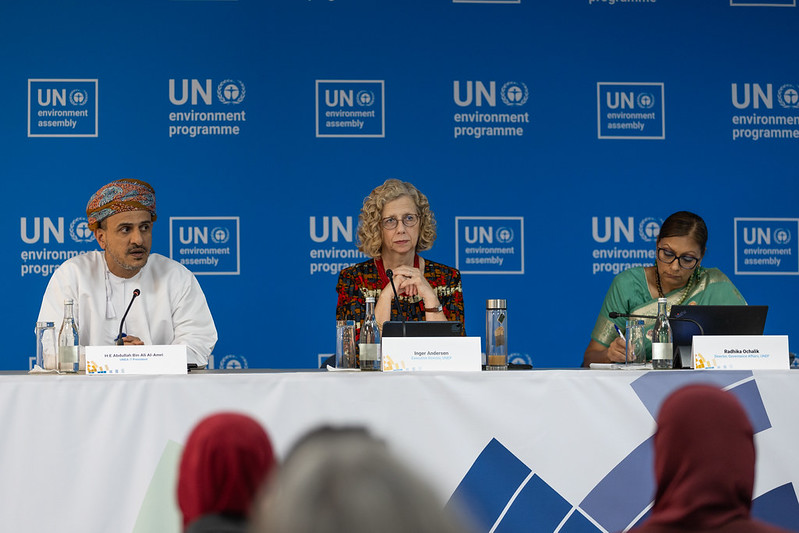
The seventh session of the UN Environment Assembly (UNEA-7) kicked off in the Kenyan capital, Nairobi, bringing together Ministers of Environment, intergovernmental organizations, multilateral environmental agreements, UN system entities, civil society, young people, and the private sector from across the globe to advance solutions for a resilient planet through multilateralism.
The UN Environment Assembly is the world’s highest decision-making body on the environment – its membership includes all 193 UN Member States. It meets biennially to set priorities for global environmental policies; decisions and resolutions then taken by Member States at the Assembly also define the work of the UN Environment Programme (UNEP).
“Today we reaffirm our shared responsibility: to transform our determination into tangible results for people, ecosystems, and our planet’s stability,” said H. E. Abdullah Bin Ali Al-Amri, President of UNEA-7 and President of the Environment Authority of the Sultanate of Oman.
“We convene at a decisive moment. Around the world, communities continue to endure the intertwined impacts of climate change, land, nature and biodiversity loss, and pollution and waste, challenges that test not only our economies and societies but the very trust in our collective will,” he added. “Our success this week depends not only on the outcomes we adopt but also on how we reach them, through trust, transparency, the spirit of compromise, and inclusiveness.”
This year’s Assembly will be negotiating 15 draft resolutions on issues ranging from saving the world’s glaciers to reining in massive seaweed blooms and reducing the environmental impact of artificial intelligence. While not legally binding, UNEA-7 resolutions help countries find common ground and have in the past laid the groundwork for precedent-setting international agreements.
“This Assembly must dig deeper than ever, because environmental challenges are accelerating. The rise in average global temperatures will likely exceed 1.5°C within the next decade, bringing escalating consequences with every fraction of a degree. Ecosystems are disappearing and land is degrading. Dust storms are intensifying. Toxins continue to pollute our air, water and land,” said Inger Andersen, Executive Director of UNEP.
“And this Assembly must dig deep, because the world is in turbulent geopolitical waters, which adds stresses and strains to multilateral processes. We all want the same thing: a better future for ourselves and for our families. This means a stable climate; a safe, clean and sustainable environment; and a pollution-free future,” she added.
UNEA-7 was preceded by a Major Groups and Stakeholders Forum, a Cities and Regions Summit and Youth Environment Assembly that saw more than 1,000 youth delegates from across the world come together to agree and issue the Global Youth Declaration that puts forward youth priorities to UNEA. Alongside discussion over the draft resolutions, UNEA-7 will feature three high-profile discussions, exploring why environmental sustainability is critical to industry, global finance and human health. Global leaders, including heads of state and government, will gather on UNEA-7’s penultimate day for the high-level segment, where Kenya’s President William Ruto, other participating Heads of State and Government and Ministers will address the Assembly.
In addition, UNEP will launch the seventh edition of its UNEA-mandated Global Environment Outlook (GEO-7) on 9 December, on the sidelines of the Assembly, and will name five climate trailblazers from around the world as its Champions of the Earth for 2025.
“A resilient planet is much more than protecting ecosystems; it means using our resources wisely, building just and inclusive societies, ensuring that economic growth respects the boundaries of our planet, and embracing innovation to foresee and prevent harm before it happens,” said Dr. Deborah Mlongo Barasa, Kenya’s Cabinet Secretary for the Environment, Climate Change and Forestry. “As we come together in the world’s environmental home, a place where the gifts and vulnerabilities of nature are felt deeply, we offer not just our challenges but also our solutions. Kenya is ready to partner with governments, civil society, the private sector, academia, and local actors. Because today, partnership is not optional, it is absolutely essential.”
UNEA-7 has just over 6,000 registered participants from over 180 countries, including 79 Ministers and 35 Vice-Ministers; it takes place under the theme, Advancing sustainable solutions for a resilient planet.
NOTES TO EDITORS
About the UN Environment Programme (UNEP)
UNEP is the leading global voice on the environment. It provides leadership and encourages partnership in caring for the environment by inspiring, informing and enabling nations and peoples to improve their quality of life without compromising that of future generations.
About the UN Environment Assembly
The United Nations Environment Assembly (UNEA) is the world’s highest-level decision-making body for matters related to the environment, with a universal membership of all 193 Member States. It sets the global environmental agenda, provides overarching policy guidance, and defines policy responses to address emerging environmental challenges. It undertakes policy review, dialogue and the exchange of experiences, sets the strategic guidance on the future direction of the UN Environment Programme (UNEP), and fosters partnerships for achieving environmental goals and resource mobilization.
For more information, please contact:
unep-newsdesk@un.org, United Nations Environment Programme
( Press Release Image: https://photos.webwire.com/prmedia/7/347645/347645-1.jpg )
WebWireID347645
This news content was configured by WebWire editorial staff. Linking is permitted.
News Release Distribution and Press Release Distribution Services Provided by WebWire.