

Met Exhibition to Explore 19th-Century Artistic and Cultural Fascination with Handheld Fans
Featuring over 75 objects from across The Met Collection, Fanmania examines fans and their widespread imagery among the avant-garde and beyond.
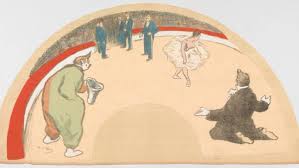
From December 11, 2025, through May 12, 2026, The Metropolitan Museum of Art will present Fanmania, an exhibition illuminating how the handheld fan became an unexpected muse for some of the most innovative artists in 19th-century Europe. Fans became enormously popular throughout European society during this period, serving as functional and fashionable objects of adornment and communication. At the same time, newfound artistic appreciation for fans emerged, fueled by cultural crazes for all things Japanese and Spanish, as well as exhibitions and publications devoted to fan making and its history. This display explores the myriad reasons artists were attracted to the semicircular form, including its commercial potential, its fashionability, and the opportunities it offered for formal and technical innovation.
“Fanmania offers visitors an intimate look at the fixations and fascinations that captured the European imagination on the cusp of modernity,” said Max Hollein, The Met’s Marina Kellen French Director and Chief Executive Officer. “Uniting objects from eight departments across The Met collection, this exhibition illuminates how handheld fans of the 19th century were not mere accessories but signifiers of identity and cultural exchange.”
Ashley E. Dunn, Associate Curator in the Department of Drawings and Prints, said: “Fans are familiar objects to everyone—we still see them in use around New York, especially on subway platforms in the summertime. This exhibition examines a moment in which ambitious artists in Europe became captivated by fans, making works in the distinct arched shape and borrowing materials typically employed by fan makers.”
“The exhibition aims to show the broader context of this phenomenon, a period when fans were ubiquitous. Lavishly ornate and cheaply made fans, as well as objects with fan motifs, flooded both specialty shops and the new department stores. Fan collectors ranged from the Impressionists and their literary friends to bourgeois women bent on improving their personal style and home décor,” said Jane R. Becker, Collections Specialist in the Department of European Paintings.
Displaying more than 75 artworks including folding fans as well as paintings, prints, and photographs from eight departments across The Met collection, this exhibition showcases artworks from Europe and Asia to explore the 19th-century phenomenon of “fanmania.” The exhibition investigates why avant-garde artists such as Edgar Degas and Camille Pissarro not only featured this feminine accessory in their work but also adopted it as an experimental format for their art. Although avant-garde fans were primarily designed to be shown on the wall and rarely intended to be used, they retain many of the associations of functional fans. Themes of gender, courtship, commercialism, appropriation, and experimentation unfold in this examination of fans as objects of visual culture in the 19th century.
Exhibition Overview
Fanmania begins by exploring the design and use of fans prior to the 19th century. Historically, European fans have been most closely associated with the 18th century as the period in which they first gained widespread use. The examples here show the multitude of purposes that fans could serve as devices of flirtation or amusement, tools for education or propaganda, and props for masquerade or covert observation. Women were not only the consumers of fans but also among their producers, as fan making was considered an art form appropriate for female practitioners, whether amateur or professional.
The fan-painting craze in Paris coincided with Japonisme, a passion for Japanese art and culture that emerged in the mid-19th century. Many Impressionist artists and their friends became collectors of Japanese art, including fans, acquiring works from newly established specialist dealers and shops. By the late 1880s, Japanese fans were imported in the millions to France, where they were used both as women’s accessories and as decoration.
Spain became a center of fan production in the 19th century too and Spanish culture was also in vogue in Paris, a phenomenon known as Hispagnolisme. Spanish-born Empress Eugénie de Montijo, who married Napoléon III in 1853, exerted considerable influence on fashion and taste. Spanish dance troupes and musicians performed often in the capital, and avant-garde artists, such as Edouard Manet, took them up as subjects. For some artists who decided to make fans in this period, it was Spain that they had foremost in mind.
The theme of the bourgeois woman with her fan in a domestic setting proliferated in art of the last quarter of the 19th century. Whether at home or on ventures out, the handheld fan served as a companion, trusted protector, and elegant accoutrement. As fashion accessories, fans signaled facets of their user’s identity through their materials and stylistic form as well as in the way they were handled. A Japanese uchiwa fan in the hands of the Impressionist Berthe Morisot or a plumed fan held by one of Mary Cassatt’s sitters displayed their alignment with current taste and confirmed their social status.
Movement is an essential aspect of the handheld fan, and the expressive qualities of a fan’s motions are among the ways it can convey meaning and reveal the user’s personality, mood, or intentions. Fan designs frequently incorporate metallic paints, gold leaf, feathers, spangles, and sequins, the visual impacts of which are heightened when in motion. Artists in the late 19th century understood the fan as a moving object and attempted to capture its dynamism in myriad ways. The fleeting and ephemeral nature of its movement made it an appealing subject for the Impressionists.
As travel increased in the 19th century, fans became popular as small, practical, and artistic souvenirs. The Universal Exhibitions of the second half of the century were key events for the promotion of the French fan industry and exposed the European public to fans from other cultures. Souvenir fans were produced for each of these occasions, providing information and maps as well as recording the remarkable buildings erected for the fairs. Industrial advances in color lithography and a growing population of middle-class consumers gave rise to advertising fans by the turn of the century. In the first decades of the 20th century, fans publicized department stores, perfume, champagne, alcohol, hotels, and restaurants.
Credits
This exhibition is curated by Ashley E. Dunn, Associate Curator in the Department of Drawings and Prints, and Jane R. Becker, Collections Specialist in the Department of European Paintings.
The exhibition is featured on The Met website.
###
Image caption: Henri-Gabriel Ibels (French, Paris 1867–1936 Paris). Circus Fan, ca. 1893–95. Lithograph on silk fan leaf. The Metropolitan Museum of Art, Harris Brisbane Dick Fund, 1938 (38.91.98).
( Press Release Image: https://photos.webwire.com/prmedia/6/347402/347402-1.jpg )
WebWireID347402
This news content was configured by WebWire editorial staff. Linking is permitted.
News Release Distribution and Press Release Distribution Services Provided by WebWire.