

Mitigating Exposure Risks to Fusarium and Other Microbial Contaminants in Hospitals, Nursing Homes, and Commercial Buildings
Clark Seif Clark, Inc. (CSC) provides indoor environmental quality and infection control testing, consulting, and training services to protect patients, workers, and the public from environmental pathogens and pollutants in the built environment.
Because Fusarium can produce various mycotoxins, animals (including humans) that eat the infected tissues may also be consuming these toxins.
Fusarium is the name of a large genus of fungi. Some species of Fusarium can cause costly plant damage or spoil cereal crops for farmers. This is due to their ability to produce mycotoxins. Exposure to Fusarium can even cause potential health issues for humans.
In water-damaged homes and buildings, Fusarium is sometimes found in surface and air samples. Exposure to elevated levels of it, as with other types of fungi, may cause allergic reactions in some people, or it can act as a respiratory irritant. Fusarium can even trigger an asthma attack in some people with the condition.
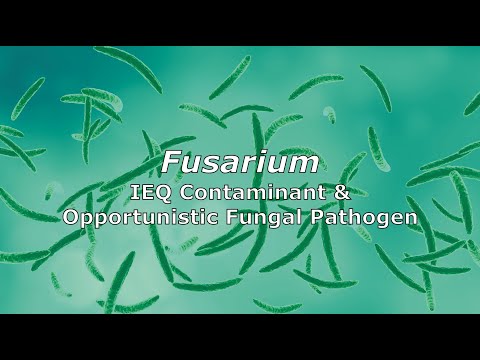
“Fusarium is a very interesting plant pathogen,” said Erik Nelson, expert in mycology and forest health with Clark Seif Clark, Inc. “Fusarium has distinctive crescent shaped spores. Those spores are intended to spread via air currents and wash into the rootzones of plants via rain. The fungus then infects the plant’s roots, and spreads through the plant with tiny spores that enter the vascular system. The spores then germinate and consume the plant. Because Fusarium can produce various mycotoxins, animals (including humans) that eat the infected tissues may also be consuming these toxins.”
There is good research showing environmental exposure to airborne spores is not sufficient to raise mycotoxin levels in people, except in extreme cases. Diet is the main way animals (including humans) accumulate mycotoxins. Fusarium also negatively impacts agricultural crops; in a normal year, losses are reported up to $20 million in the U.S.
Dedicated to helping with this are the infection control, industrial hygiene, and indoor environmental professionals at CSC. They offer site assessments, environmental testing, consulting, and training services to identify and mitigate indoor exposure risks to mold and other microbial pathogens, allergens, respiratory irritants, and airborne pollutants.
CSC also recently sponsored an educational video about Fusarium as an indoor environmental quality contaminant and opportunistic pathogen that can be seen at: https://youtu.be/KF3ZhWjBLi0
To learn more about this or other infection control, industrial hygiene, or environmental, health, and safety services, please visit www.csceng.com, email csc@csceng.com, or call (800) 807-1118.
About Clark Seif Clark, Inc. (CSC)
CSC was established in 1989 to help clients in both public and private sectors address indoor air quality, occupational health, and environmental health and safety (EH&S) issues. CSC is a leading provider of these services with multiple offices along the western seaboard and southwest. The company believes in science-based protocols and has a strong background in engineering, making them the preferred environmental consultants to industrial clients, healthcare facilities, architects, schools, builders, contractors, developers, and real estate professionals.
( Press Release Image: https://photos.webwire.com/prmedia/12710/331095/331095-1.jpg )
WebWireID331095
 Infection Control
- Contact Information
- Paul Cochrane
- President
- Cochrane & Associates, LLC
- Contact via E-mail
This news content may be integrated into any legitimate news gathering and publishing effort. Linking is permitted.
News Release Distribution and Press Release Distribution Services Provided by WebWire.