

Future-proofing the energy system to enable the Era of Electricity
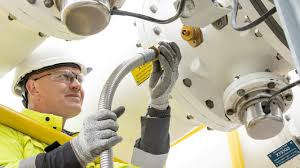
Electricity is the foundation of modern life and the pulse that keeps societies thriving.
However, the energy system is undergoing an unprecedented transformation. Surging demand, an aging grid, and workforce shortages are colliding with rising expectations for energy security, sustainability, reliability, and digitalization. At the same time, data and AI are fundamentally reshaping how infrastructure is operated and managed.
Given its scale and pace, the energy transition cannot be delivered solely through new infrastructure. How existing systems evolve is just as critical, reinforcing the defining role of service. This aligns with a circular economy approach, where extending asset lifecycles and optimizing what already exists reduces the need for resource-intensive replacement and avoids emissions across the full lifecycle.
Expectations are moving beyond point solutions or reactive maintenance toward outcome‑based, system‑level service solutions that keep critical energy infrastructure secure, reliable, and future‑ready across its entire lifecycle.
Within this evolving landscape, Hitachi Energy combines decades of domain and service experience, the world’s largest installed base, advanced digital & AI-enabled capabilities, and local service teams across the globe to deliver lifecycle services far beyond the routine maintenance schedules of the past. This circular approach enables the focus to shift not only to keeping infrastructure running but also to helping energy systems evolve while unlocking avoided emissions at scale.
Avoided emissions refer to greenhouse gas (GHG) emissions that would have occurred under a conventional scenario – such as asset replacement or continued use of carbon‑intensive materials – but are prevented through alternative solutions.
This article outlines how lifecycle service contributes to avoided emissions at scale, supported by two illustrative case studies: EconiQ® Retrofill and transformer refurbishment. Together, these examples demonstrate how service‑led circularity delivers measurable climate benefits while strengthening grid reliability and long-term customer value.
Electrical infrastructure is capital‑intensive, resource‑heavy, and built for longevity. High‑voltage switchgear and power transformers are typically designed for operational lifetimes of 30-40 years1. Yet, many assets are replaced earlier due to evolving performance requirements, regulatory changes, or technology developments. Replacing assets outright often entails substantial embodied emissions from raw material extraction, manufacturing, logistics, and installation.
Lifecycle service strategies, therefore, play a critical role in reducing emissions by maximizing the value of assets already in operation. In practice, this means:
- Extending operational lifetime through refurbishment, modernization, and life‑extension programs
- Reducing operational emissions by improving efficiency and replacing high Global Warming Potential (GWP) materials
- Enabling circularity through reuse, repair, and selective replacement rather than full asset substitution
- Maintaining and improving reliability to support the growing demand for electrification
- By intervening at critical points in the asset lifecycle, service solutions reduce the need for new equipment production and prevent emissions that would otherwise occur.
Sulfur hexafluoride (SF₆) has long been used as an insulating and arc‑quenching gas in high‑voltage switchgear due to its excellent technical properties. However, SF₆ is also one of the most potent greenhouse gases known, with a GWP 24,300 times that of CO₂ over 100 years. Even small leakages can therefore have a disproportionate climate impact.
To address this challenge, Hitachi Energy developed EconiQ – its eco-efficient portfolio for sustainability, where products, services, and solutions are proven to deliver exceptional environmental performance.
The challenge
Thousands of SF₆‑filled switchgear installations are currently in operation worldwide. While replacing them entirely with new SF₆‑free equipment would reduce future emissions, it would also generate significant embodied emissions from manufacturing new assets and disposing of old ones. At the same time, increasing regulatory pressure and net‑zero commitments are accelerating the need to phase down SF₆, making inaction an increasingly costly and unsustainable option. Customers thus face a trade‑off between environmental performance, cost, and operational disruption.
The Service solution
EconiQ Retrofill addresses this challenge by enabling the replacement of SF₆ gas in existing switchgear with an alternative gas mixture with a dramatically lower GWP -without the need to replace the entire installation. Through a carefully engineered process, service teams at Hitachi Energy assess asset condition, adapt components where needed, and refill the equipment with EconiQ‑based gas while maintaining safety, performance, and compliance with relevant standards.
Avoided emissions impact
The avoided emissions from EconiQ Retrofill arise from two main sources:
- Operational emissions avoided: replacing SF6 with a lower-GWP gas significantly reduces the climate impact associated with potential future gas leakage over the remaining asset lifetime Embodied emissions avoided: retrofill eliminates the need to manufacture and install new switchgear, thereby avoiding emissions associated with steel, aluminum, copper, insulation materials, and logistics
- In practical terms, EconiQ Retrofill enables customers to rapidly and cost-effectively decarbonize their installed base, while extending asset life and minimizing downtime. It exemplifies how targeted service interventions can unlock substantial avoided emissions without compromising grid reliability. Pilot projects have demonstrated emission avoidance of up to 95 percent as compared to the reference scenario.
Power transformers are among the most critical and resource‑intensive assets in the electricity system. Their manufacture involves large quantities of steel, copper, electrical steel laminations, insulation materials, and oil, all of which carry significant embodied emissions. Despite this, many transformers are replaced while still having significant lifetime remaining and are mechanically sound. This is often due to aging components, insulation degradation, or changes in operational requirements.
The challenge
Aging transformers may face an increased risk of failure if not properly maintained or upgraded. At the same time, replacing a large power transformer can take months or even years. This involves complex logistics and on-site modifications, resulting in substantial emissions from production and transport.
The Service solution
Hitachi Energy’s transformer refurbishment services focus on restoring and enhancing existing assets through a modular, condition‑based approach. Typical interventions include:
- Replacement or upgrading of insulation systems
- Core and winding repairs or partial replacements
- Oil regeneration or replacement with improved dielectric fluids
- Upgrading monitoring, cooling, and control systems
Rather than a one‑size‑fits‑all solution, refurbishment programs are tailored to each transformer’s specific condition and operational profile, informed by diagnostics, digital monitoring, and engineering expertise.
Avoided emissions impact
Transformer refurbishment generates avoided emissions by:
- Reducing new manufacturing emissions: extending transformer life by 10-20 years avoids the need to produce an entirely new replacement unit, along with its associated embodied emissions.
- Improving reliability and operational resiliency: proactively mitigating aging‑related failure risks, preserving asset integrity, and ensuring consistent performance during both normal operation and system stress conditions.
- Reducing end-of-life waste: reusing the core structure and major components limits waste generation and supports value retention at end-of-life, without requiring full asset disposal.
For customers, refurbishment provides a lower‑carbon alternative to replacement, often at reduced cost and with shorter lead times, while maintaining or even improving reliability and performance.
Methodology: how avoided emissions are assessedTo credibly quantify avoided emissions, Hitachi Energy applies a structured and conservative approach aligned with lifecycle and Greenhouse Gas (GHG) accounting standards of the GHG Protocol, and the WBCSD Guidance on Avoided Emissions.
Avoided emissions are calculated by comparing:
- Reference scenario: what would be the most likely alternative solution without the service intervention (e.g., continued use of SF₆‑filled equipment, or full asset replacement with a new transformer).
- Solution scenario: the emissions profile after implementing the service solution (e.g., EconiQ Retrofill or refurbishment).
The difference between these two scenarios represents the avoided emissions.
Which emissions are considered?Depending on the service offering, calculations include relevant lifecycle emission sources for both the reference and solution scenarios, such as:
- Upstream emissions from manufacturing and transport, as well as emissions from installation and service activities
- Use-phase emissions, such as gas leakage or efficiency losses
- End-of-life emissions, including disposal, recycling, and any relevant processing
System boundaries, assumptions, and asset lifetimes are clearly defined to ensure consistency and transparency.
Data sources and assumptionsThe methodology leverages a combination of:
- Product‑specific engineering data
- Standard emission factors for materials and energy
- Asset‑specific operational data where available
Conservative assumptions are applied where uncertainty exists, ensuring that avoided emissions claims remain robust and credible.
Conclusion: scaling speed and impact through lifecycle servicesLifecycle services increasingly demonstrate that avoided emissions are a practical and scalable outcome of applying circular economy principles across the installed base. Through solutions such as EconiQ Retrofill and transformer refurbishment, targeted lifecycle interventions can materially reduce both operational and embodied emissions while preserving the reliability, safety, and performance that power systems require at scale.
Treating the installed base as a strategic decarbonization asset, rather than a constraint, requires shifting from replacement‑led thinking to lifecycle optimization. In this approach, extending asset life, removing high‑GWP materials, and digitally managing performance are recognized as core climate levers.
To unlock this potential at scale, the focus must move to systematic execution through consistent measurement of avoided emissions and collaboration across industry and regulators. When executed at this level, avoided emissions that are service‑led offer one of the fastest and most cost‑effective pathways to climate impact, complementing innovation and helping deliver a reliable, low‑carbon energy system for the era of electricity.
1 https://iea.blob.core.windows.net/assets/ea2ff609-8180-4312-8de9- 494bcf21696d/ElectricityGridsandSecureEnergyTransitions.pdf
( Press Release Image: https://photos.webwire.com/prmedia/6/355981/355981-1.jpg )
WebWireID355981
This news content was configured by WebWire editorial staff. Linking is permitted.
News Release Distribution and Press Release Distribution Services Provided by WebWire.